

PUBLISHED March 15, 2026
KARACHI:The earliest recollection I have of perhaps the most rudimentary form of social media is autograph books — which, in the 1970s, bloomed into slam books. These were notebooks passed among friends to share personal information and opinions, often anonymously. To be invited to write in someone’s slam book was considered a privilege — an acceptance into the clique who, despite being young Pakistani teens, had already had the exposure to document Clint Eastwood as their favourite actor, Demis Roussos or David Cassidy as their favourite actor, Billie Jean King as their favourite sportswoman, steak as their favourite food, and Mercedes 280 SEL as their favourite cars. Clueless about it all, I munched on my spicy, lemony bhutta, wiped my hands with a dish cloth and still aghast at being asked to write in a classmate’s slam book, I settled down to blatantly copy the entries in the fat, juicy slam book, to appear equally cool in the clique! But that’s another story.
Would you believe that the earliest reference to slam books appeared in a New Jersey newspaper on November 18, 1928, reporting on high school students using them? Fast-forward to today: digital space has invaded these paper treasures, and we’ve evolved the slam book routine. Privileged cliques are still there. We invite people to join our pages, our accounts — to follow us, like us, share and subscribe to our views. We don’t allow everyone. Everyone can go to public domains.
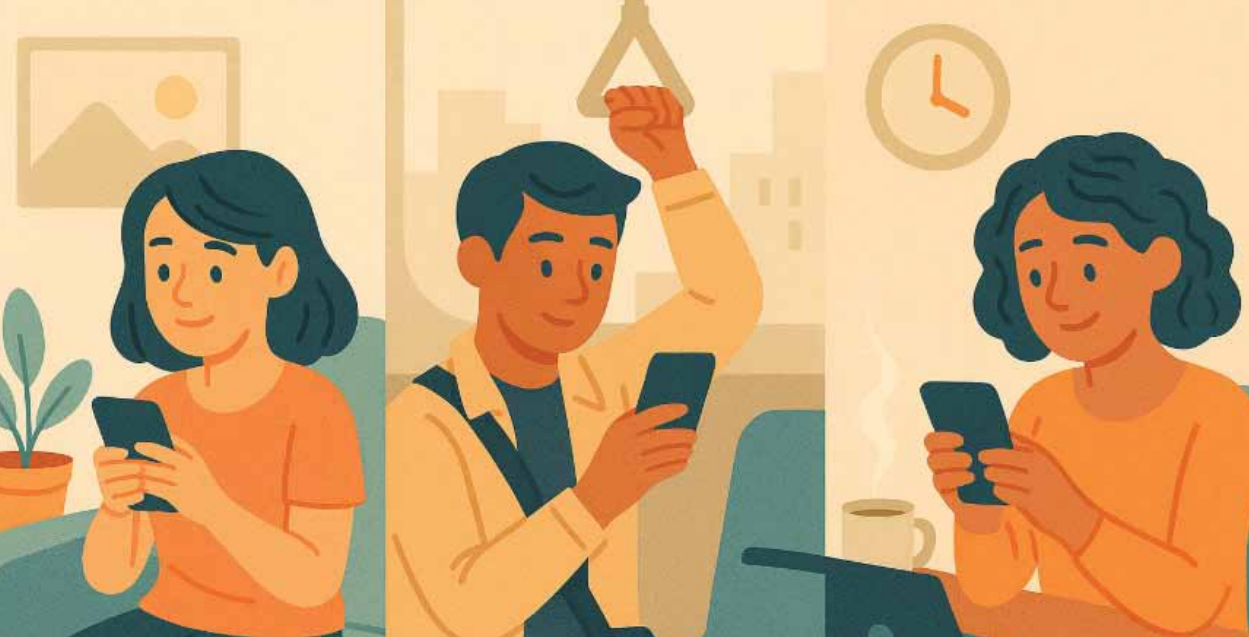
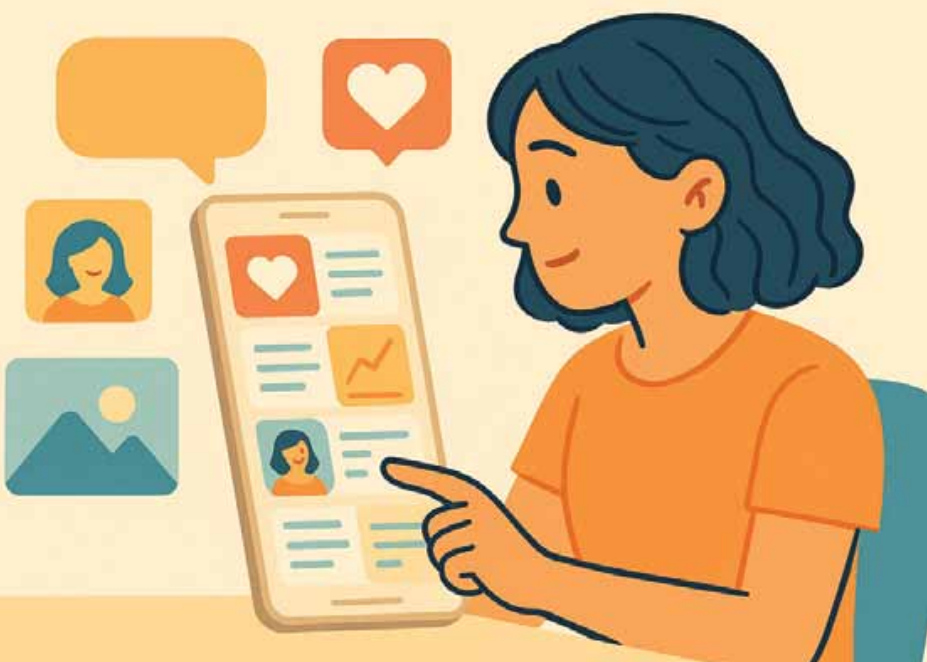
Social media is a marvel and a menace — a connector and a disturber — all at once. And with 5.24 billion people scrolling, it is no small experiment in human behaviour. That is about 63.9% of the global population actively using these platforms.
Of course, we are connected to the world. Chefs and cooks often ask people to write their city in comments on the recipe, and it baffles me to no end to see why some Egyptian fellow in Alexandria aspires to cook Charsi Karhai! The primary benefit is the ability to maintain relationships with friends and family worldwide, breaking down geographical barriers. Irrespective of the fact that you don’t know what’s happening upstairs in your own house, you are so wrapped up in thrashing some TV actor for her bigoted, hypocritical views on how daughters-in-law should live with their in-laws!
Social media geeks are one big global community, divided and organised according to their interests — from Siamese cat lovers to knee surgery groups, you can find them all online. Individuals with niche interests, professional and career platforms, rare medical conditions, or marginalised identities can find support, education, belonging, and connection.
There is a strong correlation between heavy social media use and increased rates of depression, anxiety, loneliness, and poor sleep. The platforms are designed with infinite scrolling and notifications that trigger dopamine, leading to addictive behaviours, especially when users spend an average of over two hours on social media daily.
Before “influencer” became a profession, our minds were shaped by Jaun Elia, Faiz Ahmed Faiz, Ahmad Faraz, Ahmed Nadeem Qasmi, Amjad Islam Amjad, Jameeluddin Aali, Ibn-e-Insha, Munoo Bhai, Shoaib Mansoor, Haseena Moin, and, from a younger lot, Junaid Jamshed, Nazia Hassan, Alamgir, and many cricketers who influenced our lives in various ways. However, social influence today is another circus. “Inki beti influencer hai,” as an introduction, perhaps commands the same respect and awe that “inki beti doctor/teacher hai” once did before social media arrived.
While the above-mentioned luminaries groomed us intellectually through books, newspapers, and the idiot box, “social media has introduced us not only to many Wellesians,” as Janan Ganesh says in his recent piece in the Financial Times. but also connected us daily with many budding Anwar Maqsoods, Moin Akhtars, and Munoo Bhais—the packaging may be different but what they do bring is piercing and unflinching social commentary.
There is a lot out there that you don’t want to know, see, or hear — ever — because it irritates you, angers you, triggers you, or means nothing to you, or you simply don’t subscribe to those views. But there is a digital cosmos out there, and however old-school you are, however much you hate scrolling or browsing, you will find entertainment and wisdom — or a mix of both — that makes a difference in some way. It might surprise, shock, change, enlighten, entertain, inform, educate, or simply make you laugh and smile. There is always some effect, it is not nothing.
I spend about 20 minutes on social media daily on average, but I have found myself a few doctors, a stylist, several stand-up comedians, fitness gurus, health specialists, some cooks and chefs, an odd assortment of religious scholars, and a couple of mental health professionals — quite an entourage, even if only digital in presence.
Yet I’m not sure how I lived more than half my life without them. They now make me believe that had I known something more, this, that, or the other at some fickle moment in my past, perhaps it might have made a bigger difference and things would now be different. Maybe I would have fumbled and stumbled less.
On the downside, people often compare their lives to curated highlight reels, resulting in feelings of inadequacy, fear of missing out (FOMO), and body image issues. The rapid spread of false information, scams, and fake news can influence public opinion and cause social tension. I often feel I might have become excessively lazy or comfortable ordering things online without dealing with a human. Robots can err like humans, but robots don’t harass, judge, or give attitude. Am I getting used to how the ChatGPT robot, in particular, accommodates my torrential abuse by calmly justifying my frustration and blaming its inefficiency on being an experimental model, struggling to cater to me!
In this new world that thrives on Wi-Fi, everybody is talking and everyone has something to show and share. We listen and absorb it all. Just about anyone is a religious philosopher, a cook, a stylist, an expert, a specialist, a guru. They are all talking. I am amazed at our enormous ability to soak up information. If I were to physically hold all the advice I receive in a week, it would be like a mad shopping spree at Sunday Bazaar, The Mall, and a trip to Dubai combined. My car and its boot would be filled to capacity, and it would be hard to shut the boot lid. I would have to stow some away in a container somewhere in a storage space.
There is advice on fitness, appearance, fashion, style, how and why you cook what you cook, what to say to God, to your siblings, kids, spouse, special people in your life, exes, in-laws, even your dog and cat. Being in the moment is long forgotten because we are too busy taking pictures and selfies on our latest iPhone.
Feeling a cool, silky breeze caress your skin under the shade of a tree, reaching the top of a mountain after an arduous climb, sensing the toasty warmth of a fireplace, tasting the explosion of flavour in the first bite of a sizzling steak when you’re ravenously hungry — do we even register how it feels anymore?
Just when Boomers, Gen X, and Millennials had learned to live with social media, Gen Z has decided to take a break from their phones to spend time in the real world. Is it the new “cool”?
There has been a surge of TikTok videos of people vowing to delete social media apps in 2026 and engage more with in-person and analog hobbies.
“I think people back then used to take a break from the real world by going on their phones, but now people are taking a break from their phones to spend time in the real world,” says Aliya, a Gen Z graphic designer.
Meanwhile, social media use has steadily declined since peaking in 2022, when the effects of the pandemic were still lingering. This is according to a survey by the Financial Times and digital insights company GWI, which analysed the online habits of 250,000 adults across more than 50 countries.
Globally, adults aged 16 and over spent an average of two hours and 20 minutes per day on social platforms by the end of 2024 — down almost 10 percent since 2022. The decline was particularly pronounced among teens and people in their twenties.
“I feel like social media is now more of a pressure platform — everyone is selling something, upfront or subtly — but you’re being sold everything, everywhere,” says Abdullah, an English language teacher. “It often gives me feelings of not having enough or not accomplishing enough in my career.”
For Zarina, a housewife, it is an information blitz. “We are just inundated all the time with so much information… our brains aren’t capable of handling that much,” she says. “We’re diminishing our brain’s capacity to look inward and listen to ourselves, and we’re losing sight of what is actually important to us. Brands, sellers, and politicians are blatantly lying on social media.”
We once waited to be invited into write in someone’s slam book. Now we beg to be let into algorithms. Different century, same hunger — to be seen, to belong, to matter. Only this time, the audience never stops watching.
The digital cosmos is vast, dazzling, and addictive. But no feed, however curated, can substitute the quiet authority of lived experience. At some point, we must close the app — and open a window before we forget how a fresh breeze feels. Now I sound like someone on my feed!