

Wales will be forced to swap their famous red jersey for a white alternate strip when they face Ireland at Dublin’s Aviva Stadium this Friday in the Six Nations.
Tournament organisers have prevented the Welsh from wearing their traditional home colours to comply with World Rugby’s colour blindness regulations.
The combination of Irish green and Welsh red presents difficulties for supporters and players affected by red-green colour blindness, which represents the most prevalent form of the condition.
During last year’s Six Nations fixture between the two nations, Ireland made the switch to white.
On this occasion, Steve Tandy’s squad will don the alternate kit they last wore during their autumn victory over Japan.
World Rugby introduced its colour blindness kit guidelines across all competitions from January last year, following sustained lobbying from awareness groups.

Wales will wear their white shirt when they do battle with Ireland this weekend
|
GETTY
The policy stipulates that teams with light-coloured primary strips should maintain a darker secondary option, with the reverse applying to those in darker home colours.
According to NHS figures, the condition impacts approximately one in every 12 males and one in 200 females across the population.
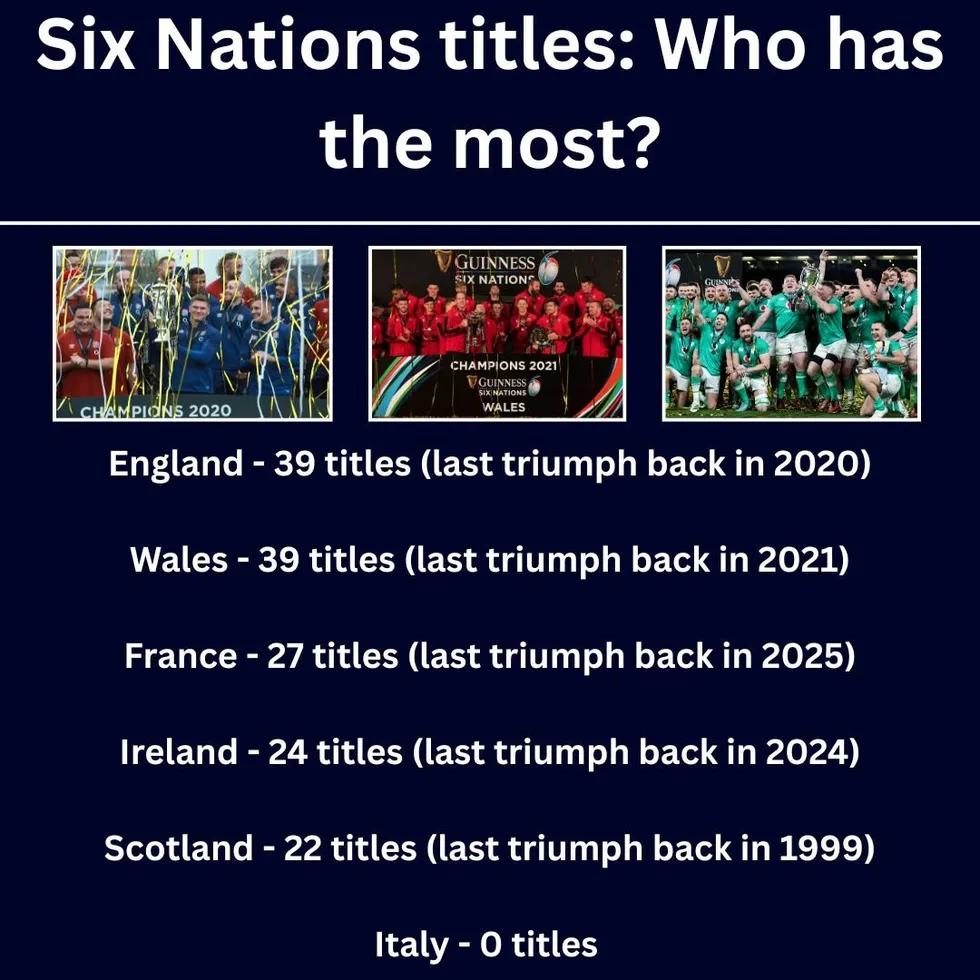 Who has won the most Six Nations titles? | PA
Red-green colour blindness remains by far the most common variant, making fixtures between teams in these colours particularly problematic for a significant portion of viewers and participants.
Kathryn Albany-Ward, founder of Colour Blind Awareness, welcomed the regulations when they were introduced. Speaking to The Daily Mail, she said: “This benefits everyone, including the players who often don’t feel they are able to speak up.”
She highlighted the scale of the issue within professional rugby squads, noting: “If eight per cent of men are affected, that means there will be two to three players in every squad who are impacted in some way. It’s just common sense.”
The campaigner’s comments underscored how the policy change addresses a previously overlooked concern affecting both spectators and athletes alike.

Wales have lost all three of their Six Nations matches so far
|
GETTY
Wales head into Friday’s encounter in dire form, sitting at the foot of the Six Nations table following three consecutive losses.
Their campaign began with heavy defeats to both England and France in February, before a closely contested 26-23 loss to Scotland compounded their misery.
Ireland, by contrast, will enter the Dublin fixture as strong favourites to extend their dominance over their rivals.
The hosts have emerged victorious in eight of their previous nine encounters with Wales, a record that suggests Tandy’s men face a formidable challenge as they seek to salvage something from a disappointing tournament.