
A US judge has temporarily blocked the Donald Trump administration from detaining British anti-disinformation campaigner Imran Ahmed.
It comes after the US permanent resident sued officials over an entry ban for the part he played in what the US government argues is online censorship.
Washington issued visa bans on Tuesday on Mr Ahmed, 47, and four Europeans, including French former EU commissioner Thierry Breton.
It accuses them of working to censor freedom of speech or unfairly hitting US tech giants with regulation.
Nigeria latest: US warns ‘more to come’ after claiming strikes on IS targets
Mr Ahmed is CEO of the US-based Center for Countering Digital Hate, which aims to protect human rights and civil liberties online.
He is a New York resident and is believed to be the only one of the five targeted by the visa ban currently in the country.
The move angered European governments, who argue regulations and the work of monitoring groups made the internet safer by highlighting false information and pushing tech giants to do more to tackle illegal content, including child sexual abuse material and hate speech.
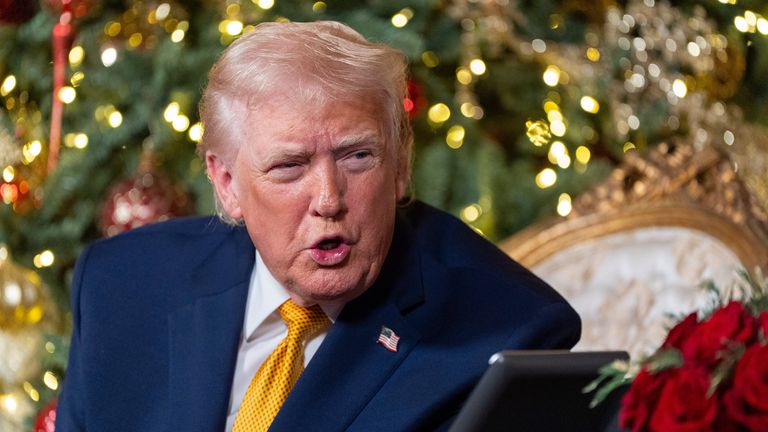
US President Donald Trump. Pic: AP
For Mr Ahmed, it also sparked fears of imminent deportation that would separate him from his wife and child, both US citizens, according to a lawsuit he filed on Wednesday in the Southern District of New York.
When announcing the visa restrictions, Secretary of State Marco Rubio said he had determined the presence of the five people in the US had potentially serious adverse foreign policy consequences for the nation, which meant they could be deported.
Read more:
Why Trump administration is so annoyed with Europe’s online rules
Man reveals what it’s like celebrating Christmas in country where it’s banned
Mr Ahmed named Mr Rubio, Homeland Security Secretary Kristi Noem and other Trump officials in his lawsuit.
He argued officials were violating his rights to free speech and due process by threatening deportation.
US District Judge Vernon Broderick issued a temporary restraining order on Thursday, instructing officials not to arrest, detain or transfer Mr Ahmed before he has an opportunity for his case to be heard, and scheduled a conference between the parties for 29 December.

Thierry Breton. Pic: Reuters
Mr Ahmed praised the US legal system’s checks and balances in a statement provided by a representative and said he was proud to call the country his home.
“I will not be bullied away from my life’s work of fighting to keep children safe from social media’s harm and stopping antisemitism online,” he said.
In response to questions about the case, a State Department spokesperson said: “The Supreme Court and Congress have repeatedly made clear: the United States is under no obligation to allow foreign aliens to come to our country or reside here.”
The Department of Homeland Security has been contacted for comment.
Legal permanent residents, known as green card holders, do not require a visa to stay in the US, but the Trump administration has tried to deport at least one already this year.
Mahmoud Khalil was detained in March after his prominent involvement in pro-Palestinian demonstrations at Columbia University.
He was released by a judge who argued punishing someone over a civil immigration matter was unconstitutional.
A US immigration judge in September ordered Mr Khalil to be deported over claims he left out information from his green card application, but he appealed that ruling and separate orders blocking his deportation are still in place.