

The UK chemicals industry is in “the fight of its life” and risks becoming the poster child for “decarbonisation by deindustrialisation”, the trade body has warned.
Damaging emissions from the sector have been cut by 60 per cent in the last five years – but more than 90 per cent of this reduction comes not from net zero measures but plant closures, it said.
The industry, which supports half a million jobs, was already at “crisis mode” at the outbreak of the Iran war and had warned that site closures, job losses and offshoring would likely increase unless policy changes.
Rising oil prices caused by the conflict pose an additional challenge, with experts warning, “the longer the war continues, the worse and more direct the impacts will be for the UK”.
The plight of the industry was laid bare by Steve Elliott, Chief Executive of the Chemical Industries Association, in a letter to Prime Minister Sir Keir Starmer.
Mr Elliott pointed out that emissions from the sector dropped by 60 per cent between 2021 and 2025 – but said most of this – 56 of the 60 per cent – is down to closures.
“We are the clearest-cut case for delivering decarbonisation through deindustrialisation,” he warned.
At least 25 facilities shut their doors in that period. Of the reasons given for the closures, 15 firms stated either energy costs, policy costs, carbon costs or competitiveness.
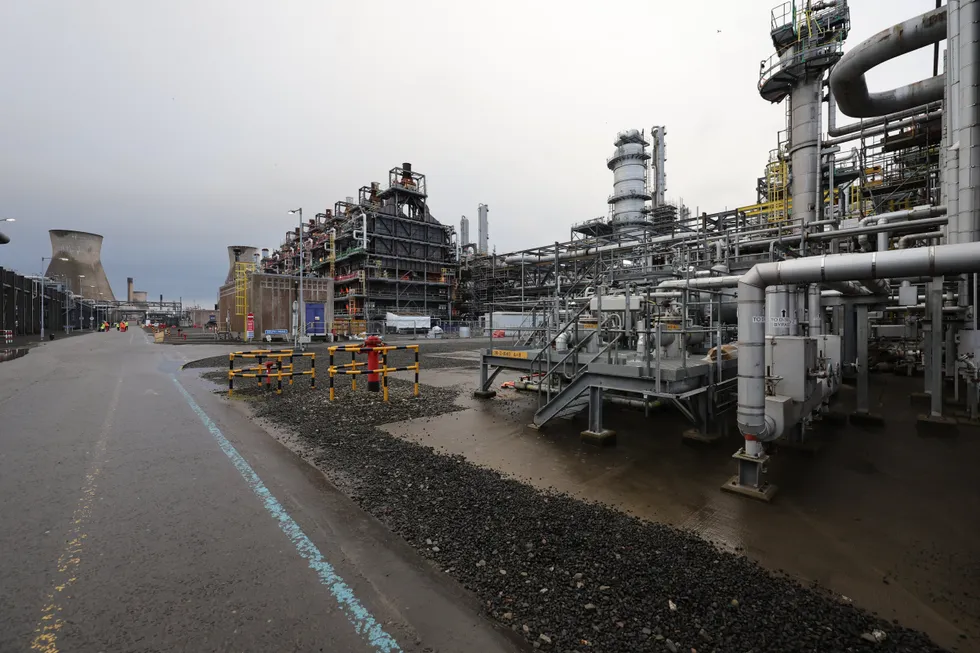
The UK chemicals industry is in ‘the fight of its life’, the trade body has warned
|
PA
Mr Elliott warned the UK risked importing carbon emission-heavy goods while seeing investment disappear overseas.
This would undermine rather than help our path to net zero, he believes.
Shadow Energy Secretary Claire Coutinho warned: “We are losing the ability to make things in this country.”
Mr Elliott’s letter was sent to No10 earlier this month, just as the war in Iran was beginning.
Also included were Chancellor Rachel Reeves, Business Secretary Peter Kyle and Energy Secretary Ed Miliband. In it, he calls for the Government to:
- Make changes to carbon levies to bring down the industrial energy price;
- Re-establish North Sea investment to reduce energy security risk;
- Make trade part of growth and challenge the “Chinese overcapacity” of markets
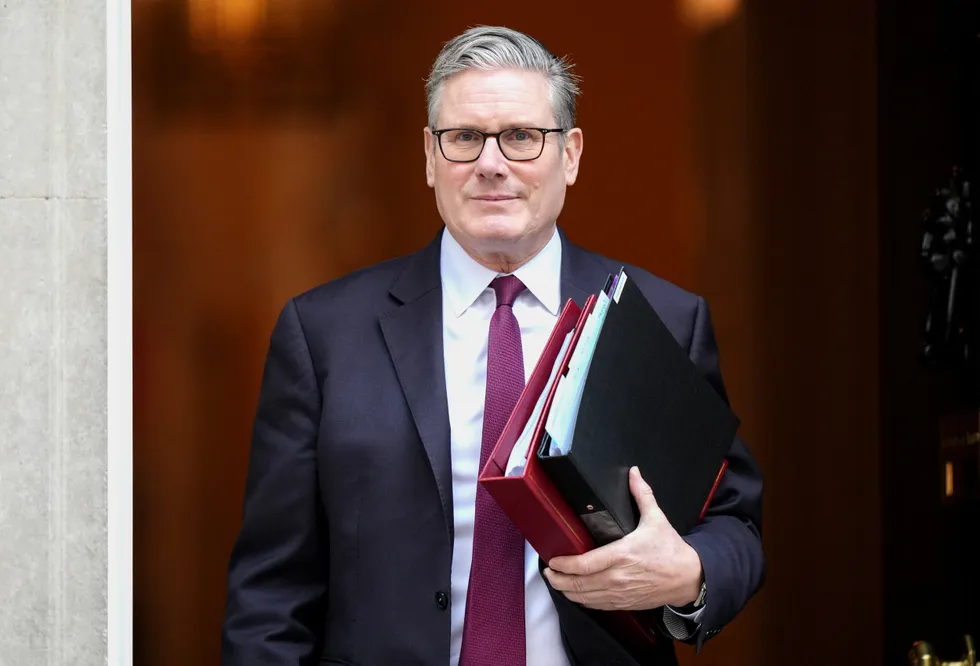
A letter was sent to No10 earlier this month, demanding 3 key points from the Government
|
PA
Ministers have yet to respond to the letter, Mr Elliott said, adding that the situation is getting worse each day the conflict continues.
A reply from the Government has been promised “shortly”.
In his letter, Mr Elliott paints a bleak picture of the chemical industry, warning it was “in the fight of its life here in the UK” and battling against “an extended period of depressed global demand, and, I regret to say, hostile Government policy”.
He said the time for “tea and sympathy” was past and warned: “If Government is serious about its commitment to the chemical industry as a key foundational sector then words need to be converted into meaningful action, and quickly”.
Mr Elliott points out that the chemical sector is vital in supporting the nation’s critical infrastructure, from clean water to healthy food and effective medicines.
Its expertise is also “central to the delivery of a clean energy / net zero future”.
But it was facing huge challenges, from high energy and carbon reduction costs to “regulatory burden”.
He said he had raised the alarm a year ago, when an industry report revealed there had been a 40 per cent fall in output between 2021 and 2024.
“Regrettably, Government didn’t take up the request or opportunity to engage with us over this report,” he said, pointing out that, one year on, output had fallen by 60 per cent.
“As it this were not distressing enough to the men and women who have lost their jobs . . . I also have to report that the corresponding percentage fall in CO2 emissions between 2021 and 2024, and then 2025, corresponds exactly to that output fall.
“Chemical sector emissions have decreased 60 per cent between 2021 and 2025. Unfortunately, only a mere four per cent of this emission reduction was as a result of decarbonisation, with the remaining 56 per cent due to site closures, reflecting the equivalent 60 per cent drop in UK chemicals sector production.”
He adds: “As bleak as this picture is, there is still a little time to arrest the speed of this decline and return the industry to what will be a slow and sustained recovery.
“But we must act NOW.”
A key priority was to “restore energy security and lower bills”.
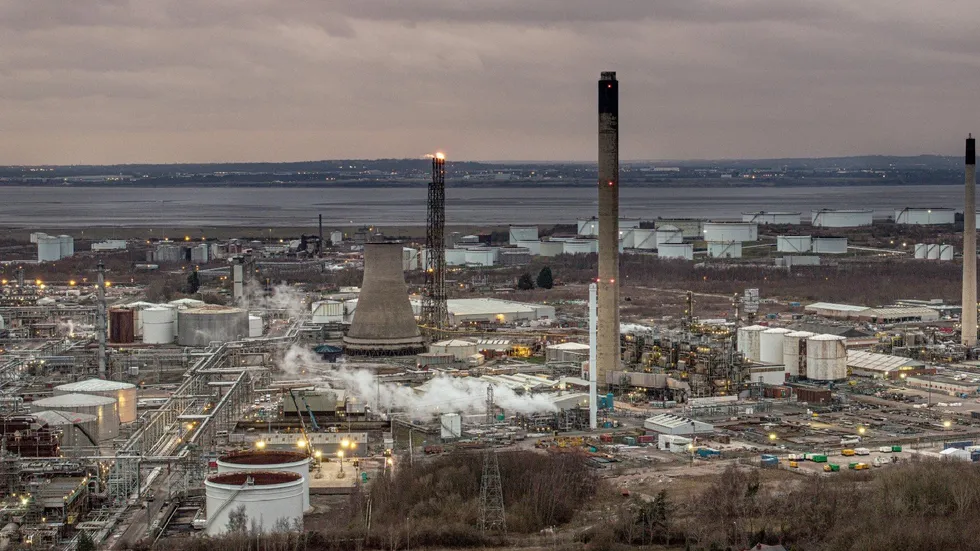
The chemical sector is vital in supporting the nation’s critical infrastructure, from clean water to healthy food and effective medicines
|
GETTY
He called for the UK’s Carbon Price Support mechanism, a tax levied on electricity generators that was originally introduced to discourage coal, to be lifted for the sector. He also asked for a pause in the Climate Change Levy, a tax on non-domestic energy use.
Mr Elliott suggested changes to the UK’s emissions trading scheme, which caps emissions, as part of a “wider policy package that supports rather than penalises decarbonisation”.
He said: “Without this urgent policy shift, we will continue to see site closures, jobs and investment offshored and the import of carbon emission heavy goods – all undermining the UK’s net zero commitment, resilience and growth.”
Further, he said, ministers should re-establish investment in the North Sea.
This should begin with scrapping the windfall tax, or Energy Profits Levy, which currently takes total tax payable up to 78 per cent.
Ms Reeves has been in discussion with business leaders on this issue.
She is understood to be considering reductions to the levy or scrapping it and replacing it with a lower duty. But Mr Elliott said there was a need for “the re-incentivisation of North Sea exploration”.
“This is not about abandoning climate commitments but reducing energy security risk and maintaining the bridge to a cleaner, cheaper energy future,” he wrote.
He added that UK chemical firms were at a disadvantage because of Chinese overcapacity, or production above market demand.
This has led to “Chinese material continuing to flood UK and European markets”.

‘Chinese material is continuing to flood UK and European markets,’ Steve Elliott wrote
|
GETTY
While increased duties levied by the EU and the US have stemmed this, the UK “has been slow to react”.
Mr Elliott said bringing in this raft of measures would “not only make the UK chemical industry much more competitive in a wider European context but would give us a fighting chance on the global stage in terms of future trade and investment”.
Stopping the industrial decline would “send a powerful signal” to hard-pressed communities across the UK that the Government could deliver “real and tangible change and growth, rather than ‘tea and sympathy’,” he wrote.
Mr Elliott said that he had yet to receive a meaningful response to his letter.
“At the time of writing, there has been no ministerial reaction from Government,” he told GB News.
He added: “The industry is critically dependent on gas so the current events, which are exacerbating gas prices, are now an additional challenge on top of what is already ‘crisis mode’ for our industry.
“In just over 3 weeks, we have seen gas prices double, which were already 4 times higher than those faced by our competition in, for example, the USA.
“Whilst it’s true that eastern markets such as China, India and Japan have been more immediately and directly affected, due to their greater reliance on oil and gas through the Strait of Hormuz, the longer the war continues, the worse and more direct the impacts will be for the UK, in terms of energy and raw material costs as well as supply chain disruption.”
Shadow energy secretary Ms Coutinho said that the difficulties highlighted in the letter could be found in a whole range of vital industries.
She said: “This letter should be taken very seriously by Government. It’s not just chemicals – our refining, metals, glass and ceramics industries are in crisis and moving overseas thanks to sky-high energy prices and crippling carbon taxes.
“We are losing the ability to make things in this country.
“As the world gets more dangerous, we must do all we can to rebuild our energy resilience. That means supporting British industry, backing our own oil and gas production in the North Sea and stopping escalating carbon taxes.”
The Government said it would be replying to the letter soon. It is conducting a detailed analysis of supply chains and emerging risks.
A spokesman said: “We know this is a tough time for our chemicals industry, who are grappling with increased fossil fuel prices.
“The best way to tackle this is getting onto homegrown power which we control to bring down bills for good and we will respond to the Chemical Industries Association letter shortly.
“Ministers regularly meet with the industry and are working with them to understand the impact of the situation in the Middle East and explore potential solutions.”