
Missile exchanges hit Qatar and Saudi Arabia as South Pars attack rattles global energy markets, raises Gulf tensions
Members of a Red Crescent rescue team work at a building that was damaged by a strike, amid the U.S.-Israeli conflict with Iran, in Tehran, Iran, March 17, 2026. Majid Asgaripour/WANA (West Asia News Agency) via REUTERS
US President Donald Trump said Israel had “violently lashed out” at Iran’s major gas field, marking a sharp escalation in the US-Israeli war, but warned no further strikes would follow unless Tehran retaliates.
Wednesday’s attack on the vast South Pars gas field pushed oil prices higher and triggered Iranian threats to target energy infrastructure across the Gulf, as missiles were fired at Qatar and Saudi Arabia. The escalation underscores unprecedented disruption to global energy supplies, raising political stakes for Trump, who joined Israel in strikes on Iran nearly four weeks ago.
QatarEnergy reported “extensive damage” after Iranian missiles hit Ras Laffan Industrial City, which processes about one-fifth of global gas supply. Saudi Arabia said it intercepted and destroyed four ballistic missiles headed for Riyadh on Wednesday, along with a drone targeting a gas facility in the kingdom’s east.
Read: US war on Iran and its larger consequences
On Thursday, Iran again targeted Qatar’s gas facilities, while missiles were also launched towards the Saudi capital. QatarEnergy said “sizeable fires” broke out and extensive damage was caused at several liquefied natural gas (LNG) facilities in early morning strikes.
Trump said Washington had no prior knowledge of Israel’s attack and that Qatar was not involved.
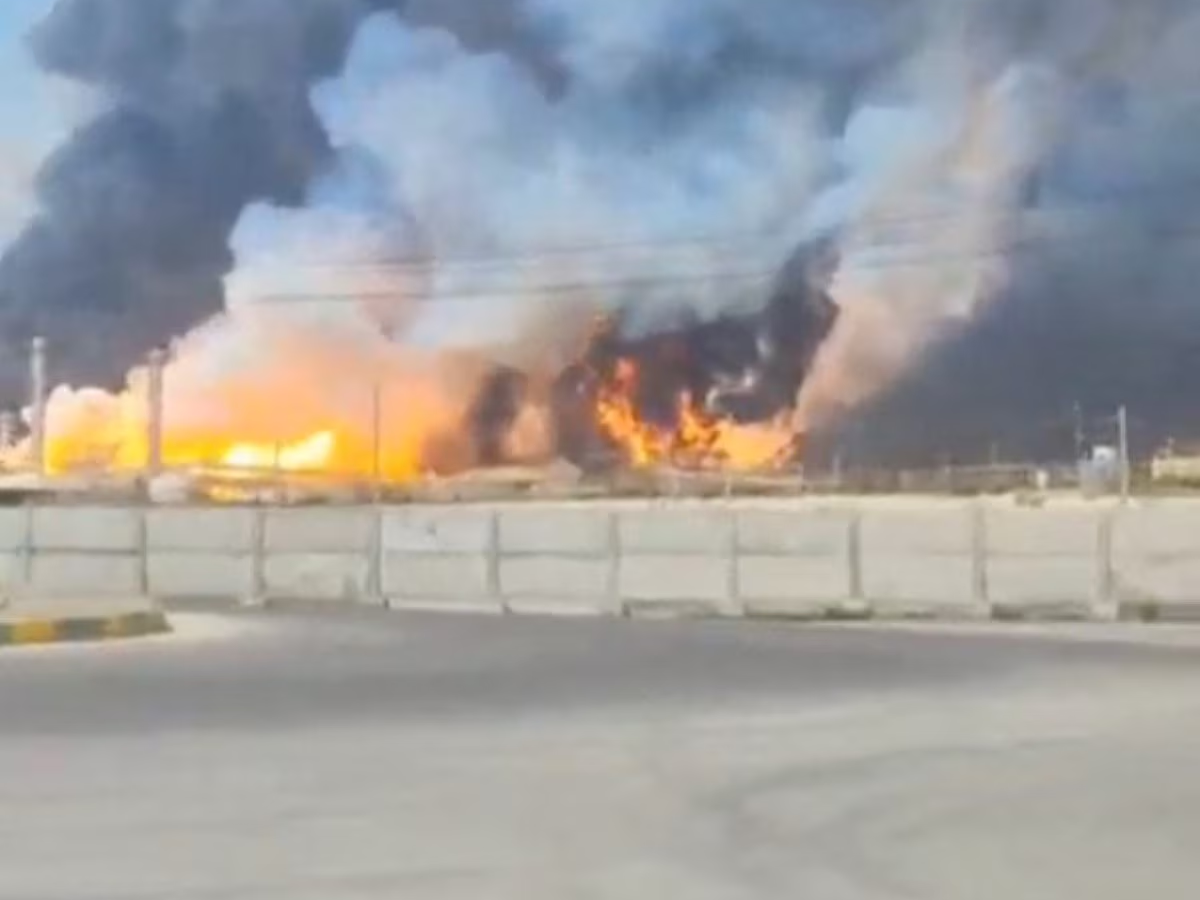
Smoke and fire rise near the South Pars gas field following an attack, amid the U.S.-Israeli conflict with Iran, in Bushehr Province, Iran, March 18, 2026, in this screengrab obtained from a social media video. Social Media/via REUTERS
“Israel, out of anger… has violently lashed out at a major facility known as South Pars Gas Field in Iran,” Trump wrote on X.
He said Iran had acted “unjustifiably” in striking Qatar, adding: “No more attacks will be made by Israel… unless Iran unwisely decides to attack… Qatar.” “In which instance the United States… will massively blow up the entirety of the South Pars Gas Field… at a strength and power that Iran has never seen,” he added.
Earlier, the Wall Street Journal reported Trump had approved Israel’s plan to strike the gas field. South Pars forms part of the world’s largest natural gas deposit, shared between Iran and Qatar, a key US ally hosting Washington’s largest regional military base.
Since the conflict began, Tehran has targeted Israel as well as US diplomatic and military sites across the Gulf, warning neighbours against facilitating attacks. With no signs of de-escalation, Trump is considering deploying thousands more US troops to the region, officials said. The troops could help secure oil tanker routes through the Strait of Hormuz, a chokepoint for around a fifth of global oil trade.
Trump says Israel attacked Iran gas field without US and Qatari involvement
President Trump said Israel carried out the attack on Iran’s South Pars gas field, adding that neither the United States nor Qatar was involved.
Trump said Israel would not launch further strikes on South Pars unless Iran retaliates against Qatar, warning that Washington would target the facilities if Tehran acted against Doha.
“The United States knew nothing about this particular attack, and the country of Qatar was in no way, shape, or form involved with it,” Trump wrote on Truth Social.
Israel has not publicly claimed responsibility for the strike. However, the Wall Street Journal and Axios reported that Trump was aware of Israel’s plan to target the Iranian section of the world’s largest natural gas field and supported it. Iran earlier said Israel struck its South Pars facilities on Wednesday, in a major escalation in the US-Israeli war that sent oil prices surging.
Tehran retaliated by threatening attacks on oil and gas targets across the Gulf, firing missiles at Saudi Arabia and striking Qatar’s Ras Laffan Industrial City, a key energy hub. Doha condemned Israel’s strike as “dangerous and irresponsible” and criticised Iran for a “flagrant breach” of international law, expelling two senior Iranian diplomats.
Trump said Iran had “unjustifiably and unfairly” attacked part of Qatar’s LNG facilities, adding: “No more attacks will be made by Israel… unless Iran unwisely decides to attack… Qatar.”
“In which instance the United States… will massively blow up the entirety of the South Pars gas field,” he added.
The US and Israel launched the war on Iran on February 28. The conflict has killed thousands in Iran, including senior leadership figures. Tehran has responded with attacks on Israel and Gulf states hosting US military bases. The war has rattled global markets and disrupted oil supplies, fuelling a surge in prices.
Islamic ministers condemn Iran strikes
Foreign ministers from 12 Muslim-majority countries, meeting in Riyadh, condemned Iran’s attacks on Gulf states and called for an immediate halt. In a joint statement, they said targeting residential areas and civilian infrastructure — including oil facilities, airports and desalination plants — “cannot be justified under any circumstances”. “This pressure from Iran will backfire politically and morally, and we reserve the right to take military action if deemed necessary,” Saudi Foreign Minister Prince Faisal bin Farhan said.
Read More: Israel says killed Iran intel chief, tells military to hunt down officials
Air defence interceptors were seen launched near the Riyadh venue during the meeting. The UAE shut its Habshan gas facility after intercepting missiles in what it described as a “terrorist attack” by Iran. More than 3,000 people have been killed in Iran since the conflict began on February 28, according to US-based group HRANA.
Lebanese authorities say 900 people have been killed there, with 800,000 displaced. Iranian strikes have also caused casualties in Iraq and across Gulf states, while at least 13 US service members have been killed in the war.