
The Labour Government is being urged to “protect” the state pension triple lock until at least 2029, amid growing concerns over the Department for Work and Pensions’ (DWP) future.
A fierce debate has erupted over the future of Britain’s Triple Lock pension guarantee, with pensioner advocates and a leading think tank taking opposing positions on the policy’s fate.
The Civil Service Pensioner Alliance (CPSA) has launched a petition demanding the protection be maintained past 2029, warning that abandoning it would push retirees into hardship.
Meanwhile, the Centre for Social Justice is calling for the mechanism to be abolished entirely, arguing the savings should instead support white working-class boys, whom it identifies as among society’s most disadvantaged groups.
The future of the state pension is in doubt
|
GETTY
The CSJ’s proposal, outlined as part of its Lost Boys report, frames the move as essential intergenerational rebalancing and calls for further support for younger Britons
Under the triple lock-uprate mechanism, state pension payment rates are guaranteed to increase based on whichever is highest among inflation, average earnings growth, or 2.5 per cent annually.
According to the CSPA, this mechanism represents the primary income source for most retired people, and without it, pensioner incomes would have fallen behind during the cost-of-living crisis.
The union points to significant erosion before the policy’s 2011 introduction, when the state pension’s value plummeted from 26 per cent of average earnings in 1980 to just 16 per cent by 2010.
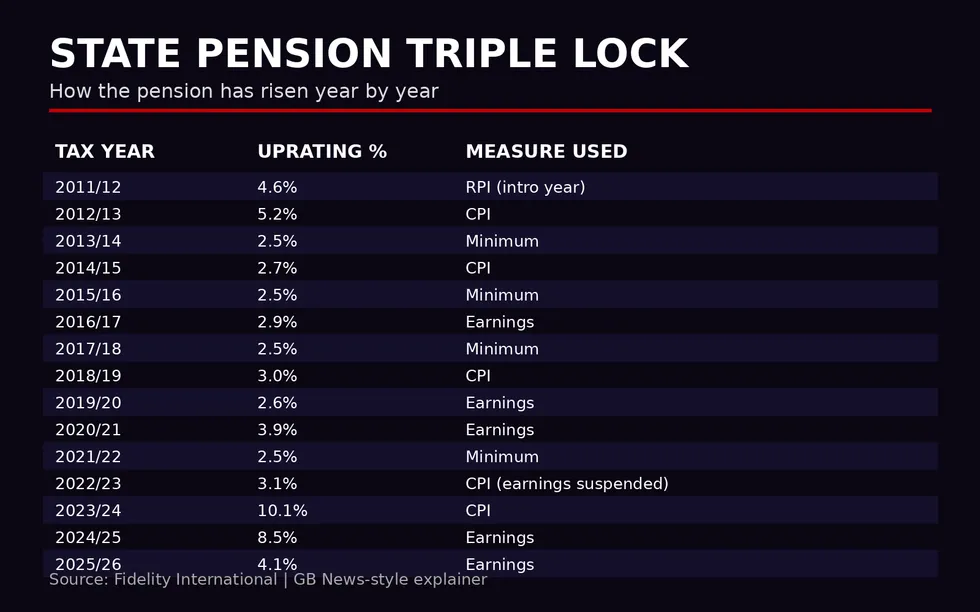 How much has the state pension risen by thanks to the triple lock? | GB NEWS / FIDELITY INTERNATIONAL
 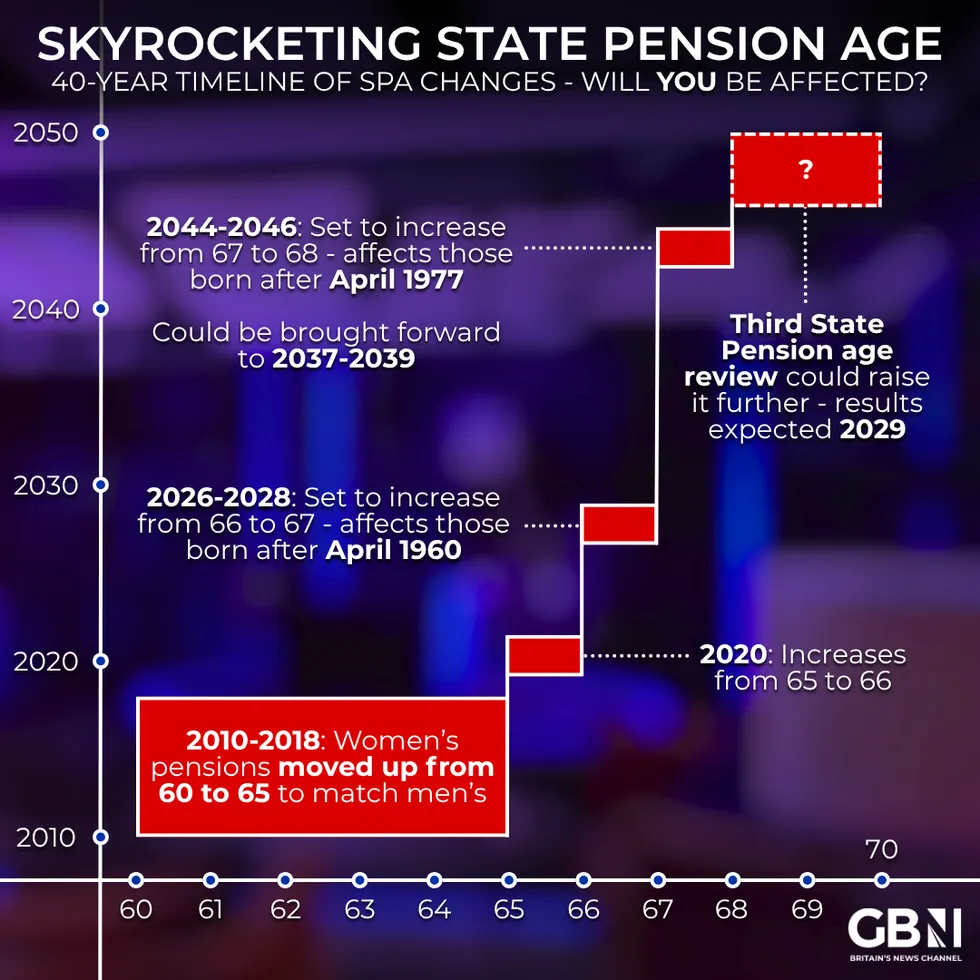 Are you affected by state pension age changes? | GETTY
Since implementation, this trend has reversed, with pension value climbing to nearly 25 per cent of earnings by 2022, while pensioner poverty rates dropped from 15-20 per cent in the late 1990s to 10-12 per cent by the mid-2010s.
As part of its campaign, the Civil Service Pensioner Alliance proposed the following: “The protection of the triple lock extends beyond 2029, ensuring pensions rise in line with living costs and wages. To defer further state pension age rises until inequalities in life expectancy narrow and a new settlement is agreed.”
The Centre for Social Justice contends that pensioners have been the primary beneficiaries of government spending decisions for more than a decade, while funding for workers, children, and young families has comparatively diminished.
Miriam Cates, Senior Fellow at the CSJ, stated: “This out-of-step growth has separated the fortunes of the old and young, morphed the UK into a gerontocracy, and contributed to the further atomisation of society.”
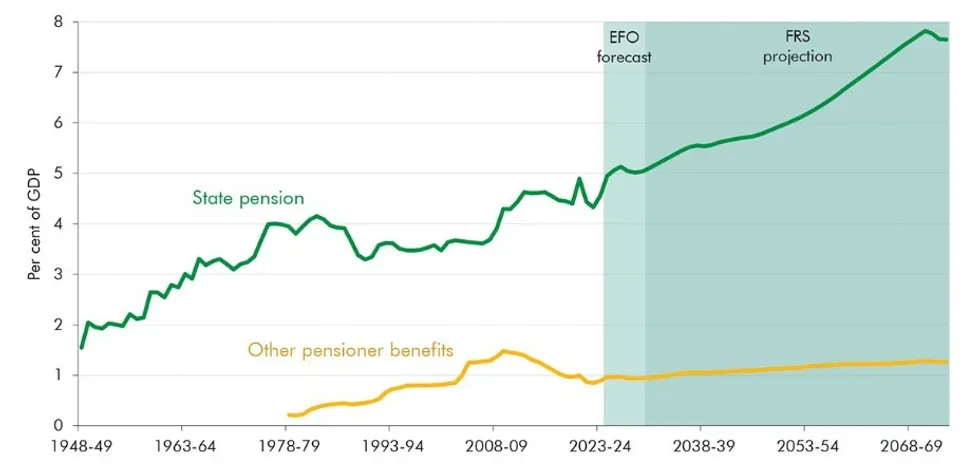 How much will the state pension triple lock cost the British taxpayer? | OBR
 By linking future pension rises to the consumer price index and accelerating planned retirement age changes, the think tank calculates savings reaching £8.4 billion by the final year of this parliament.
Ms Cates described the proposed abolition as “a necessary social realignment to give both economic and political re-enfranchisement and support to children and young families, on whom our nation ultimately depends”.
In its Lost Boys report, the CSJ highlights that boys consistently underperform girls academically, face double the unemployment risk, and are more than three times as likely to take their own lives, with white working-class boys suffering most acutely.
Based on its recommendations, scrapping the triple lock would free up spending for the Government to enfranchise this group more.