

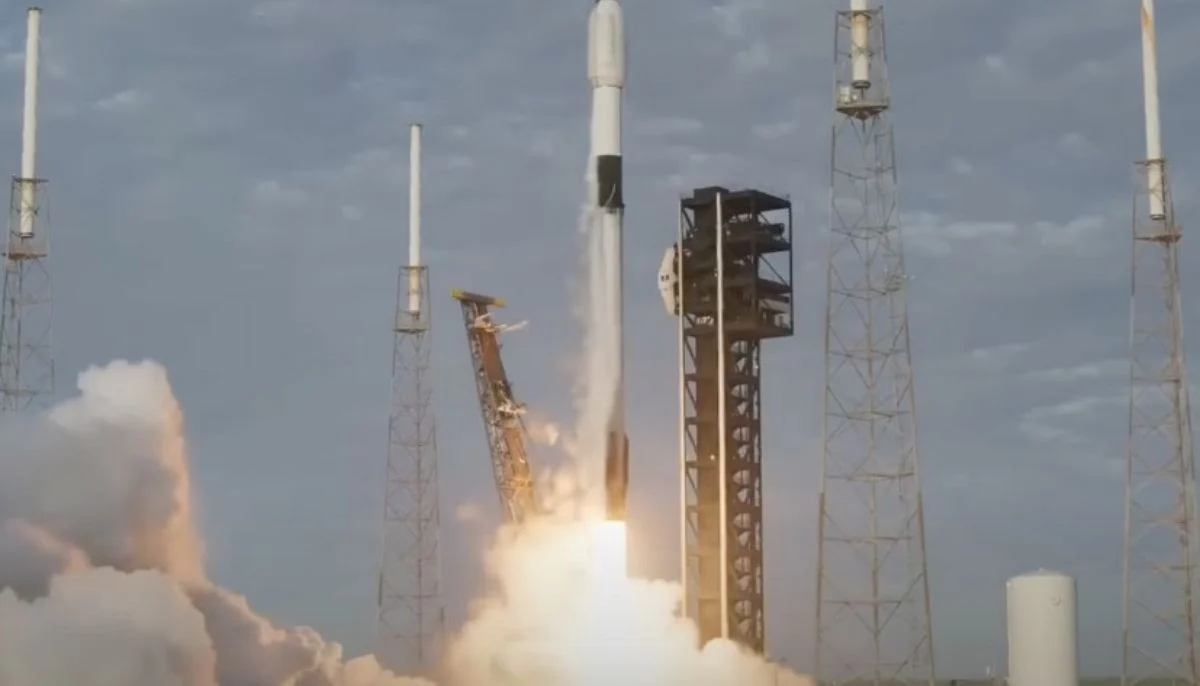
SpaceX achieved a major milestone on Saturday night after launching a batch of 28 Starlink satellites into low-Earth orbit from Cape Canaveral. The Falcon 9 rocket had a successful launch from Space Launch Complex 40 (SLC) at 10:46 p.m.
This marks the 33rd flight for the first stage booster supporting this mission, which previously launched CRS-22, Crew-3, Turksat 5B, Crew-4, CRS-25, Eutelsat HOTBIRD 13G, SES 03B, PSN SATRIA Telkomsat Merah Putih 2, Galileo L13, and 20 Starlink missions.
The first stage landed on the A Shortfall of Gravitas droneship, which was stationed in the Atlantic Ocean following subsequent phases.
Meanwhile, no sonic booms were heard in Brevard County, as the booster landed out on the droneship A Shortfall of Gravitas in the Atlantic Ocean. It remains to be seen just how many flights a single Falcon 9 booster will achieve.
The next Falcon 9 rocket launch from Florida is scheduled for no earlier than 3:56 p.m. on February 24 at Space Launch Complex 40 at Cape Canaveral Space Force Station. The mission will carry the next batch of SpaceX Starlink internet satellites, designated Starlink 6-110. The successful landing of the first-stage booster for the 33rd time has essentially ushered in a new era of space economics.