
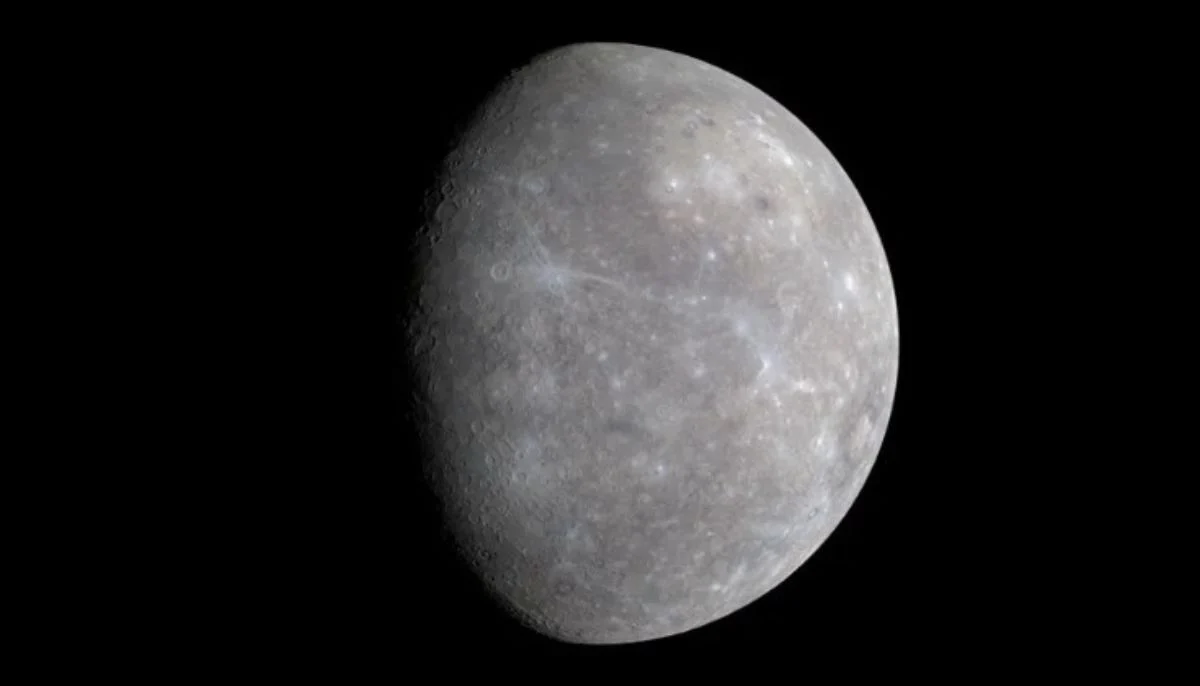
For years, the planet Mercury has been a mystery for its existence. The smallest and closest planet to the Sun has long baffled astronomers because it defies much of what we know about planet formation.
A latest scientific study has revealed that a new space mission, arriving in 2026, might solve the cosmic mystery.
At a superficial glance, Mercury might be the solar system’s dullest planet, and the surface reveals that the likelihood of life being found amidst its scorched craters is non-existent, as there is no evidence of water in its past and the planet’s delicate atmosphere is fragile at best.
Planetary scientists remain puzzled by the very existence of the closest planet to our Sun.
Mercury is the second densest planet in the Solar System after Earth due to a large, metallic core that accounts for the majority of its mass.
Scientists revealed that, particularly, Mercury is tiny and 20 times less massive than Earth.
“There’s some key subtlety that we’re missing,” says Sean Raymond, an expert in planetary formation and dynamics at the University of Bordeaux in France.
The mystery about where Mercury came from, how it formed, and why it looks like it does today, is one of the grandest mysteries in the Solar System.
Reflecting upon the other facts, scientists are also concerned about its closeness to the Sun.
A joint European and Japanese mission called BepiColombo launched in 2018, is currently on its way to Mercury and the probe will be the first visitor to the planet in more than a decade—its key goal is to try and find out exactly “where Mercury came from.”
The scientists informed that after a thruster problem delayed its journey in 2018, the resumed mission will enter Mercury’s orbit in November 2026.
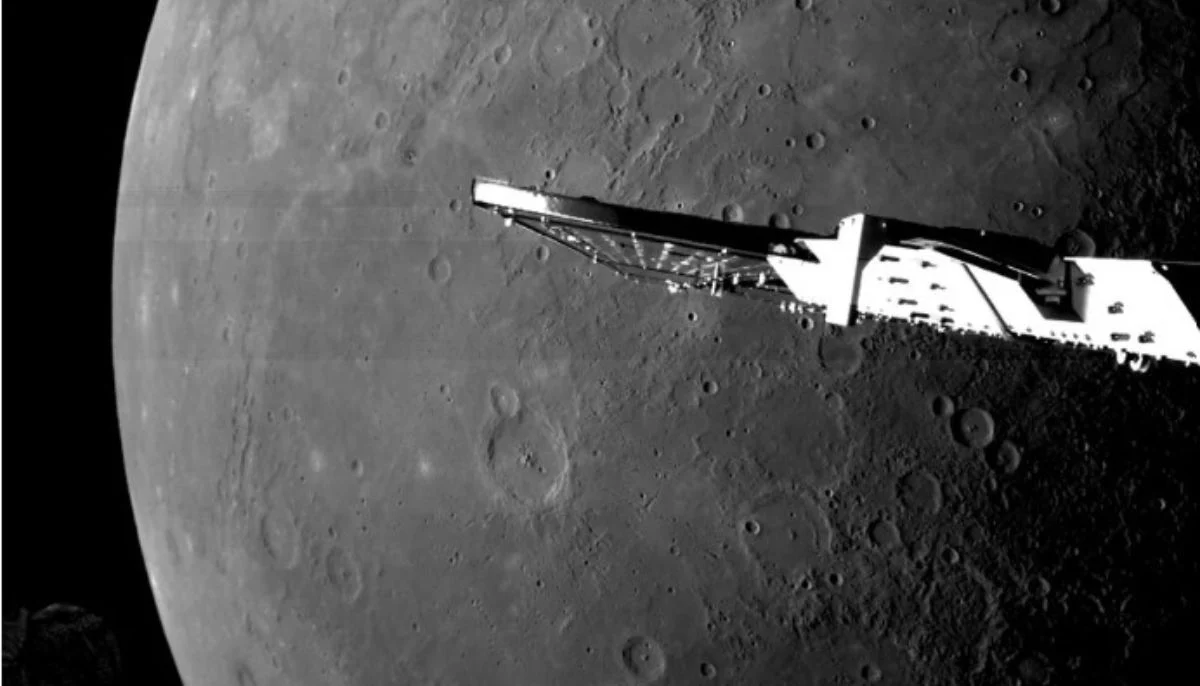
Scientists explain that working out how mercury is formed is not just important for understanding more about the origins of our solar system but also for studying planets around stars and exoplanets.
“Mercury is probably the closest planet that we have to an exoplanet,” and due to its unusual formation, “It’s a fascinating world,” says Saverio Cambioni, a planetary scientist at the Massachusetts Institute of Technology in the US.
Furthermore, the astronomers first realized something was wrong with Mercury after NASA’s Mariner 10 spacecraft flew past the planet three times in 1974 and 1975, which were humanity’s first visits to the solar system’s innermost world.
Those flybys provided initial gravity measurements of the planet, providing a glimpse inside Mercury for the first time and revealing its bizarre innards.
Scientists reveal that Mercury is completely different than other planets in the Solar System and its core makes up about 85% of its radius with only a thin rocky mantle and crust on top.
Another mission to Mercury by NASA’s Messenger, which orbited the world between 2011 and 2015 raised more concerns about its existence.
Orbiting just 36 million miles (60 million km) from the Sun, temperatures during the day on Mercury can reach highs of up to 430C (800F) while at night they can plunge as low as -180C (-290F).
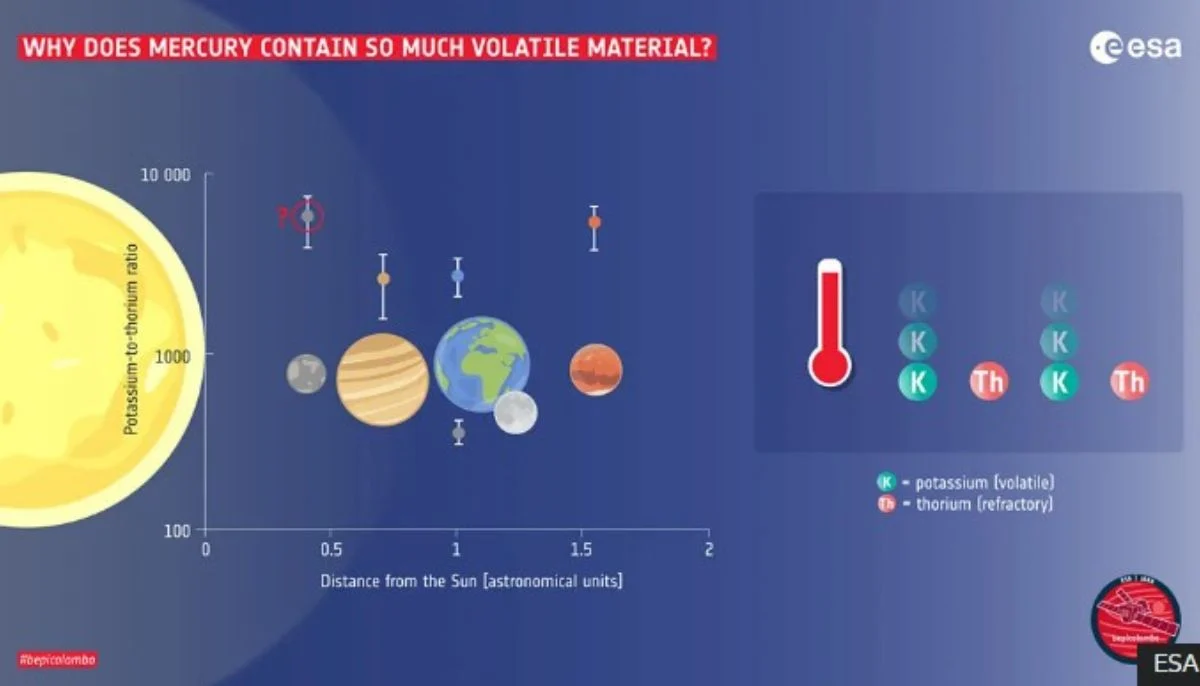
Discoveries like this have added to the idea that Mercury does not truly belong in its current home around the Sun, reports BBC.
Astronomers have long puzzled over Mercury’s position in the Solar System, in a region where they don’t think a planet like Mercury could easily form.
“The formation of Mercury is a major problem,” says Nicola Tosi, a planetary scientist at the German Aerospace Centre in Berlin.
“It’s still unclear why Mercury looks like it does.” He added.