

Savers are being reminded of their tax liabilities as millions of Britons risk receiving a “surprise letter” from HM Revenue and Customs (HMRC) in the future.
The number of savers facing tax bills on their interest earnings has surged dramatically, with HMRC data revealing 2.79 million individuals will be liable in 2025/26.
This figure represents more than double the 1.27 million who paid savings tax just three years earlier in 2022/23, according to information obtained through a Freedom of Information request.
The sharp increase comes as competitive savings rates combine with a frozen personal savings allowance to push more people above the tax-free threshold.
Savers could get a ‘surprise letter from HMRC’ and a tax bill
|
GETTY
Depending on their income band, affected savers now face having their interest taxed at rates of 20 per cent, 40 per cent or 45 per cent.
Basic rate taxpayers have been hit particularly hard, with their numbers climbing 132 per cent from 613,000 in 2022/23 to 1.42 million in the current tax year.
These savers face average bills of £641 on their interest earnings, according to new research from Paragon Bank.
Those in the higher rate band have also seen substantial growth, rising from 387,000 to 883,000 over the same period. Their average tax payment stands at £2,030.
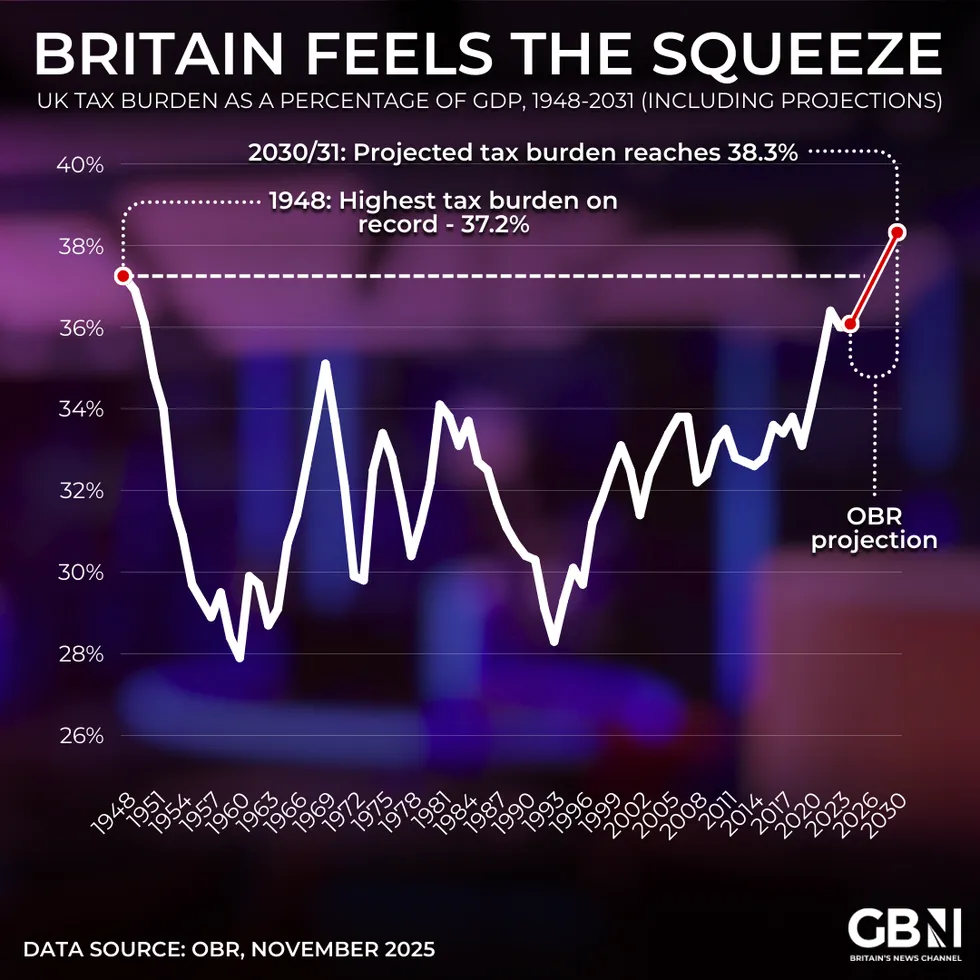 £26billion in tax raids has seen the UK’s tax burden projected to rise to a post-war record 38 per cent of GDP by 2030, according to the OBR | GB NEWS/OBR
 HMRC chair explained the extra £15.8billion collected showed “a clear example of an effective approach that represents a good return on investment” | GETTY
Additional rate taxpayers, who receive no personal savings allowance whatsoever, number 479,000 this year compared to 271,000 three years ago. They face the steepest average bills at £6,990.
A separate FoI request reveals that individuals aged 65 and over will pay £2.5 billion in savings tax during 2025/26, marking a 215 per cent rise compared to 2022/23.
Andrew Wright, Paragon Bank’s head of Savings, said: “More people than ever are being drawn into paying tax on their savings, and a letter from HMRC risks catching many by surprise. With the number of taxpayers on savings interest rising so sharply, it’s never been more important for savers to consider using Cash ISAs.
“The 132 per centrise in basic rate taxpayers paying tax on savings interest is likely being driven by retirees, people with modest incomes but meaningful savings balances.”
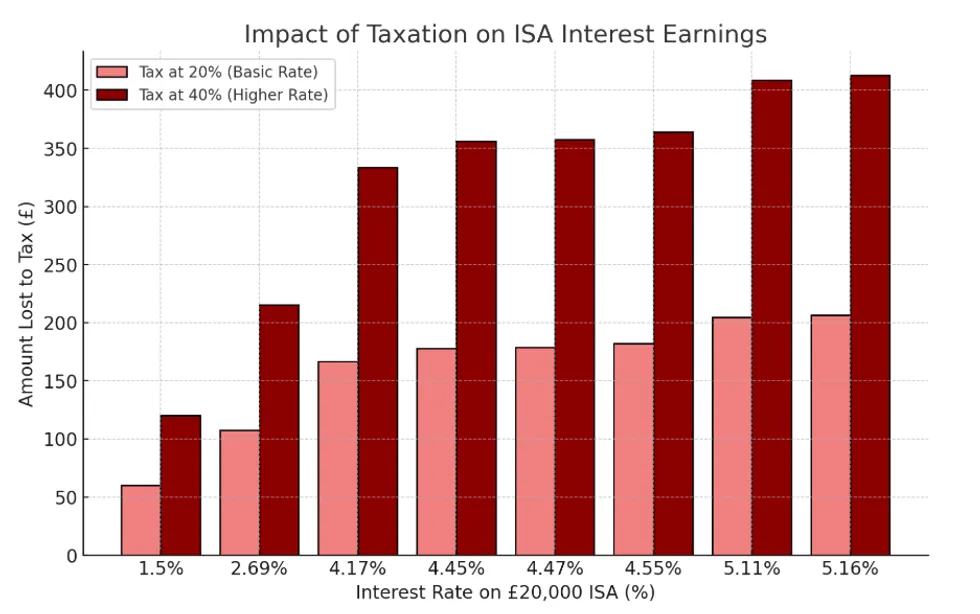 How much you could lose if Isa earnings were subject to income tax, broken down via interest rate and tax bracket | GBN
He added: “Many pensioners depend on savings interest to support their income, but frozen income tax thresholds and unchanged personal savings allowances are pulling more people into a part of the tax system originally designed for wealthier individuals.”
Mr Wright urged savers to consider cash ISAs as a means of protecting their returns from taxation. Interest earned within an ISA wrapper remains entirely free from income tax, regardless of rate movements or changes to allowance thresholds.
The savings expert added: “The tax-free status of ISAs means savers keep every pound of interest they earn, providing certainty and protection at a time when allowances are frozen, and interest rates remain competitive.”
He warned that pressure on savers would intensify further, with tax on savings income set to increase from April 2027. This comes as households continue grappling with inflation’s lingering effects.





 in t)