Peeling herself off the cold concrete cell floor – sweating out stale alcohol and feeling the bile rise in her stomach – Emily Redondo started to piece together the chain of events that had led to this moment.
On the surface, Redondo, 36, looked like any other suburban Texas mom, complete with a minivan full of toys, a busy schedule of dance classes for her girls – Shelby, 13, Becca, four, and Stella, two – and a beautiful newborn son Spenser.
But unlike most of the other moms on the school run, she was hiding a shameful secret that she was going to increasingly elaborate lengths to hide.
Pretending to be sober was a full-time job – finding excuses to go to the store, sneaking money from the house, hiding boxes of booze in the diaper bag, chugging mini bottles of wine in grocery store toilets, before discreetly disposing of the empties.
And, less than two weeks out of her latest stint in rehab – she eventually completed 20 stays in recovery units – she was already careening into her next catastrophic relapse.
Her new book, Wife, Mother, Drunk, recounts in painful detail her battle with an addiction that had plagued generations of her family, and that took her – and those she loved – to the brink of death.
‘I could get sober,’ she told the Daily Mail. ‘That was not my issue. I got sober dozens of times. But I could not stay sober.’
The afternoon she ended up behind bars had begun innocently enough, with a shopping trip on the way to pick up Becca from school. She was hankering after a cute throw pillow or maybe a wooden plaque for the kitchen wall.
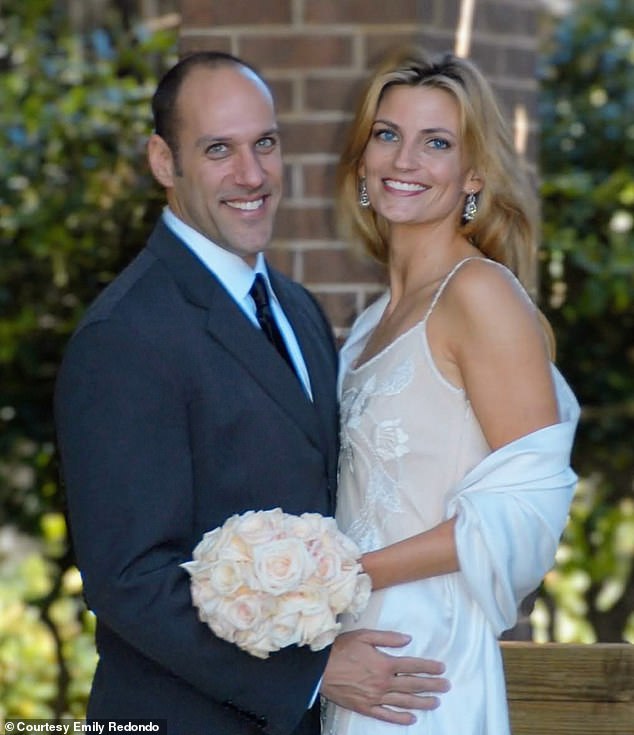
Redondo and her husband, Pete, on their wedding day in December 2004
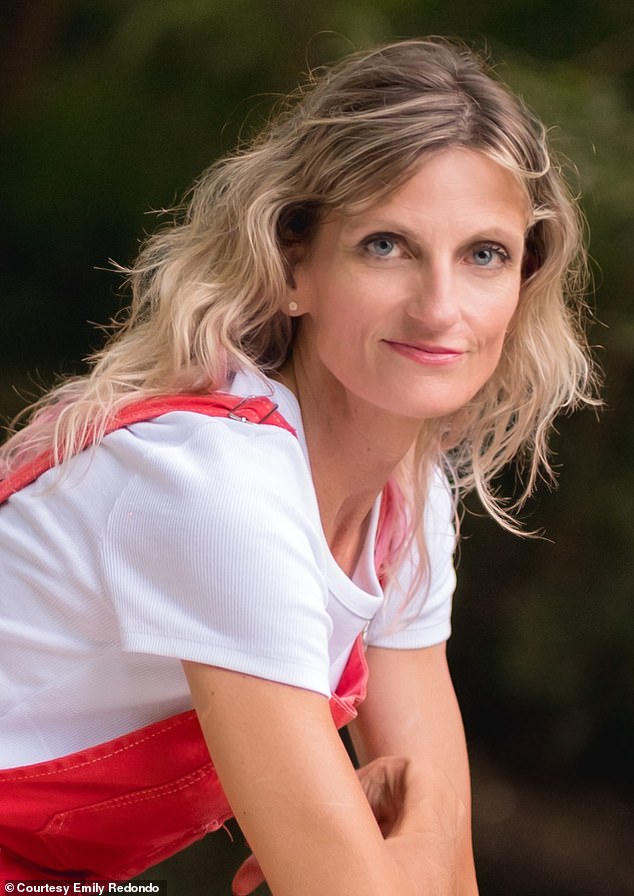
Addiction had plagued generations of Redondo’s family, and took her – and those she loved – to the brink of death
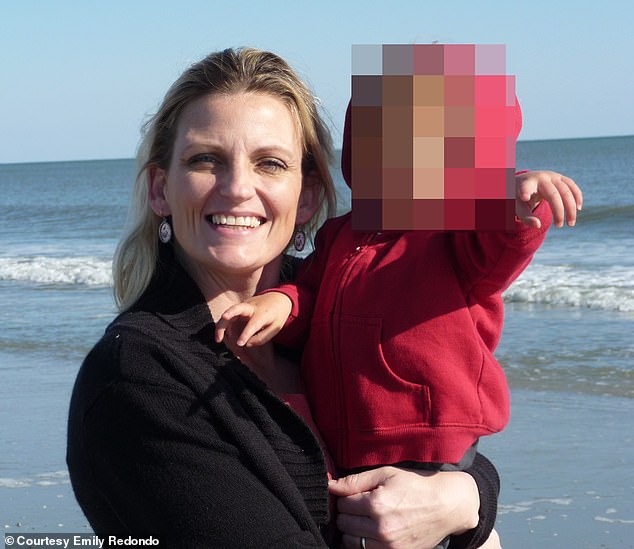
On the surface, Redondo looked like any other suburban Texas mom with a newborn
But, passing a grocery store, she was drawn in like a magnet, with its promise of cheap, warm wine to take the edge off a crippling depression that refused to lift.
Almost like an out-of-body experience, she described how one version of herself waited in the car while the other ran inside and bought two big, juice-box wines – the ones like milk cartons that hold a full bottle each.
Back in the car she drove off, drinking the first one fast. The rest was a blur.
‘I remembered pulling the car over and telling Becca, ‘I need to rest my eyes for a second.’
The next thing she knew, the police were knocking on the window and Becca was wailing from the back seat.
‘I tried to talk,’ she wrote in the book, ‘tried to hold my eyes open and force myself sober, all while standing handcuffed on the side of a road with drivers slowing down to watch.’
Ten hours into her incarceration – her furious husband Pete wasn’t coming to get her anytime soon – her shame plunged even deeper.
With her breasts aching for her breastfed baby back home, she was left with no choice but to unbutton her blouse in front of her cellmates and hand-express the milk that should have nourished her newborn into a filthy sink.
As far as rock bottoms go, this was one of the worst.
‘I just thought, I’m never going to get over this… it’s never going to get better,’ she said. ‘It was such a horror.
‘I didn’t want to die, because that felt too selfish. But I wanted to have never been there in the first place. I wished the kids had somebody else. I wished it wasn’t me.’
For all her determination to quit, however, she was soon reaching for the wine bottle again.
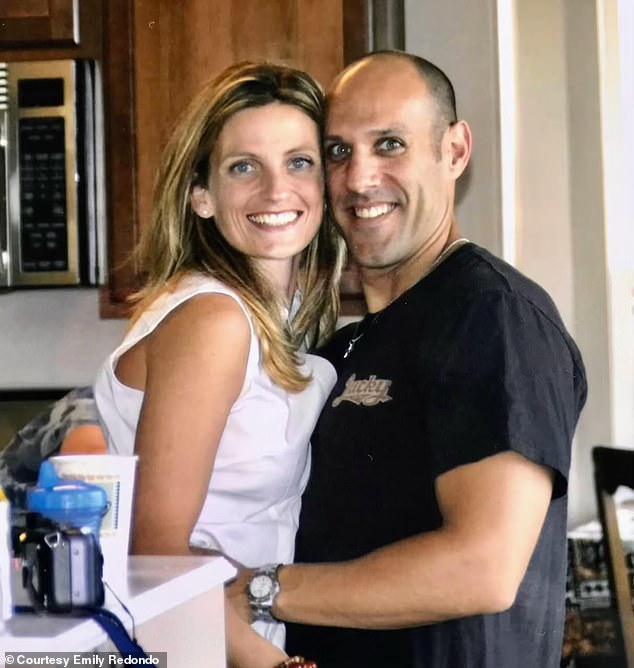
Pete supported Redondo through her stays in rehab facilities – and her subsequent relapses
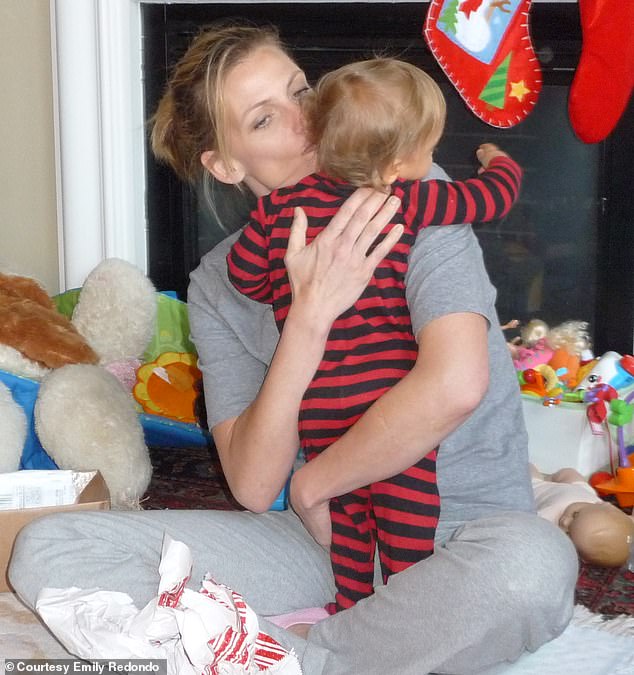
At one point, Redondo had resorted to hiding bottles of booze in baby Spenser’s diaper bag

Redondo missed most of Spenser’s baby milestones and rejected hugs from her girls because she was afraid they’d smell the wine on her breath
She missed most of baby Spenser’s big milestones – his first smile, his first teeth – because she was in rehab. She rejected hugs from her little girls because she was afraid they’d smell the wine on her breath.
She’d even drunk her way through pregnancy.
‘Never had I heard a story of an alcoholic woman unable to stop drinking when she was pregnant,’ she wrote. ‘Even in the thousands of meetings I’d sat in, mothers mentioned how they didn’t drink or use for nine months in their addictions.
‘It kept me silent, knowing I was the worst.’
In fact, a recent survey found that nearly 14 percent of women in the US had admitted to drinking while pregnant. About five percent acknowledged binge drinking.
But knowing she wasn’t alone probably wouldn’t have made any difference to her growing sense of isolation. Because, as her secret became public knowledge, the women with whom she had once shared play dates and car pools turned their backs on her.
‘Mothers shunning one of their own is a passive form of cruel aggression,’ she said. ‘We’re supposed to believe women are caring and kindhearted, when the truth is our aggression is ruthless.’
The whispered rumors – just close enough so she could hear – were torture.
‘Wine has a fine line where, on one side, it’s “Let’s have girl’s night and drink a couple of bottles of wine with friends because momming is hard,”‘ she said. ‘But cross the line, and it’s banishment and isolation.’
Her eventual moment of clarity came when she realized that, if she didn’t get a handle her addiction, someone was almost certain to die.
‘Death was a presence with me, non-stop,’ she said. ‘I didn’t know if it was coming for me, or if it was coming for somebody who crossed my path. I just thought, I gotta find a way, I gotta figure this out, I gotta find out what’s wrong with me. Like, why can’t I forgive myself?’
She acknowledged for the first time the impact both her parents’ alcoholism had on her growing up, learning that children of alcoholics are four times more likely to become addicts themselves.
‘I saw strings of addiction that began when I was a child, sneaking food to comfort me,’ she wrote. ‘Later, an adolescent overweight, stuffing myself to fill a need that went unanswered, then a teenager and young adult with eating disorders and self-abuse like cutting that required medical intervention.
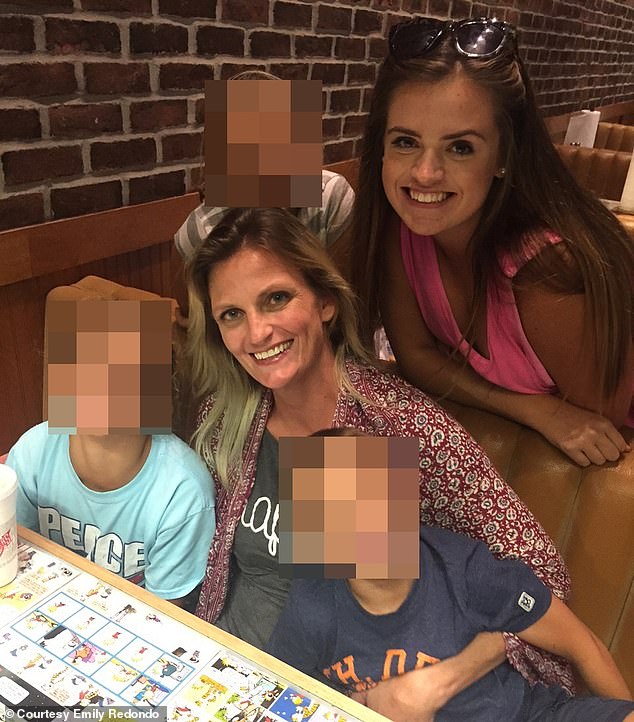
Redondo’s four children are now aged 27, 20, 17 and 15
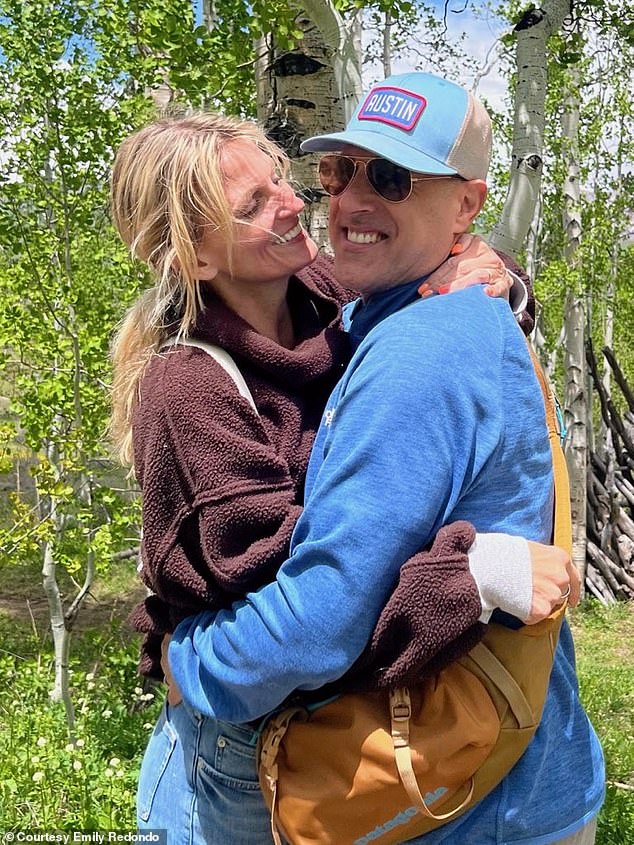
Now aged 51 and more than nine years sober, she, Pete and the kids are otherwise healthy and happy
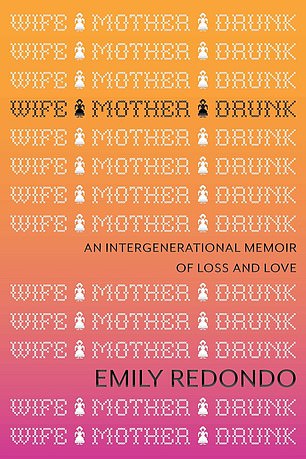
Her new book, Wife, Mother, Drunk , recounts in painful detail her battle with an addiction that had plagued generations of her family
‘It kept going – co-dependency, distorted eating relapses, self-harm, abusive relationships, but alcohol was the beast that took me down and ruled them all, my last stop, the one that really tried to kill me.’
Now aged 51 and more than nine years sober, she has some ongoing neurological issues caused by her alcohol abuse. But she, Pete and the kids – now aged 27, 20, 17 and 15 – are otherwise healthy and happy.
‘What’s important, what’s a priority for me, is to have a small life where I’m available,’ she said. ‘If my kids need me, I’m there.
‘Life is so good,’ she added. ‘and I don’t take anything for granted.’
The book, she insisted, is not intended to blame anyone else for her own mistakes but to simply say the quiet part out loud in the hope that others might feel empowered to do the same.
‘The things we hide make us who we are,’ she wrote. ‘It’s the reason the bigger story matters – not to expose family secrets or make villains and heroes of one another, but to get a sense of what’s really going on, what we inherit, and most important of all, what we pass down to our children.
‘The more we bury, the more difficult it is to grow.’
Wife Mother Drunk: An Intergenerational Memoir of Loss and Love by Emily Redondo is published by Rise Books