Epping council loses appeal for hotel to stop housing asylum seekers
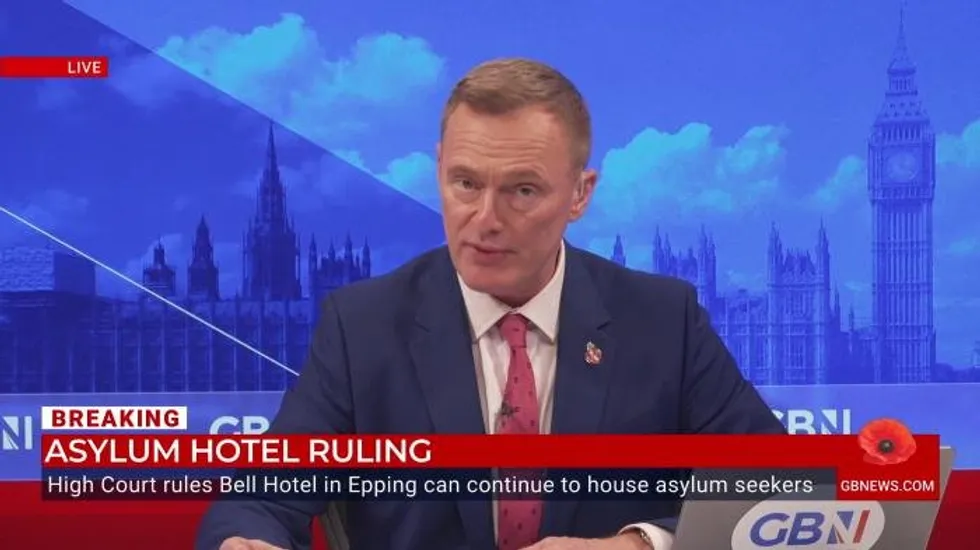
A hotel in Epping, Essex will continue to house asylum seekers after the council lost a Court of Appeal bid to challenge the High Court ruling, dismissing its attempt to stop the hotel’s use.
The council tried to appeal against the November decision not to grant an injunction blocking the hotel’s owner, Somani Hotels, from accommodating asylum seekers at the Bell Hotel.
The site played host to frequent, almost weekly protests last summer, as Epping residents gathered in huge numbers to voice concerns against the use of the hotel.
However, In a judgment this morning, two Court of Appeal judges said the appeal could not go ahead.
Lady Justice Andrews and Lord Justice Holgate said the High Court judge did not “duck the issue” related to planning law and that council’s appeal was “unarguable”.
“There is no arguable basis for criticising the judge’s reasons for refusing to exercise his discretion to grant a declaration, whether as a matter of general approach or in the circumstances of this case”, they declared.
“The need to provide accommodation for persons present in this country, whether as asylum seekers or otherwise, is plainly capable of being a relevant planning consideration”.
Somani Hotels and the Home Office had opposed the appeal bid, with lawyers for the department telling a hearing in March the council was doing an “unjustified dis-service to the judge’s comprehensive analysis of the law”.
Philip Coppel KC, for Epping Council, argued at the hearing that hotels had been used to house asylum seekers “without any planning consideration” and that “it is a matter of public and planning concern that, of course, goes wider than just the Bell Hotel episode”.
The site was used to house asylum seekers from May 2020 to March 2021, and accommodated single adult males from October 2022 to April 2024 – with the council taking no enforcement action.
It was then used for a third time, and became the focal point of several protests and counter-protests last summer after an asylum seeker housed there was charged with sexually assaulting a teenage girl in July.
The council successfully sought a temporary injunction blocking the use of the site last August, claiming the use of the site was a breach of planning rules.
After the Conservative-led authority had spent £566,000 fighting the case, the decisionwas then overturned by the Court of Appeal, which found the decision to be “seriously flawed in principle”.
Mr Justice Mould then dismissed the council’s bid for a permanent injunction, finding the breach of planning rules was “far from being flagrant” and that it was “not a case in which it is just and convenient for this court to grant an injunction”.