Britain’s markets make £150billion loss after worst week for Ftse since Donald Trump’s Liberation Day tariffs
Britain’s leading companies have shed more than £150billion in value in a week of heavy market losses as escalating conflict in the Middle East triggered a global investor sell-off.
The Ftse 100 fell 1.24 per cent on Friday to close at 10,284.75, leaving the blue chip index down 5.7 per cent across the week.
The decline represents the most severe weekly fall since market turbulence linked to Donald Trump’s “Liberation Day” tariffs unsettled global trade during the first week of April 2025, when the index dropped around seven per cent.
Investors have moved rapidly to reduce exposure to equities as hostilities in the Gulf region intensify, with markets reacting to the prospect of a prolonged disruption to global energy supplies.
Commodity markets have experienced significant volatility during the same period as energy traders respond to the geopolitical risks.
Crude oil prices rose above $90 per barrel for the first time since April 2024 before approaching $95, marking a weekly increase of almost 30 per cent.
The surge in energy costs has also pushed Government borrowing costs higher as investors reassess inflation risks linked to rising fuel prices.
Ten year gilt yields increased to 4.73 per cent from 4.23 per cent just seven days earlier, reflecting a sharp move in the cost of Government debt.
British bonds experienced larger losses than those of other European countries, with analysts pointing to concerns about the UK’s fiscal position and exposure to energy price shocks.
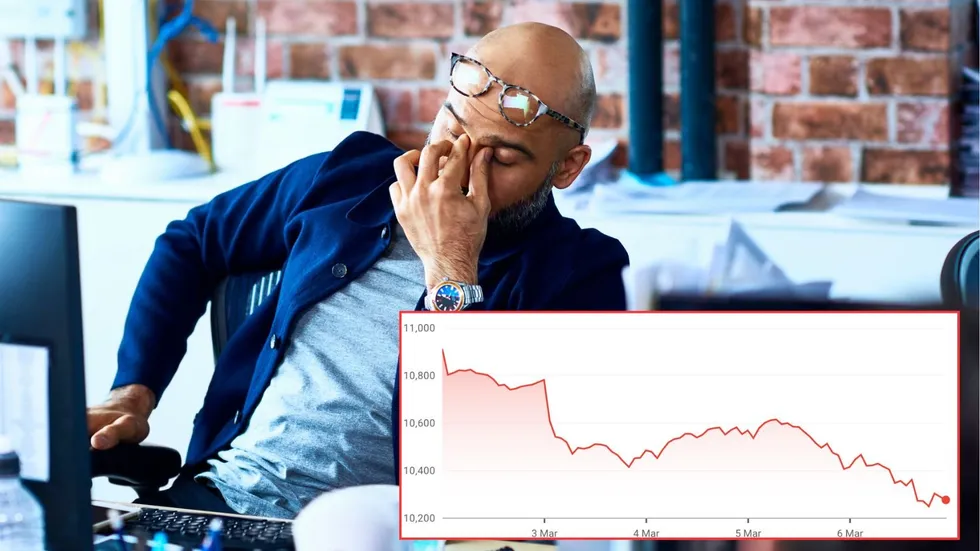
The markets were rattled following the US-Israeli strikes last weekend
|
GETTY/Google finance
Airline shares were among the worst performers during the sell off as the conflict disrupted travel routes across the Middle East.
Shares in International Airlines Group, the parent company of British Airways, fell 18.6 per cent after airlines cancelled flights and adjusted schedules across the region.
Market expectations for interest rate cuts have also shifted during the week as investors reassess the economic outlook.
Financial markets are now pricing the probability of any interest rate reduction this year at below 50 per cent, reflecting concerns that higher energy costs could prolong inflation.
Barry O’Dwyer, chief executive of Royal London, said the developing crisis could have significant economic consequences for Britain.
Stocks last spiked when Donald Trump introduced global tariffs
|
GETTY
Mr O’Dwyer said the escalation in the Middle East could push the UK economy into recession if energy prices remain elevated.
The warning was echoed by Saad al-Kaabi, who said the conflict could have severe implications for global markets.
Mr al-Kaabi said: “The war risks driving oil prices to $150 per barrel and could bring down the economies of the world.”
Analysts have warned that the UK economy may be particularly exposed to rising energy costs due to its fiscal position and sensitivity to inflationary pressures.
Lindsay James, an investment strategist at Quilter, said a complete shutdown of Gulf oil and gas production would remain an extreme scenario but recent developments had increased concerns.
Ms James said: “The concerns he raises are understandable given recent attacks on Qatari facilities have already suspended production there.”
Investor sentiment was further weakened by economic data from the United States showing a sharp deterioration in employment conditions.
Figures indicated that 92,000 jobs were lost last month, pushing the unemployment rate to 4.4 per cent.
Chris Beauchamp, chief market analyst at IG Group, said the employment figures had intensified market concerns during an already volatile week.
Mr Beauchamp said: “Quite possibly the worst situation that could have been imagined in a week when a new Middle East war lit a fire under oil prices.”
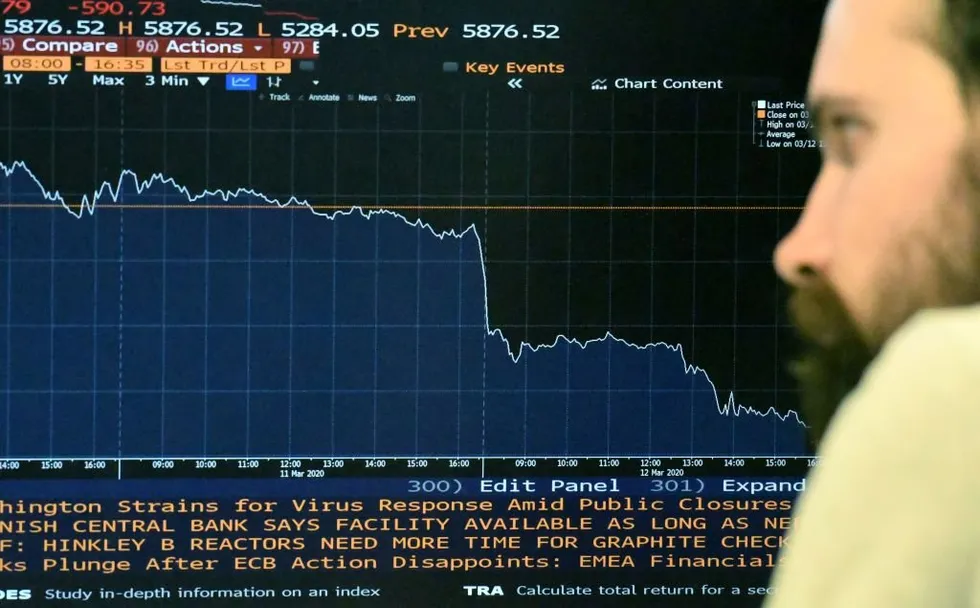
Stocks around the world have been hit by the conflict
|
GETTY
He added: “It is hard to imagine a worse time for energy prices to start surging.”
Selling pressure spread across European markets during the session as investors continued to reduce risk exposure.
Germany’s main stock index declined 1.13 per cent while CAC 40 in Paris fell 0.65 per cent.
US markets also opened lower as global markets reacted to the combined impact of geopolitical tensions, rising energy prices and weaker economic data.
Mr Beauchamp said the retreat from equities that began earlier in the week had accelerated significantly in the final trading sessions.