Rachel Reeves’s stealth tax raid on working people will push burden to fresh record high
Chancellor Rachel Reeves’s quiet squeeze on workers is set to push Britain’s tax burden to its highest level in the post-war era, with the overall take rising faster than previously forecast.
The Office for Budget Responsibility (OBR) now expects annual tax revenues to reach £1.4billion by the early 2030s, up from £1.2billion today.
That would lift the overall tax take to 38.5 per cent of gross domestic product, exceeding the 38.3 per cent projected at the time of Rachel Reeves’s November Budget.
It would also overtake the previous post-war record of 37.2 per cent in 1948–49, when Britain was beginning to reduce debts accumulated during the Second World War.
Almost half of the projected increase is expected to come from income tax, largely driven by the freeze on personal thresholds which is due to remain in place until 2030–31.
As wages rise, millions of workers are forecast to be pulled into paying income tax for the first time or pushed into higher bands, even if their real incomes decline in real terms.
The OBR estimates that the threshold freeze will raise £67billion a year by the end of the decade.
By that point, 44.6 million people are expected to be paying income tax, which is 6.1 million more than if thresholds had increased in line with inflation and 1.1 million more than the OBR forecast in November.
Frozen thresholds will push millions more into paying income tax by 2030
|
GETTY
The figures include around one million additional pensioners, as the full new state pension is forecast to rise above the £12,570 tax threshold.
Although the Chancellor has said pension-only households will not pay income tax, the OBR said it has not been informed how this policy would be implemented in practice.
Higher-rate liabilities are also projected to increase significantly over the period.
An additional 4.8 million people are forecast to pay the 40 per cent rate, while 600,000 more are expected to fall into the 45 per cent band, taking the total number paying the top rate to 1.6 million.
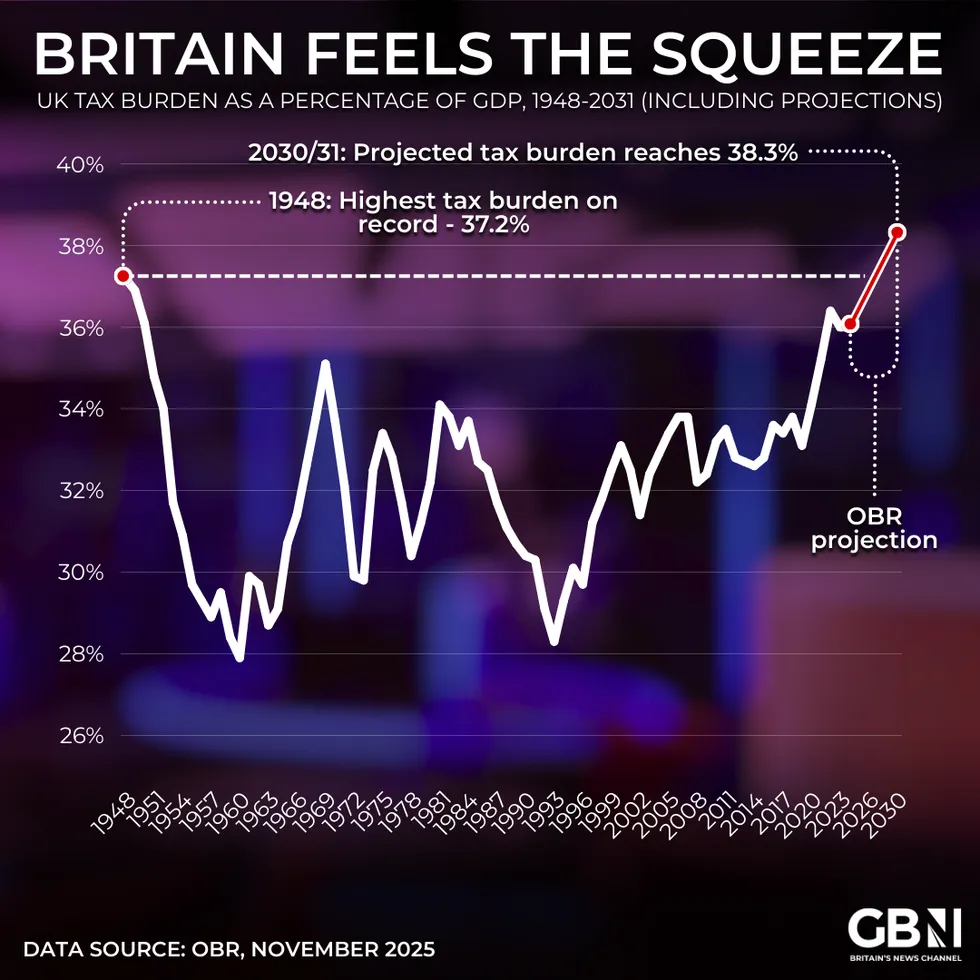
Fiscal drag will hit millions of workers
|
GB NEWS/OBRBy 2030–31, Ms Reeves is forecast to collect £677billion annually from income tax and National Insurance contributions, compared with £535billion today.
The higher tax take comes despite unemployment being forecast to rise to 5.3 per cent this year, which would match the peak recorded during the Covid crisis and leave 1.9 million people out of work.
The OBR said the rising tax burden could weigh on economic growth, cutting its gross domestic product forecast for this year from 1.4 per cent to 1.1 per cent.
It also identified escalating conflict in Iran as a significant risk to both the global and UK economies, warning that higher oil and gas prices could trigger a renewed energy shock for households and businesses.