HMRC to make Britons file updates 10 times a year in latest tax overhaul as ‘admin burden builds’
A major overhaul of the UK tax system will come into force on April 6, requiring more than 860,000 self-employed individuals and property landlords to submit regular financial reports to HM Revenue and Customs (HMRC).
The Government’s Making Tax Digital programme will initially apply to those earning more than £50,000 from self-employment or rental income.
Under the new rules, affected taxpayers must maintain digital records and provide quarterly updates to HMRC using approved software.
Ministers have said the initiative is designed to modernise the tax system and improve accuracy in reporting.
The income threshold will reduce in stages over the following years, bringing significantly more people within scope.
From April 2027, individuals earning above £30,000 will be included.
The threshold will fall further to £20,000 from 2028.
Sole traders will be required to submit a minimum of five filings each year under the scheme, consisting of four quarterly updates detailing income and expenditure alongside a final end-of-year declaration.
Those who are both self-employed and landlords may face more than 10 submissions annually before any VAT reporting requirements are taken into account.

More than 860,000 self-employed and landlords face quarterly HMRC reporting from April 6
|
GETTYThe first quarterly reporting deadline will fall on August 7, 2026, followed by further updates in November, February and May.
Free software options are expected to be available to help generate summaries for submission to HMRC.
The new penalty regime will operate on a points-based system rather than imposing immediate fines for late submissions.
Taxpayers will receive penalty points for missed deadlines, with a £200 fine issued only after four points have been accumulated.
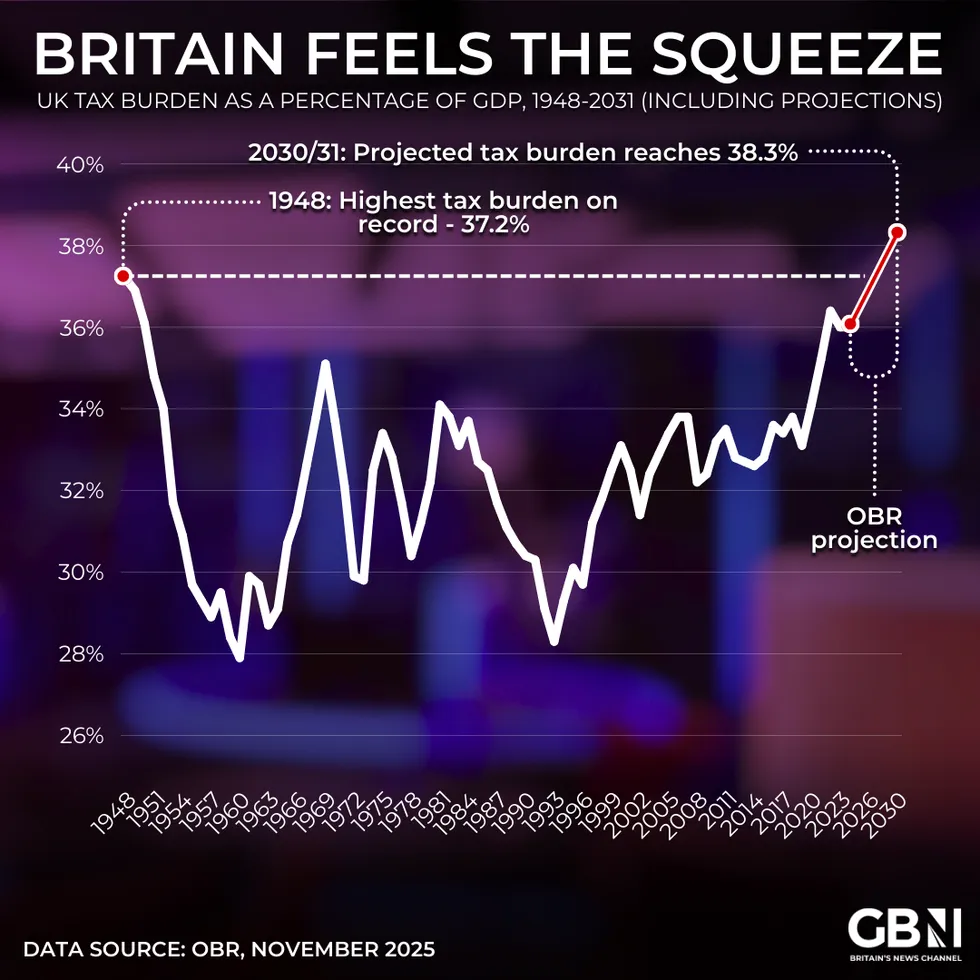 £26billion in tax raids has seen the UK’s tax burden projected to rise to a post-war record 38 per cent of GDP by 2030, according to the OBR | GB NEWS/OBR
Business groups have raised concerns about the additional compliance burden for small enterprises and sole traders.
Taryn Lee Johnston, owner of business publishing firm The FCM Group, said: “Quarterly reporting under Making Tax Digital was sold as a way to modernise the system. The concern is not just frequency, but cost, time and mental bandwidth.
“Many small business owners do not have in-house finance teams.”
Ms Johnston added: “They will either need to pay accountants more or spend more hours on compliance rather than growing their businesses.
“At a time when the UK says it wants to encourage entrepreneurship and economic growth, increasing administrative burden sends a conflicting message.”
Gwion Thomas, founder of accounting app LITT, urged those affected to begin preparations well ahead of the April 2026 start date.
Some industry figures have suggested that digital tools may provide longer-term benefits once businesses adjust to the new framework.
Research by Sage indicates that nearly a quarter of UK business owners currently spend more than six hours completing their annual tax returns.

Businesses fear being buried in administrative work
|
GETTY
Lisa Ewens, senior vice president for small business at Sage, said: “When costs are rising, working more should not be the only answer.”
She said: “Digital tax tools can help spread the workload across the year, reduce last-minute stress and give business owners back valuable time, while also giving them a clearer picture of what they owe throughout the year, so they can plan and budget with more confidence.”
Ms Ewens added: “With Making Tax Digital approaching in April, there is a real opportunity for sole traders to make taxes simpler and far more manageable.”