State pension age to rise next month but thousands of workers already left ‘not able to retire early’
The state pension age will rise from next year, but thousands of workers are “not able to retire as early” as planned due to changes in the retirement age, MPs have been warned.
From next month, the state pension age will begin its increase from 66 to 67, with the transition taking place between April 2026 and April 2028.
The Work and Pensions Committee has been consulting policy experts, including unions representing impacted workers, about the implications of this significant change.
A central concern raised during parliamentary discussions is the predicament facing those in physically demanding occupations who may become unable to perform their duties yet must wait years before receiving their pension.

State pension concerns grow as Britons left ‘unable to retire early’
|
GETTY
MPs questioned witnesses about whether the Government should provide enhanced workplace assistance in sectors where it has the most direct influence, including health, social care, and education.
UNISON’s assistant general secretary Jon Richards drew attention to inconsistencies in how different emergency service workers are treated regarding retirement.
He told the committee: “If you compare ambulance workers to fire and police workers, they have different retirement ages. It’s very difficult for ambulance workers, even though they are manually handling all the time, all the day, more so than police and fire workers, yet they are not able to retire as early.”
Under the current Police Pension Scheme (2015), the normal retirement age is 60, which officers can usually retire from age 55, but with a reduced sum of cash. Similarly, firefighers are able
The union official emphasised that ambulance staff perform manual handling throughout their shifts, often exceeding the physical demands placed on their counterparts in the police and fire services.
 Unison members striking | PA
 Are you affected by state pension age changes? | GETTY
According to Mr Richards, UNISON surveyed ambulance personnel to discover what would help retain them in their roles, with a reduced retirement age emerging as the top answer.
GMB Union research from 2024 revealed that three-quarters of ambulance workers who left the service in 2023 did so before turning 60.
Police and fire service employees, by comparison, typically have a retirement age of 60, with options for earlier pension access available.
NHS staff, including those working in ambulance services, have their retirement age linked to the state pension age, which is set to climb further to 68 between 2044 and 2046.
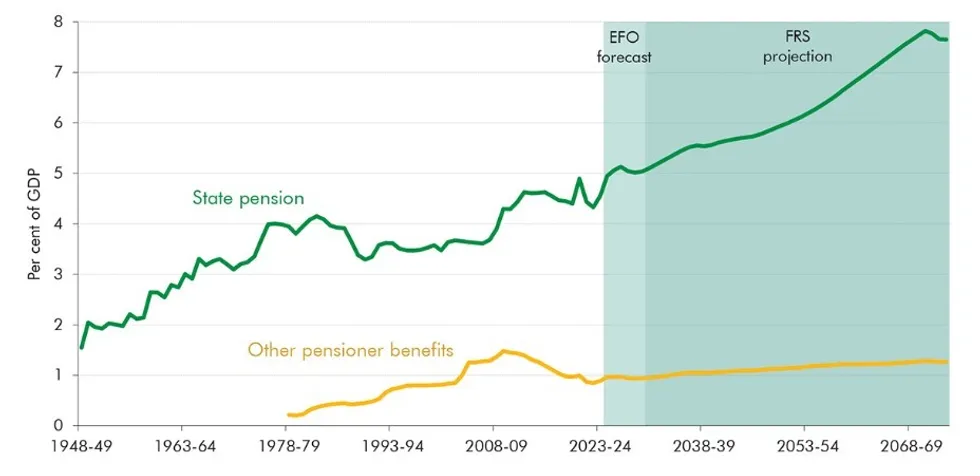 How much will the state pension triple lock cost the British taxpayer? | OBR
 He told the committee: “If you look at other sectors like education, the focus is always on teachers, professional workers, yet 50 percent of people in schools is support staff, cleaners, teaching assistants.”
The union representative referenced a Department for Education study on teachers’ mental health, noting that researchers assumed the results might apply to teaching assistants, despite these roles operating in fundamentally different ways.
He said: “You get this idea of public sector workers with their ‘gold-plated pensions’ and other things like that. I always say this, but the local Government pension scheme average pension is just over £5,000.”
The Government has commissioned a review into the state pension age to determine the impact of hikes on retirees and the wider economy.