Rachel Reeves branded ‘desperate’ and ‘delusional’ as UK economy languishes behind global peers
Rachel Reeves is facing a fresh backlash over the state of the UK economy, with critics accusing the Chancellor of being “delusional” in her response to the latest growth forecasts.
The row erupted after a major international institution delivered a sobering verdict on Britain’s economic outlook.
Ms Reeves has been labelled “delusional” and “desperate” by Conservative opponents after the International Monetary Fund (IMF) maintained its prediction that Britain’s economy will grow by just 1.3 per cent this year.
The latest IMF forecasts offered no improvement to the UK’s outlook, leaving Britain alongside Italy as the sole G7 nations denied an upgrade for 2026.
Despite this, the Chancellor opted to highlight a marginal revision to 2025 growth figures, which the IMF now estimates at 1.4 per cent rather than the previously forecast 1.3 per cent.
Ms Reeves declared: “After years of decline, this is the year the country turns a corner.”
She maintained Britain remained “on course to be the fastest growing European economy this year,” crediting government stability and investment policies.
However, her optimistic assessment drew fierce criticism from the opposition benches.
Shadow Chancellor Sir Mel Stride dismissed the Chancellor’s celebration as evidence of desperation rather than success.
He said: “A 0.1 per cent uptick is not a triumph – and the fact Rachel Reeves is celebrating it shows how desperate she has become.

Rachel Reeves explained the UK is “on course to be the fastest growing European economy this year”
“The economy is flatlining. After £66billion of tax rises, business confidence has collapsed to record lows, inflation and unemployment are up, and growth is flat.
“Gaslighting the country won’t fix the economy – only a serious plan to lower taxes and control welfare will.”
Conservative business spokesman Andrew Griffith echoed the criticism, pointing out that IMF projections show UK growth trailing behind the United States, Canada and numerous developing nations throughout 2026 and 2027.
He said said: “Rachel Reeves is delusional if she thinks there is anything to celebrate. The IMF confirm that on her watch, UK growth in 2026 and 2027 will be slower than the US, slower than Canada and even slower than most developing countries. Brits are getting poorer as a result.
“In fact, the only countries we beat are the snail-like EU countries which makes it all the odder that Labour want to tie us more closely to them.”
The Chancellor faces pressure not only from Conservative critics but also from economists traditionally aligned with Labour.
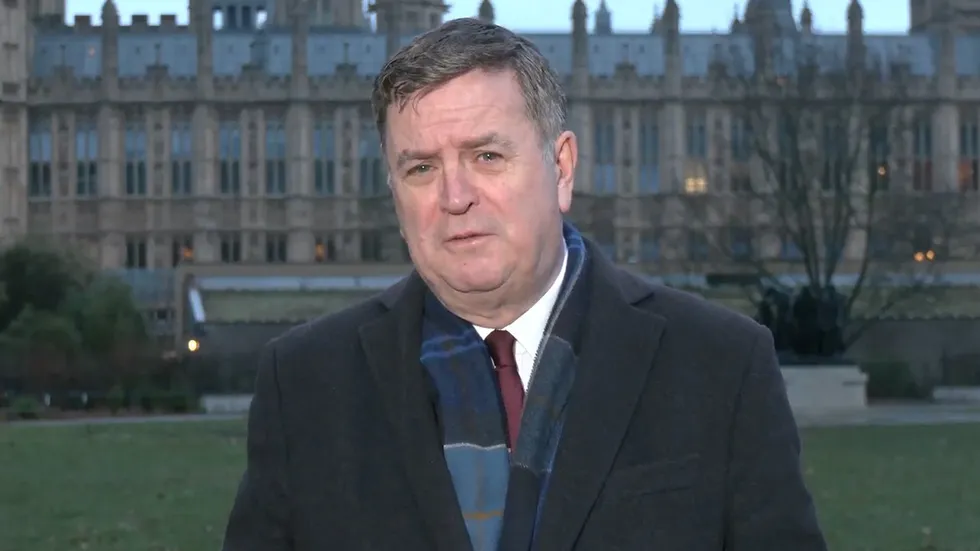
Shadow Chancellor Sir Mel Stride dismissed the Chancellor’s celebration of a 0.1 percentage point revision as evidence of desperation rather than success
|
GB NEWSThe Resolution Foundation, a think tank with close ties to current Treasury ministers, has issued a stark warning that Britain is “languishing” 15 per cent behind comparable economies including Germany, France and Canada when measuring GDP per head.
The organisation’s report delivered a damning assessment of government decision-making, concluding that policy uncertainty under this parliament has exceeded that of the preceding seven Conservative administrations.
Research director Greg Thwaites criticised ministers for undermining their own economic strategy through “policy U-turns, kite-flying tax ideas and timidity in areas like trade where it needs to be bold.”
The think tank highlighted insufficient progress on planning reform and hesitancy over capital spending plans.
The Resolution Foundation urged the Government to intensify its efforts across several policy areas
|
GETTYThe Resolution Foundation urged the Government to intensify its efforts across several policy areas, calling for renewed focus on unblocking housebuilding in major cities and improving employment support for younger and older workers.
Mr Thwaites argued it was time for Britain to “catch up” with living standards in other major economies, noting the country had been “caught by Italy.”
The think tank also criticised delays to capital expenditure plans, including transport and research and development spending, which it said would not increase as a proportion of GDP until 2030.
Perhaps most controversially, the foundation suggested ministers should consider whether to “bite the bullet and reverse some of the damage from Brexit.”
The criticism comes as Ms Reeves prepares to meet leading banking executives including JP Morgan’s Jamie Dimon at Davos.