London museum accused of ‘reframing history with woke appeal’ over ‘disturbing’ tour featuring trans people
The Imperial War Museum has been left facing festive accusations of attempting to “reframe history” with “woke appeal” through a new digital tour exploring LGBTQ+ experiences during wartime.
Launched to commemorate the 25th anniversary of the UK’s decision to end its prohibition on gay individuals serving in Britain’s Armed Forces, the trail presents personal accounts from the LGBTQ+ community during periods of conflict.
However, critics have noted that transgender-related content comprises more than a third of the featured exhibits, including items such as a dress worn during performances at a deadly Japanese prisoner of war camp and a Land Army worker who preferred male identification.
Professor Anthony Glees, a military expert at Buckingham University, described the museum’s approach as “greatly disturbing”.
The academic accused the internationally respected institution of diminishing often harrowing historical events to advance a particular narrative.
“The experiences of what we now call the LGBTQ+ community are no less worthy of understanding than those of ‘straight’ service personnel,” Professor Glees said.
“But with this display, they trivialise true stories of bravery and courage and – what is worse – appear to be doing so in order to reframe the lessons of history to make a woke appeal to young Brits on behalf of a highly controversial special interest group.
“I hope the IWM will think again about this. History should never be rewritten to proselytise or normalise any particular lifestyle.”

The Imperial War Museum has been left facing festive accusations of attempting to “reframe history” with “woke appeal” through a new digital tour exploring LGBTQ+ experiences during wartime
|
PA
Among the exhibits drawing particular criticism is a dress fashioned from a mosquito net, worn by Gunner Charles Woodhams during theatrical performances at Changi Prison in Singapore.
The notorious Japanese prisoner of war camp saw approximately 850 British soldiers executed or killed through mistreatment during the Second World War.
The tour guide describes how drag performances at the facility were “vital for prisoners’ morale”.
However, Professor Glees strongly objected to this framing.
He said: “The story of the notorious Changi jail, scene of appalling brutality towards British and Commonwealth servicemen, cannot be illustrated with reference to ‘drag artists’. Almost 1,000 were killed there.”
The tour also highlights Enid Mary Barraud, a Land Army worker who preferred to be known as “John” among friends and lived with her female partner, “Bunty”.
According to the guide, she has become a notable LGBTQ+ figure, with later generations viewing her memoirs as significant documentation of a life outside conventional gender expectations.
Another exhibit features a painting depicting the Queen’s Hospital for Facial Injuries at Sidcup, where Dr Harold Gillies pioneered skin graft techniques on wounded servicemen.
The tour claims his wartime surgical methods later enabled the first phalloplasty in 1946 and first vaginoplasty in 1951, procedures it describes as “laying the foundation for the future of transgender medicine”.
Professor Glees yet again dismissed this connection, labelling the suggestion as “tendentious at best”.
The museum’s promotional material states that LGBTQ+ individuals “have always been present during times of conflict” and acknowledges these histories are “often sadly erased or hard to verify”.
The trail, which runs until April 2026, is available free at the London and Manchester sites.
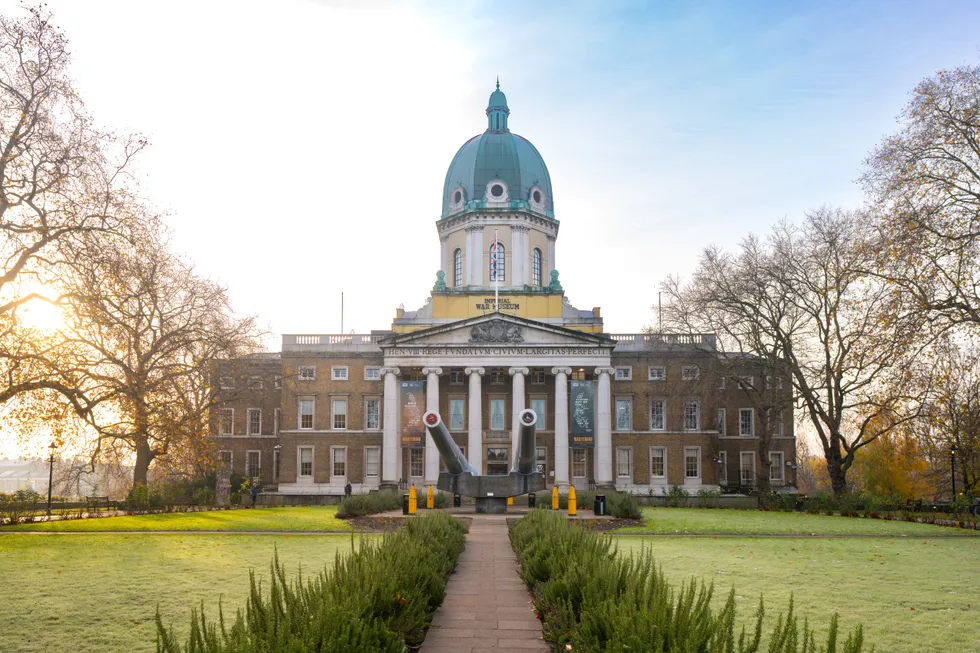
The Imperial War Museum
|
GETTYThose wanting to access the material have to scan the QR codes located beside exhibits in the First and Second World War galleries.
The Imperial War Museum has defended its initiative after it received a backlash.
“We are proud to play our part in telling some of the lesser-known stories of lives affected by war and conflict,” a spokesman said.
The Imperial War Museums attract over two millions visitors annually across its five sites, with pre-pandemic figures showing IWM London alone hitting over one million visitors.