BBC hit by second major Donald Trump accuracy bombshell as it admits to misleading viewers over claim Potus wanted to shoot critic in face
The BBC has been hit by a second accuracy bombshell after it admitted it misled audiences by falsely reporting Donald Trump called for a prominent critic to be shot in the face.
BBC News acknowledged the error, which occurred just days before the November presidential election last year, in an internal message to staff.
Despite the admission of wrongdoing, the corporation has yet to issue a public correction.
In its report, a presenter on BBC World News America said Mr Trump “appeared to suggest Liz Cheney should face a firing squad for her stance on foreign policy”.
Another incident on BBC News saw a presenter ask his guest: “He [Trump] is out there on the campaign trail saying he wants people to shoot Liz Cheney in the face. Is that the sort of thing women react well to?”
Speaking later on the Six O’Clock News, BBC North America editor Sarah Smith said Mr Trump had been “ratcheting up the violent rhetoric”.
She added: “In the latest spat, Donald Trump has been accused of being petty, vindictive and a wannabe tyrant because he suggested that one of his political opponents should face guns, have them trained on her face.”
In reality, Mr Trump accused Ms Cheney of being a “radical war hawk” over her plan to send troops to war.
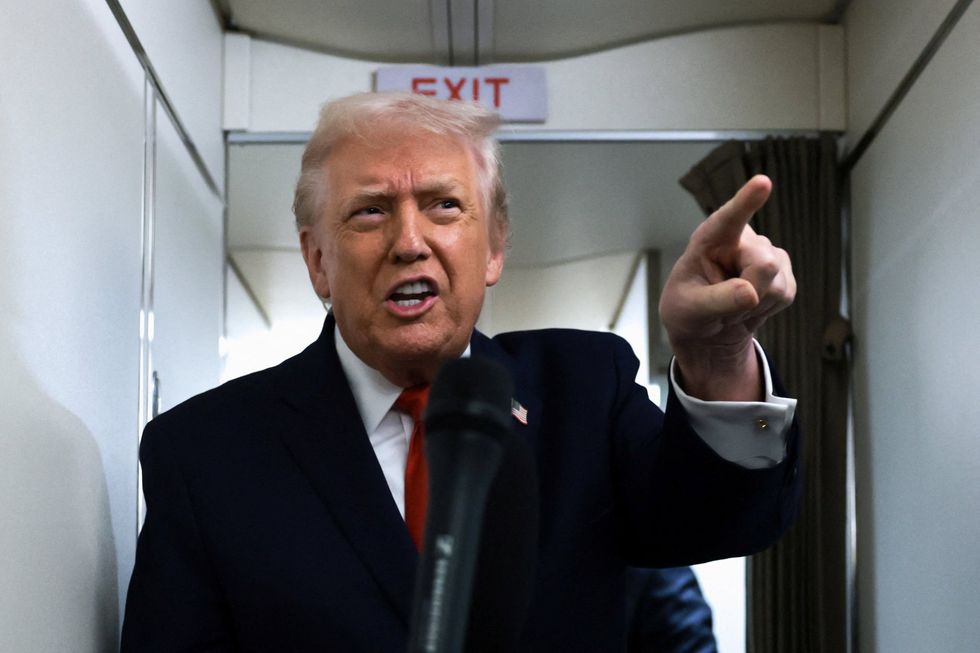
The BBC misled audiences by falsely reporting Donald Trump had called for Liz Cheney to be shot in the face
|
REUTERS
Rather than calling outright for Ms Chaney to be shot, Mr Trump was making a comparison between the dangers faced by active servicemen and the relative safety of Ms Chaney’s life in Washington.
He said: “Let’s put her with a rifle standing there with nine barrels shooting at her face. OK? Let’s see how she feels about it.”
The second admission of wrongdoing comes just weeks after the corporation conceded it misled audiences over a BBC Panorama documentary
|
GETTY
It follows a controversy which resulted in the BBC issuing a formal apology to the US President after admitting that a documentary aired on Panorama wrongly edited together segments of his 6 January 2021 speech, giving the “mistaken impression” that he made a direct call for violent action.
Yet despite the apology — and the BBC’s decision never to rebroadcast the flawed episode — the corporation rejected Trump’s demands for compensation, arguing there was no legal basis for a defamation claim.
Not satisfied, Mr Trump has doubled down. From aboard Air Force One, he told reporters he intends to sue the BBC for anywhere between $1 billion and $5 billion, saying the broadcaster “changed the words coming out of my mouth” and claiming they “cheated”.
He described the edit as “impossible to believe,” branding it not just fake but corrupt — and asserted that he has an obligation to act so such misrepresentations don’t happen again.
Two of the BBC’s top executives — its Director-General and its head of news — resigned amid mounting criticism and internal chaos.
Internally at the BBC, the editing was acknowledged as an “error of judgement”. The corporation pledged to review its editorial processes — but maintained that reforming policy does not equate to admitting legal liability.
For Mr Trump and his legal team, the apology alone is not enough. What matters now is whether the courts — likely in the United States — will accept a defamation suit based on a broadcast never aired there, and whether Trump can prove that the edit caused him real reputational or financial harm.