Minnesota once prided itself on its Scandinavian-style safety net – high taxes, generous benefits and a shared belief that no child should ever go hungry.
But that image lies in ruins after a billion-dollar fraud spree that siphoned taxpayer money away from the needy and poured it straight into luxury mansions, high-end cars, overseas real estate and designer lifestyles.
What authorities first hoped was a one-off pandemic scam has now been exposed as something far bigger – and far uglier.
Federal prosecutors say that over the past five years, scores of scammers – many operating inside Minnesota’s Somali diaspora – stole more than $1 billion intended for feeding children, helping homeless families and providing autism therapy.
Instead, the money bankrolled G-Wagons, Teslas, Porsches, lakefront homes, Dubai shopping sprees and beachside resorts abroad.
Minnesotans are livid – and scared. Because this wasn’t a small-time hustle – it was a full-scale hijacking of the state’s famously trusting, famously generous social-services machine.
For decades, Minnesota welcomed immigrants, and poured taxes into the public good. The state drew tens of thousands of Somali refugees fleeing civil war. Most built families, careers and political influence.
But investigators say a small number saw something else: an open-tap of easy money.
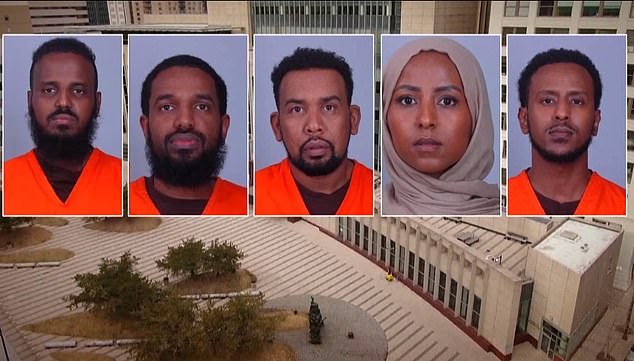
Ahmed Naji Maalim Aftin Sheikh (left) and other alleged members of the Minnesota fraud ring

Fraudster Abdimajid Mohamed Nur, 24, spent his cut from the scam on high-end jewelry in Dubai
Over five years, they created companies that billed Minnesota’s agencies for services that were wildly exaggerated – or never happened at all.
Fifty-nine people have been convicted so far, with more cases coming. The total haul now tops $1 billion, a sum so large it outstrips the state’s yearly prison budget.
IRS investigator Justin Campbell called it the ‘epitome of greed.’
The scandal blew open in 2022.
A nonprofit called Feeding Our Future claimed it was feeding tens of thousands of children during the pandemic. State agencies reimbursed the group and its partner sites based solely on invoices – invoices that prosecutors say were almost entirely fiction.
Lists of children were fabricated. Meal counts were invented. And the money? It paid for luxury fleets and global real-estate ventures.
Cars included Porsches, G-Wagons, Teslas and tricked-out SUVs. Houses ranged from suburban McMansions to lakefront estates. Jewelry, designer bags and lavish foreign investments were all part of the haul.
One central figure, Abdiaziz Shafii Farah, 36, helped steal $47 million along with others. He spent his share on a $93,000 Porsche, a Tesla, a GMC truck, homes in Minnesota and Kentucky, and a condo in Nairobi. A judge handed him 28 years in August.
His business partner, Abdimajid Mohamed Nur, 24, was sentenced to ten years after spending his cut on high-end jewelry in Dubai, luxury vehicles and a Maldives honeymoon.
Aimee Bock, 44, the nonprofit leader at the center of the scam, awaits sentencing. Prosecutors say she used her share on a Mercedes, Vegas trips, exotic car rentals and designer goods from Gucci and Louis Vuitton.

Abdimajid Mohamed Nur, 24, (right) was in November sentenced to 120 months in prison for his role in the fraud
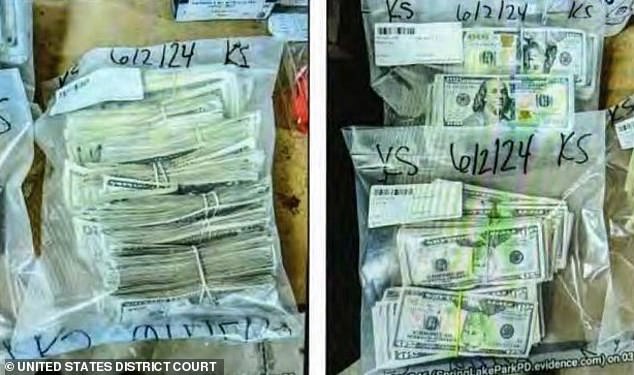
Investigators found wads of cash in the homes of alleged conspirators. Some was even allegedly used to try and bribe a juror

This property on Park Avenue South in Minneapolis was bought by a company involved in the fraud
Millions more were sunk into investments – including a $2.5 million commercial building in Minneapolis and real estate projects in Kenya and Turkey.
The meals were fake. The luxury lifestyle was not.
As investigators sifted through bank records, they realized the feeding-program fraud was only the beginning. Two more schemes quickly surfaced.
A housing-aid scam saw hundreds of ‘providers’ billing the state for helping homeless Minnesotans stay off the streets. Prosecutors say virtually nothing was actually done – except cashing checks. The program exploded from a projected $2.6 million to more than $104 million in one year.
Then came the autism-therapy scam, where providers allegedly recruited Somali children, falsely diagnosed them as needing treatment, and paid parents kickbacks for participating.
One provider, Asha Farhan Hassan, 29, is accused of stealing $14 million. Prosecutors say the money again funded lavish lifestyles instead of therapy for vulnerable kids. Her attorney has indicated she intends to plead guilty.
And the scandal keeps growing. On November 24, Minnesota 36-year-old Abdirashid Bixi Dool became the 78th defendant in the scheme, battling charges including wire fraud and money laundering.
Prosecutors say he fraudulently claimed more than $1.1 million in federal child nutrition program funds through two non-profits he controlled, including Bilaal Mosque.
Nearly all the defendants across the three schemes are of Somali ancestry – though the vast majority are US citizens.
Many Somali Americans say the scandal has cast a dark cloud over an entire community just as it was rising politically and economically. Leaders worry that every seized luxury SUV becomes another stereotype used against them.

Abdiaziz Shafii Farah spent some of his ill-gotten gains on this $93,000 Porsche Macan, a compact luxury crossover SUV

Aimee Bock ran the nonprofit Feeding Our Future at the heart of the scam. She’s behind bars, awaiting her sentence
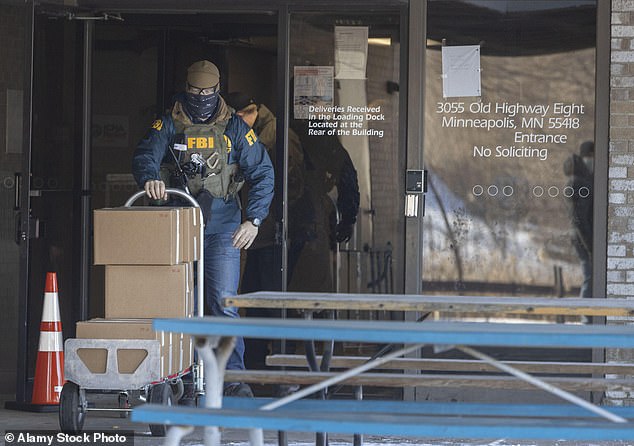
An FBI raid on the premises of Feeding our Future in May 2024

Scammer Abdimajid Mohamed Nur bought cars, jewelry and honeymooned in the Maldives
Tensions have spiked. And the political right has seized on the scandal as proof that Minnesota’s welfare system is out of control.
President Donald Trump labeled Minnesota a ‘hub of fraudulent money laundering activity’ and called for offenders to be deported – comments that triggered protests, prayer gatherings, and blunt denunciations from Somali leaders.
Conservative activist Chris Rufo claimed stolen funds flowed back to Somalia and into the pockets of Islamist militants.
Behind the luxury purchases lies a more uncomfortable question: Did Minnesota’s Democratic leadership hesitate to crack down out of fear of appearing racist?
Some former investigators say yes. They argue that officials worried that rejecting invoices or pausing funds for Somali-run organizations could trigger accusations of discrimination.
A nonpartisan legislative audit later found that state agencies were indeed influenced by fears of racial backlash.
At one point, Feeding Our Future threatened regulators directly – warning that delays in approving Somali-owned feeding sites would spark a public racism scandal ‘sprawled across the news.’
The state backed off. Money kept flowing.
Prosecutors say racial accusations were even used in court. During one trial, defendants allegedly tried to bribe a juror with $120,000 and a note complaining that ‘people of color and immigrants’ were being unfairly targeted.
Democratic Governor Tim Walz now admits the system was exploited. He says the state erred on the side of generosity during the pandemic and that criminals slipped through loopholes.
Facing a tough 2026 reelection bid ahead, Walz has launched a fraud-hunting task force, expanded inter-agency data sharing, and approved new AI systems to detect suspicious billing.
But critics say it’s too late. The money is gone. The trust is shattered.
Democrats argue the state was overwhelmed. Somali community leaders say they’re being unfairly blamed. And ordinary Minnesotans are questioning whether their high-trust welfare model is collapsing under its own idealism.

Abdiaziz Shafii Farah, 36, was sentenced to 28 years behind bars in August as one of the key players in the fraud

Stolen funds were used to buy units in this apartment block in Nairobi, the Kenyan capital

Liban Yasin Alishire used his stolen money to buy the Karibu Palms Resort at Diani Beach, Kenya
Speaking to the New York Times, Federal prosecutor Joseph Thompson put it bluntly: ‘No one will support these programs if they continue to be riddled with fraud. We’re losing our way of life in Minnesota in a very real way.’
Longtime residents who championed Minnesota’s multicultural vision now worry the scandal has handed ammunition to extremists.
Representative Ilhan Omar urged people not to blame an entire community for the actions of a few.
But Somali Americans far outside the social-services world say they’re being humiliated in public discourse – and fear the political fallout will linger for years.
Some Minnesotans blame the state’s overly generous benefits for attracting opportunists. Others blame officials too timid to enforce rules. Still, a few point to cultural norms imported from a country where corrupt government was the norm.
But everyone agrees on one thing: the fraud wasn’t victimless.
Every seized luxury car represents a child who went hungry. Every mansion bought with stolen money represents an autistic child denied therapy – or a homeless family left out in the cold.
Minnesota built its identity on trust – trust in government, trust in immigrants, trust in a Scandinavian-style system designed to protect the vulnerable.
Now, as prosecutors seize cars and freeze bank accounts, residents are asking the question they never thought they’d face:
If criminals could turn a children’s feeding program into a personal luxury fund, is the system still sustainable?