At 37, I lost my virginity. For the second time. As I slipped between the sheets with my new partner Mark, I said with a laugh, ‘I’ve never done this before’.
I meant I had never been so exposed, so real, so… sober. Technically, I had lost my virginity aged 17 after a drunken night with a work colleague. But I then spent almost 20 years having sex under the influence, often remembering little about the act itself and doing things I would later regret, including cheating on partners.
There had been many occasions when I woke up in a strange bed with no memory of how I got there. Unsurprisingly, I had rarely climaxed during sex. I certainly knew nothing of the electrifying fulfilment and connection that proper intimacy – without alcohol – can bring.
That’s why I think of that night with Mark as the first time I had – proper, meaningful – sex. I’d been sober for 18 months and it was the first time I was with a man without drinking.
It was revelatory, like stepping into the light after a lifetime in the dark. I experienced orgasms more intense than I’d ever felt.
I was no longer passive; I didn’t let sex just happen to me. I was in complete control and had never felt sexier.
You don’t need to be an alcoholic like me to never have experienced sex sober. So many women say they need a bit of liquid courage to sleep with a new partner; some say they can’t imagine even sharing a kiss without a glass of wine.
Research shows that as many as 64 per cent of people in the UK have had sex while intoxicated, but just 20 per cent ‘always enjoy’ it.
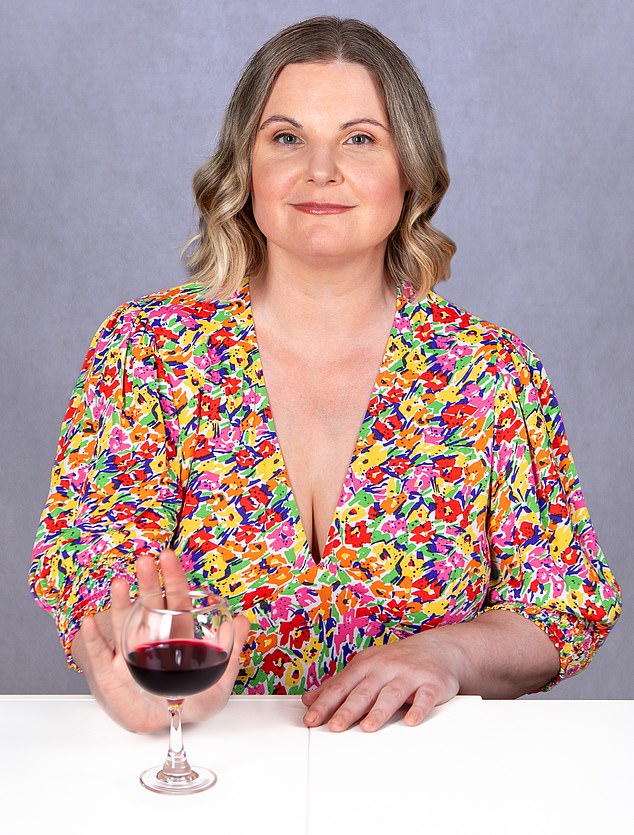
At 37, Catherine Renton had sex sober for the first time
Alcohol is deeply embedded in modern dating culture. Like many women, I used to think I had to be tipsy to feel sexy. But I’ve discovered there’s nothing more sensual than being in the moment.
I’ve certainly come a long way from that drunken first encounter with a work colleague, after a night out that saw me down a bottle of wine, despite not being old enough to drink.
He kept telling me I was beautiful, and I was so drunk that I believed him. We went back to his place. The sex was over quickly and, when I began to sober up, I hurriedly put my clothes back on.
We never had sex again; I felt embarrassed that I’d exposed myself (in every way) to him, and thought he’d only had sex with me because he was drunk.
Studying journalism at university in my early 20s, I hit the bottle hard. I often missed lectures because of hangovers and skipped afternoon tutorials to go out drinking again. I would spend £80 a week on socialising rather than food and existed on snacks and sandwiches.
When I left college in 2006 and entered full-time work, I had a group of ‘party pals’ who I could always rely on for a good night out.
I regularly drank to the point of blackout. The next day, I’d wake with an aching head, mysterious bruises and sometimes with a mystery man in my bed.
Sober, I could barely make eye contact with a guy; drunk, I would flirt outrageously with anyone who crossed my path, including people I knew were already taken. I even lost a friendship over my flirting after I became overly affectionate with a friend’s partner and she accused me of trying to steal him.
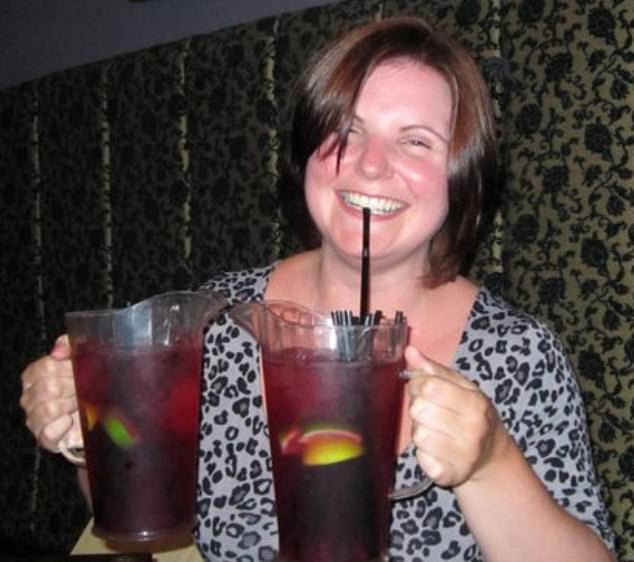
Catherine hated the person she became when she was drunk: argumentative, brash and attention-seeking
With cripplingly low self-esteem, I thrived on male attention when I was drunk and often had no intention of following through on my flirting.
My first date with my future husband was in a bar. This led to me staying at his house after I missed my last train home. We had sex that night but as soon as it was over I got dressed again, even though I was staying the night.
He laughed as I put my clothes back on, saying, ‘It’s too late, I’ve already seen you naked!’ But I was too scared for him to see me without clothes when we’d both sobered up. We dated for four weeks before I let him see me naked when I was sober and, although he couldn’t have been more complimentary, I struggled to believe him.
We married when I was 22 and still a student; he was 29 and a journalist. We were both big social drinkers. For the first three months of our marriage, we partied and had lots of drunken sex.
Gradually my husband’s drinking calmed down, but I’d still go out on a big nights with my student friends, returning home a stumbling, slurring wreck.
It soon became clear we were in very different places. He wanted children and I wasn’t sure I would ever be ready. I also suffered from anxiety and depression, a long-term consequence of bullying in my teens.
We went from lovers and best friends to strangers sleeping in separate beds. He would much rather stay at home with a box set, whereas I’d rather be out on the town.
We split when I was 25 and I moved back in with my parents. Humiliated, I carried on drinking and had more drunken hook-ups that I barely remember.
In her early 30s, Catherine had a drunken hook-up with a married colleague that developed into a full-blown affair
I did things drunk I knew I wouldn’t have done sober. At 26, after a boozy Christmas party, I cheated on a new boyfriend with a friend, who was also in a relationship. Our respective partners never found out and I’m ashamed to say ‘getting away with it’ made me feel like my actions had no consequences.
Then, at 31, I lost my mum to cancer and my drinking escalated. I’d often grab a bottle of wine on the way home from work to help lull me into a fitful sleep.
The drunken sexual exploits continued, too. In my early 30s, I had a drunken hook-up with a married colleague that developed into a full-blown affair. He left his wife for me – something I never asked him to do – and for the first time I realised that my self-destructive patterns were affecting more than just me.
I hated the person I became when I was drunk – argumentative, brash and attention-seeking – but I didn’t love myself enough to stop.
It wasn’t until I turned 35 that things changed after I made an appointment with my GP. I hadn’t slept properly in months and had panic attacks so severe I sometimes struggled to leave the house. He asked me if I had any plans to end my life and I told him: ‘No, but I am disappointed when I wake up every morning.’
He suggested I quit alcohol for a month to see if my mental health improved. It was January 2017 and, thankfully, with everyone on the Dry January bandwagon, it was an easy month to stay sober.
Within a fortnight, my anxiety started to ease and my sleep was undisturbed for the first time in years. I gave up dating around the same time, although my love life had been fairly unsuccessful since my divorce. My three-year marriage was my longest relationship; my low self-esteem made it difficult to form deep connections. My reckless behaviour when I drank didn’t help.
Thankfully a month of sobriety turned into two, then six. My anxiety was almost non-existent.
Initially, I thought about sobriety in terms of what I’d never do again. In particular, I wondered if I’d ever again be able to date, much less have sex sober. The idea seemed impossible – without drink I was still painfully shy.
I had started going to Alcoholics Anonymous, which I attended weekly for the first three months of sobriety, and was advised not to start a new relationship in the first year. You can end up replacing one addiction (alcohol) with another, like love.
Eight months into my sobriety, I went to a party and met a very cute guy. We began flirting and everything was going well until he went to the bar to get us a drink. I told him I was sober and he seemed almost offended when I refused to accept an alcoholic drink. He said, ‘I want to take you home, wouldn’t it be better if we were both a bit loosened up?’
Stunned, I told him that I wouldn’t be coerced into drinking just so I could have sex and walked away. This was progress. I used to match guys drink-for-drink, always ending up drunker, so the balance of power would always be tipped in their favour. Now, I was in control.
I was already in therapy and began speaking more about my past sexual exploits. I told my therapist that I’d faked almost every orgasm I’d had with a partner and we worked out why I’d been afraid to have sex sober.
I may have had more than 30 sexual partners by then, but I didn’t know what I liked in bed; I had always gone along with what my partner wanted.
My therapist suggested getting to know my own erogenous zones before I considered partnered sober sex. I began exploring my body in front of a full-length mirror and found tender spots I didn’t know existed; stroking the gentle curve under my belly set my senses on fire and grazing my inner thighs with my fingers gave me goosebumps.
I found out I needed very little encouragement to orgasm, despite having struggled to do this with partners for many years.
When I returned to dating apps, I was upfront about being sober, and while that deterred some potential suitors, most were understanding.
I had been sober for a year and a half when I met Mark. After a couple of dates, we decided to have sex – it was the first time I’d been fully present. That’s why it felt like losing my virginity again.
Knowing my own body far better, I felt more comfortable with Mark than with previous partners. I knew exactly what I needed and wasn’t afraid to ask.
We dated for a few weeks but realised we’d be better off as friends. I will always be grateful to him for being so kind and gentle with me as I re-entered the dating pool.
Sober me was more deliberate and selective with partners. As a drinker, I tended to fall for narcissists who would lap up my fawning attention. Now I realised that the kind, gentle men I would previously have dismissed as ‘boring’ were just what I needed.
I found myself gravitating toward men who didn’t drink either. We’d share stories from our drinking days and instead of trying to laugh off some of the more worrisome behaviour, like blackouts, we acknowledged that we were lucky to have emerged relatively unscathed.
Before, I had always been looking for the ego boost of being ‘attractive enough’ to sleep with when I went home with a man, rather than a genuine connection. I thought all I was good for was a quick fumble before staggering home in the early hours. Now I know I deserve so much more.
Instead of bars, my dates now take place in coffee shops or on walks and I no longer look to have sex on the first date. I used to depend on booze to power through boring dates, but now I am happy to cut my losses and leave if I don’t feel a connection.
Nerves can still affect me, but I accept that really fulfilling connections can be a slow burn, rather than instant fireworks.
Now 43, I’m more than happy to tell potential partners what makes me feel good. It’s liberating, I think, for both of us. He’s not guessing and I’m not faking.
The past eight years of sobriety have taught me much about forgiveness, particularly forgiving myself. I beat myself up for a long time for actions often out of my control. No one forced me to drink excessively, but plenty of people were willing to take advantage when I wasn’t capable of making sensible decisions.
These days I date on and off. I am after quality, not quantity. If someone had told the younger me how good sex could be without drinking, I wouldn’t have believed them. It’s so good, in fact, it’s one of the main reasons I wish I’d quit boozing years ago.