Hidden ‘dark galaxy’ traced by ancient star clusters could rewrite the cosmic galaxy count
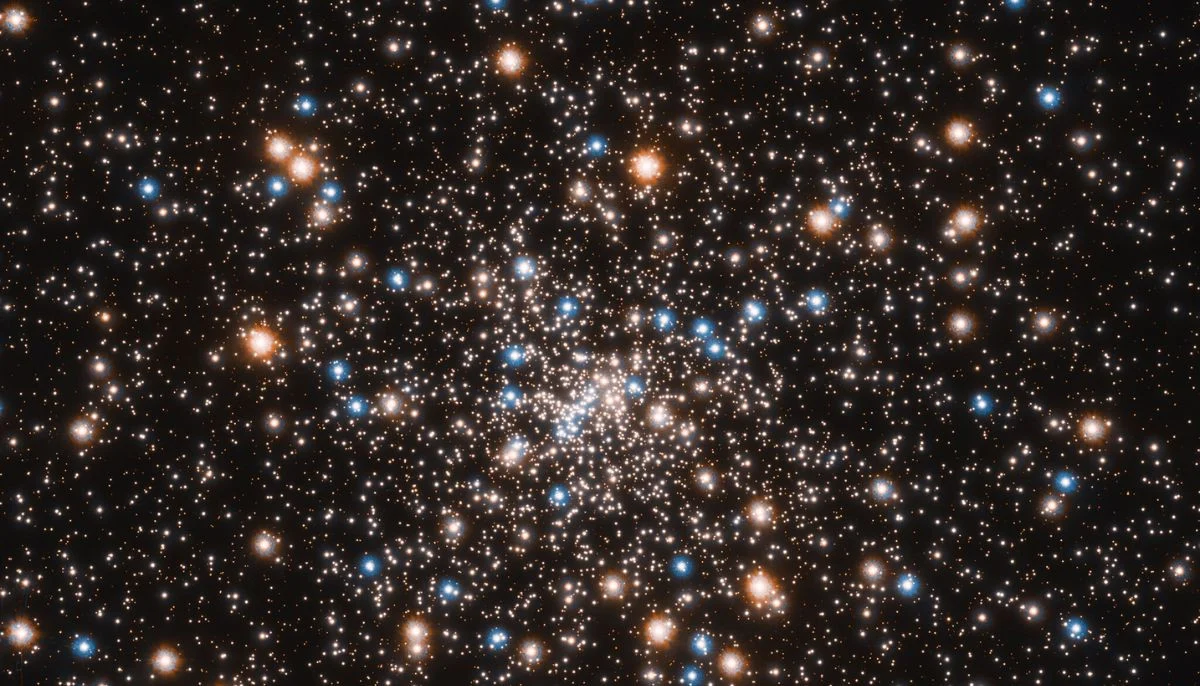
Astronomers have made a surprising discovery: a faint object nearly invisible is holding a collection of star clusters together. This represents the intriguing presence of a hidden galaxy that is on the verge of disappearing into space. The discovery began with the observation of four globular clusters located close to one another within the Perseus galaxy cluster, roughly 300 million light-years away. While small clusters usually drift away from time, these remain in tight orbits, implying a powerful gravitational pull from an unseen source.
Astronomers have determined that a barely visible, faint object is holding a compact assembly together. They tested the possibility of a random alignment, but statistical analyses showed it to be highly unlikely, instead the data suggests a massive unseen object anchoring them in place.
In this connection, David Li, an Astrostatistics researcher at the University of Toronto and the study’s lead author said: “This is the first galaxy detected solely through its global cluster population.”
The research findings were published in The Astrophysical Journal Letters, raising questions about how many other faint galaxies are too dim to detect with existing methods. These objects could lead to a miscalculation of the total number of galaxies in the universe.
The new technique developed by the team will assist in detecting additional galaxies that are currently hidden. Researchers identified images of CGD-2 captured by NASA’s Hubble Space Telescope, the European Space Agency’s Euclid space observatory and the Japanese Subaru Telescope in Hawaii. CGD-2 seems to possess only four globular clusters, whereas the Milky Way has over 150.
The mysterious object shines dimly, emitting the light of only 6 million suns compared to the billions of suns illuminating our own galaxy.