‘None of them can survive!’ British farmers at risk from Labour’s eco drive
New research has revealed Ed Miliband’s decarbonisation pledges could pose an “existential threat” to British farmers.
In what has already been a difficult 18 months for the industry – with depleted profits, spiralling costs and the threat of Inheritance Tax – the pro-Labour Resolution Foundation has now suggested potential policies to help the UK reach Net Zero, such as reducing livestock and giving up land for solar farms, could have a detrimental impact on the farming community.
One of their Economists, Zachary Leather, said: “We can green British agriculture without emptying people’s wallets or destroying farmers’ livelihoods, but it requires the Government to act decisively.
‘’The transition to Net Zero in agriculture is set to add just 1 per cent to the weekly shop by 2050.
“But while the impact for consumers is small, pushing the cost onto farmers instead would pose big risks to their livelihoods.
“Policy must ensure the costs of greening agriculture are borne by other parts of the supply chain, or through small increases in food prices, rather than by farmers who are already struggling.”
According to the Climate Change Committee, the decarbonisation plans could cost the industry an additional £1billion per year.
If that were to be the case, it would “reduce average farmer pay last year by around a fifth (from £43,000 to £35,000)”.
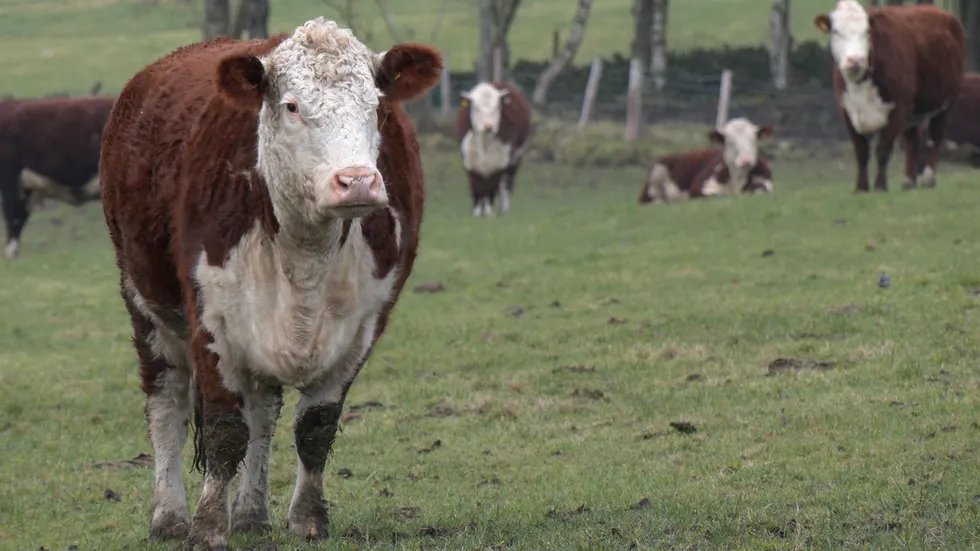
New research has revealed Ed Miliband’s decarbonisation pledges could pose an ‘existential threat’ to British farmers.
|
SUPPLIED
Colin Hanson-Orr is a farmer and business owner in Cheshire.
Speaking to GB News about his concerns surrounding farming, he said: “There appears to have been a decision at government level to make farming ever-more difficult and that Net Zero is being applied possibly without consideration for the long-term implications.
“For most farmers right now, losses of £1,000 a day will be realistic for the next 12 months.
“None of them can survive!
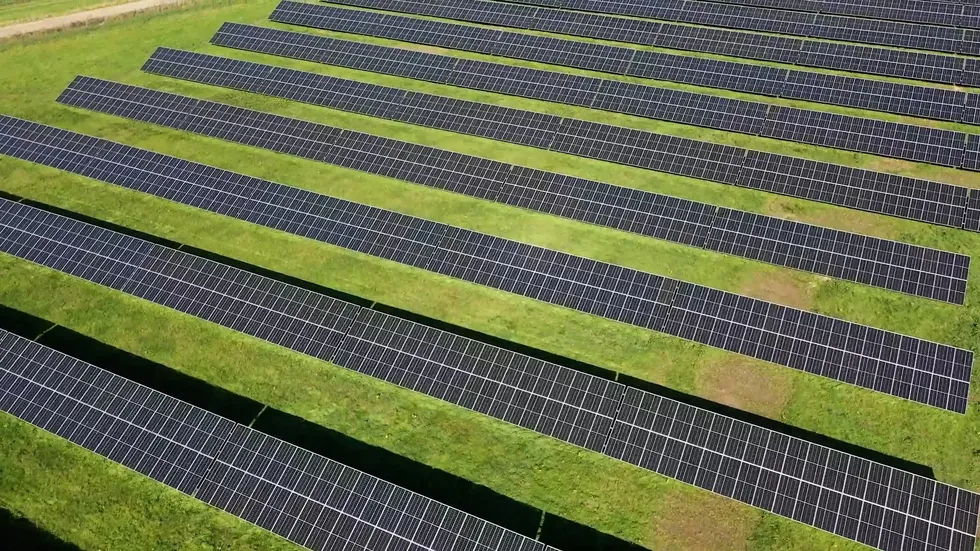
Farmer Colin Hanson-Orr explained solar energy tends not to be very ‘efficient’ and wind is ‘very dependent on conditions’
|
SUPPLIED
“So, the question has to be: is it an accident, or is it deliberate, or is it ignorance?”
Mr Hanson-Orr also explained, whilst solar energy tends not to be very “efficient” and wind is “very dependent on conditions”, the “muck” produced daily on Britain’s seven thousand dairy farms could be placed into AD Farms and that in turn “would produce a vast amount of electricity from a natural resource”.
GB News reached out to the Department of Environment, Food and Rural Affairs, but they declined to comment on the topic.
However, they did stated they had pledged £1.8billion for sustainable food production and food security.