BBC blasted for ‘frustrating pro-China spin’ after claiming Beijing is a ‘green superpower’
The BBC has been slammed after dubbing China a “green superpower”, despite being the world’s largest emitter of carbon emissions.
An article published on the BBC’s website described China as being “at the helm of a renewables revolution”.
While recent research found China’s carbon dioxide emissions fell by 0.3 per cent year-on-year in 2025, it is still the world’s largest polluter, pumping 12,667,428,430 tonnes of CO2 into the atmosphere.
Energy experts have told GB News about why China is able to manufacture cheap renewable energy infrastructure.
Head of Policy at The Global Warming Policy Foundation Harry Wilkinson told The People’s Channel: “China is able to manufacture cheap solar panels and wind turbines because it has access to cheap sources of energy such as coal.
“What it is not doing, is trying to replace vital baseload and industrial power capacity with renewables.
“Instead, it continues to open new coal power stations and has become by far the world’s biggest CO2 emitter.
“Meanwhile, in Europe we continue be hamstrung by overly aggressive climate targets whilst becoming dependent on cheaply made Chinese products. Make no mistake, China is no climate leader. But it is exploiting our poor decisions.”
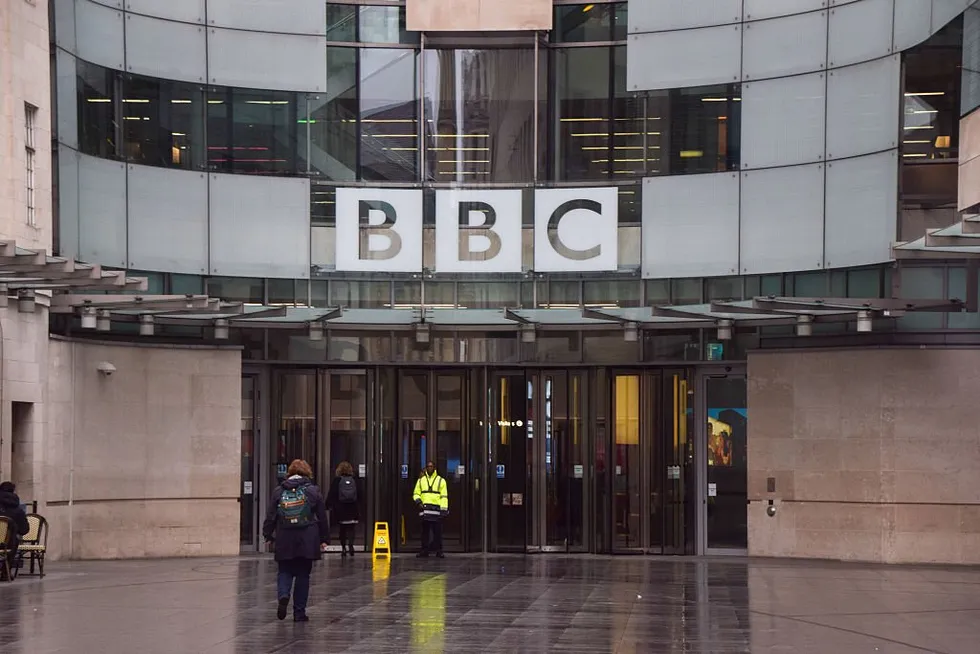
The broadcaster was slammed for a ‘pro-China spin’
|
GETTY
Research from the Helsinki-based Centre for Research on Energy and Clean Air found China’s emissions rose 12 per cent year-on-year in 2025 in China’s chemical industry, which burned more coal and oil, partially outweighing declines in transport, power, cement and metals emissions.
Head of Energy Policy at the Centre for Better Britain Jonathan Kitson, rubbished the BBC’s claims that Beijing had become a “green superpower”.
He told GB News: “It appears Chinese emissions are stabilising, but it is worth bearing in mind that China is not to reach ‘carbon neutrality’ until 2060.
“Britain’s Net Zero 2050 target isn’t just earlier than China’s, but also has a wider scope, including other greenhouse gases such as methane and nitrous oxide.
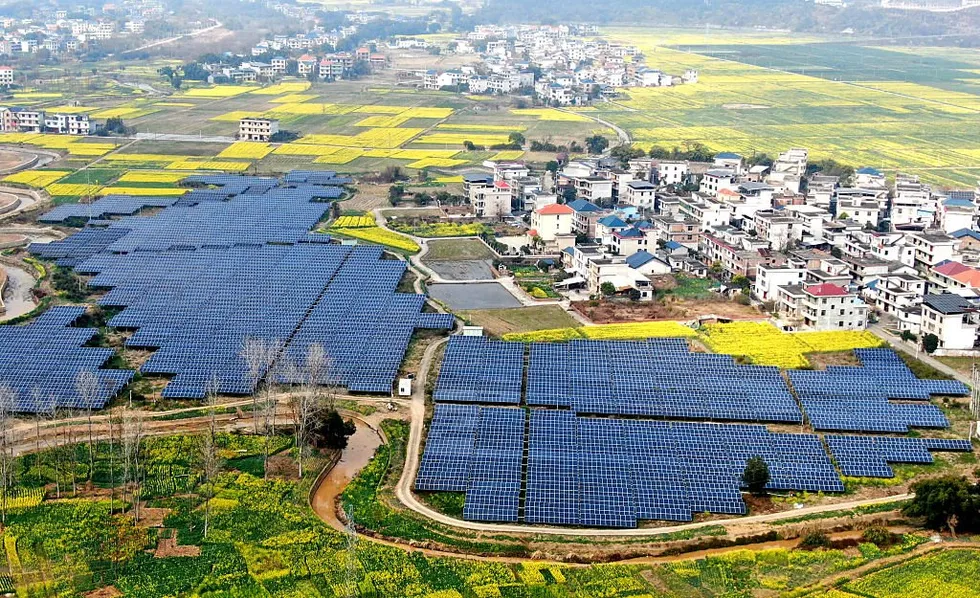
Solar panels are seen in fields next to a village in Meijiang, in Suichuan county, in China’s central Jiangxi provinc
|
GETTY
“In terms of a ‘green superpower,’ growing wind and solar capacity in China is only a small part of the story, what matters is output.
“For instance, China’s coal and solar capacity are, for China’s huge electricity production, not too far away, around 1300 GW for solar, and 1420 GW for coal, but solar provided around nine per cent of electricity while coal provided around 58 per cent.”
The BBC was accused of propagating “spin” in their article as it described how “Beijing’s determination to turn China into a renewables superpower is now evident across its vast landscapes.”
The article also descried how China is “at the helm of a renewables revolution…driven by both Beijing’s ambition as well as the competition that it unleashed.”
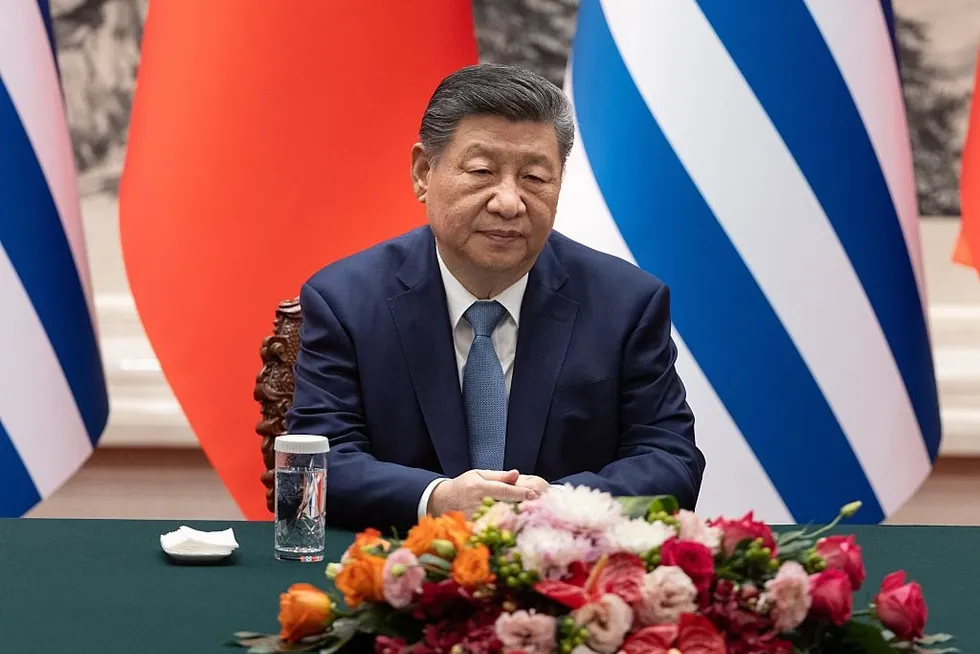
Chinese President Xi Jinping has pushed for Beijing to invest in renewables
|
GETTY
However, energy policy expert and author of the Eigin Values blog David Turver was quick to point out that infrastructure and the location of the much lauded solar panels in the article was also an issue.
He told GB News: “China is spending quite a lot on wind and solar. But solar panels in the Mongolian desert are hundreds of miles from the sources of demand.
“Wind and solar are still just a rounding error in China’s energy mix. China continues to be a coal superpower, consuming more than half the world’s coal.”
Rebecca Ryan, Campaign Director at Defund the BBC slammed the article, accusing the broadcaster of “frustrating” the licence fee payer.
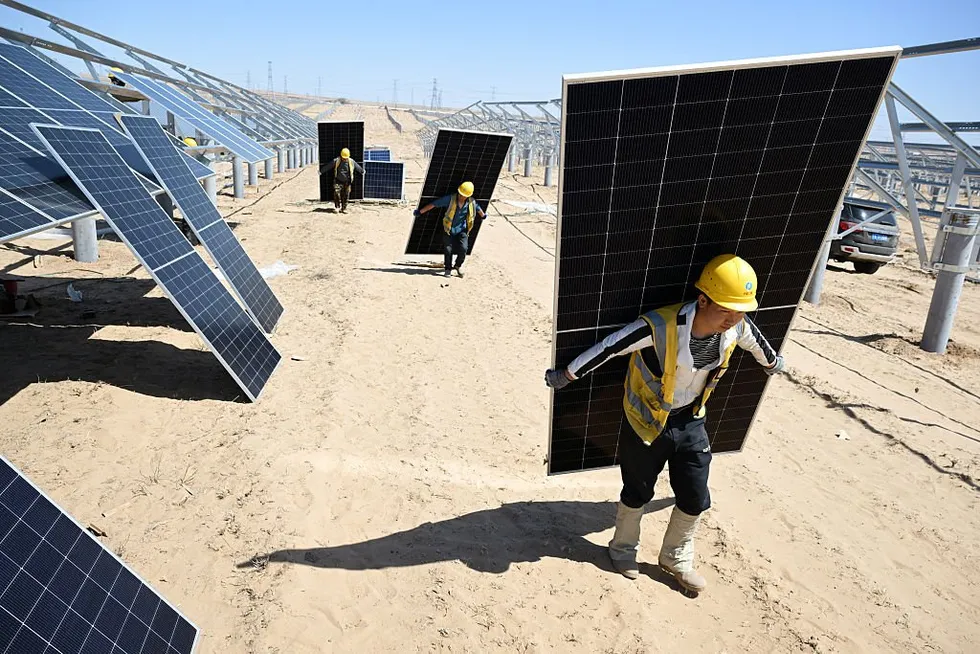
Workers carry solar panels to be installed in the desert at the Ningguoyun Lingwu 1 million kilowatt photovoltaic project in Lingwu
|
GETTY
She told GB News: “This is exactly the kind of framing that frustrates licence fee payers. China is the world’s biggest polluter, by a long way. To label Beijing a ‘green superpower’ without leading with that fact is, at best, selective.
“Yes, China is producing vast amounts of solar panels and wind turbines, heavily state-subsidised and often linked to serious human rights concerns.
“That isn’t climate leadership; it’s strategic industrial dominance. The BBC’s job is scrutiny, not spin.”
GB News has approached the BBC for comment.