NHS puberty blocker trial PAUSED in Northern Ireland amid legal challenge over children’s safety
Northern Ireland has dramatically paused its involvement in a controversial UK-wide puberty blocker trial, piling fresh pressure on the Government to halt the scheme altogether.
Stormont Health Minister Mike Nesbitt confirmed he is suspending Northern Ireland’s participation in the so-called Pathways trial pending the outcome of a judicial review now before the courts.
“Having taken account of the ongoing Judicial Review into the UK Government’s clinical trial of puberty blockers, I have decided to suspend Northern Ireland’s agreement to participate in the UK-wide trial until the legal process has concluded,” he said.
The £10.7million study – the largest of its kind – aims to recruit around 220 children under 16 experiencing gender distress.
Participants would be randomly assigned to begin puberty blockers either immediately or after a 12-month delay, with researchers tracking their physical, emotional and cognitive development into early adulthood.
The intervention in Northern Ireland comes just days after campaigners launched a High Court challenge to block the trial entirely.
An emergency injunction is now being prepared in a bid to prevent recruitment, which has already been delayed until April.
Psychotherapist James Esses, who is bringing the legal action alongside detransitioner Keira Bell, said: “We don’t want a single person to be recruited for this trial.”
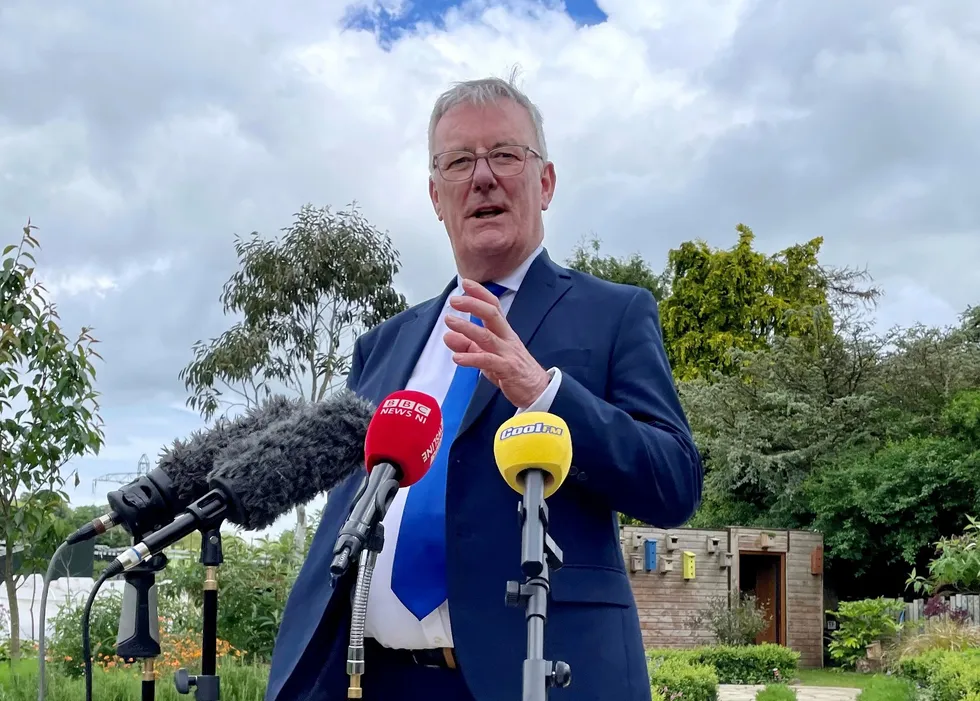
Stormont Health Minister Mike Nesbitt has announced Northern Ireland has dramatically paused its involvement
|
PA
Opposition has surged nationwide. More than 137,000 people signed a petition against the trial within 72 hours, including JK Rowling, who described it as “an unethical experiment on children who can’t give meaningful consent”.
A cross-party group of MPs has also demanded an immediate pause.
In a letter coordinated by MP Rosie Duffield and sent to Health Secretary Wes Streeting, parliamentarians warned pressing ahead could be a “dangerous mistake” with potentially devastating consequences for children’s physical and psychological health.
The letter was signed by MPs including Tom Tugendhat, Rebecca Paul, Sarah Pochin, Rupert Lowe, Iqbal Mohamed and Liberal Democrat peer Baroness Ludford.
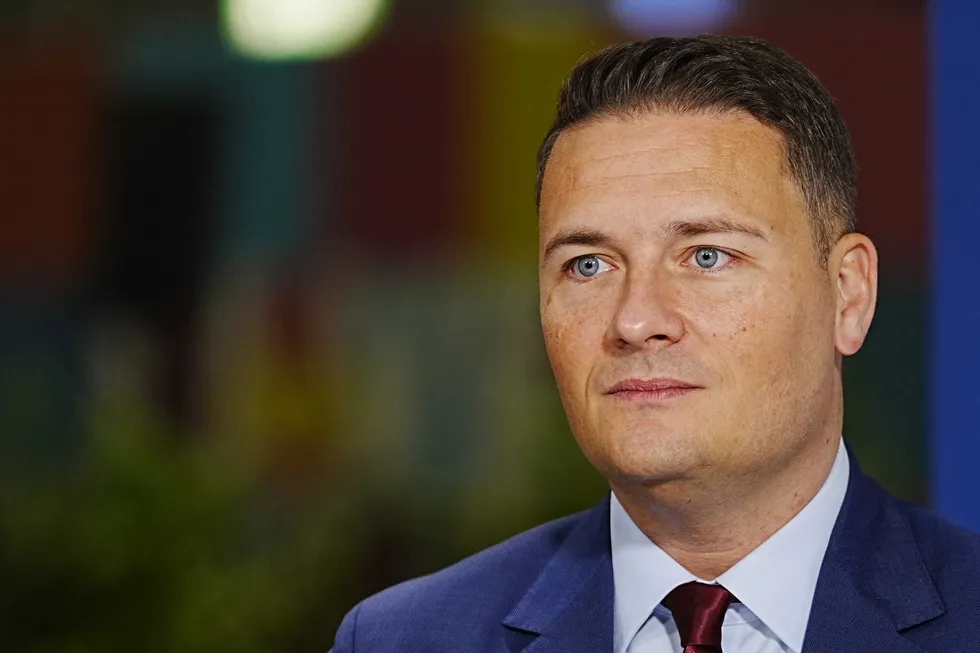
Parliamentarians have warned Health Secretary Wes Streeting pressing ahead with the blocker trials could be a ‘dangerous mistake”
|
PAMr Streeting banned the routine prescription of puberty blockers for under-18s in gender medicine last year following safety concerns raised by paediatrician Dr Hilary Cass in her landmark review.
However, Dr Cass recommended a tightly controlled clinical trial to address gaps in the evidence base.
Defending the scheme, Mr Streeting has insisted it is grounded in rigorous ethics and clinical oversight.
“I am following clinical advice in this area and I have tried to take the politics out of it entirely,” he previously said, stressing children would undergo extensive physical and mental health assessments and require parental consent before participation.
But speaking on Sunday, Dr Cass said children have been “weaponised” by both sides of a toxic debate about transgender rights.
“People at the extremes” had caused “quite a lot of distress for young people”, she told the BBC.
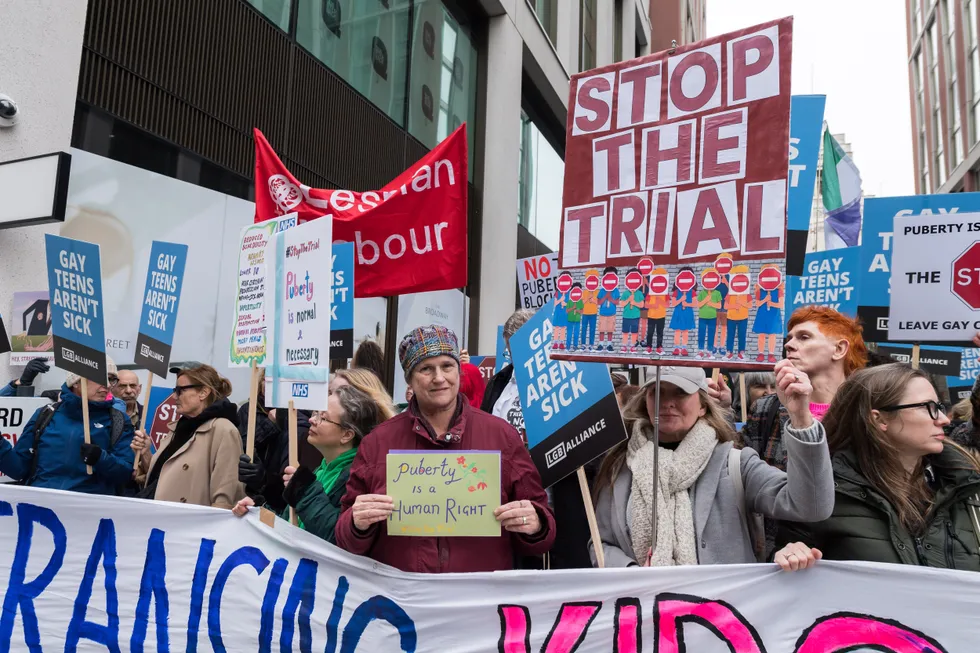
The trials have faced plenty scrutiny from critics
|
GETTY
She pointed to a “lack of realism about what transition would really mean and how hard it would be”, noting a “quite intensive medical treatments” and “sometimes quite brutal surgeries”.
She added: “There are a tiny number of people who will never be comfortable with their biological sex, with the gender associated with their biological sex.
“And for them, a medical pathway is the only way they’re going to live their life comfortably. And we don’t understand why that is, but we have to try and help those people thrive as much as the young people who are going to grow out of this.”
In Northern Ireland, a parallel review found that many children presenting with gender-related distress had histories of trauma, bullying and autism spectrum disorder, and were commonly aged 12 to 13.
It also raised safeguarding concerns, including the need to examine “parental motivations” in some cases.
Mr Nesbitt’s move has been welcomed within his party, with several colleagues voicing unease about pharmaceutical interventions for minors.
With a parliamentary debate looming and legal proceedings underway, the future of the UK’s most ambitious puberty blocker trial now hangs in the balance.