

Retirement savers face a major tax when defined contribution pensions will be included within inheritance tax calculations for the first time.
The change, announced in the Budget by Chancellor Rachel Reeves, means pension pots could face the standard 40 per cent inheritance tax rate when passed to beneficiaries.
Currently, money held in defined contribution schemes, where individuals build funds to generate retirement income, can usually be passed on without any inheritance tax liability.
This exemption will end on April 6 2027 under the planned reforms.
Final legislation has not yet been published, meaning some technical details could still change before implementation.
The Chancellor has confirmed inheritance tax thresholds will remain frozen until 2030.
Government estimates suggest around 10,500 estates will face inheritance tax bills for the first time directly because of these pension changes.
A further 38,500 estates are expected to pay more inheritance tax than they would under current rules.
For many households, the reforms are unlikely to have a practical impact because everyone benefits from a £325,000 nil rate band, which allows assets up to this value to pass tax free to any beneficiary.
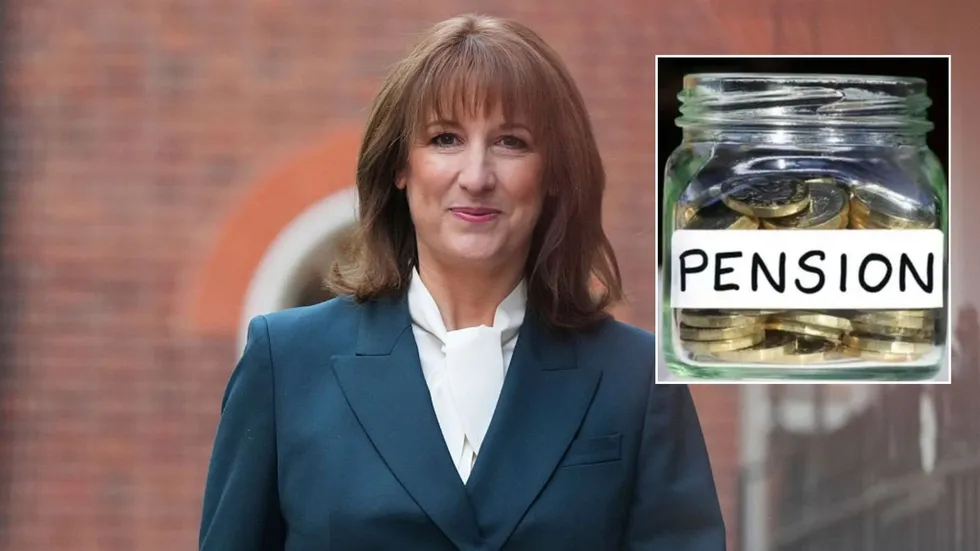
Changes will bring defined contribution pensions into inheritance tax calculations
|
GETTY
However, homeowners with significant pension savings could become liable when property values are combined with defined contribution pension pots and total estates exceed available tax-free allowances.
Those inheriting a spouse’s pension alongside their own assets may face increased exposure because the combined value could move estates above inheritance tax thresholds.
Industry figures have raised concerns about how the reforms could affect long-term retirement planning behaviour.
Lily Megson-Harvey, policy director at My Pension Expert, told GB News: “Many individuals already struggle to engage with their pension and introducing uncertainty over future taxation risks widening the pension engagement gap even further.”

Those inheriting a spouse’s pension alongside their own assets may be more exposed
|
GETTYShe said: “People may choose to run down their pension pots faster than planned or move savings into less efficient vehicles purely to avoid potential tax liabilities, which could leave them more vulnerable later in life and undermine the purpose of the pension system.”
Ms Megson-Harvey said policymakers should consider the balance between short-term tax revenue gains and maintaining confidence in long-term retirement savings.
The current inheritance tax framework includes several allowances that determine how much wealth can be passed on without tax being applied.
The nil rate band currently stands at £325,000 per person and applies to assets left to any beneficiary.
Married couples and civil partners benefit from additional flexibility under inheritance tax rules.
When one partner dies and leaves their estate to their spouse or civil partner, no inheritance tax is charged and any unused nil rate band can be transferred.
This effectively increases the threshold to £650,000 when the second partner dies.
Those passing property to direct descendants, including children, stepchildren or grandchildren, may also qualify for the residence nil rate band worth up to £175,000 per person.
For married couples and civil partners, this can create a combined potential inheritance tax-free allowance of up to £1million.
Unmarried couples face stricter rules because they cannot transfer unused inheritance tax allowances between partners.
Assets passed between unmarried partners may also trigger inheritance tax charges depending on estate value.
Seeking professional financial advice is reccomended
|
GETTYFinancial specialists say individuals concerned about potential exposure may consider reviewing retirement withdrawal strategies and estate planning arrangements.
Ms Megson-Harvey said: “There is no universal solution and the right approach depends on individual circumstances, so anyone unsure about the implications should seek regulated financial advice before making major decisions.”
Some savers may review how and when they draw retirement income, examine gifting allowances or diversify savings across different products.
Lifetime gifting remains an option for individuals whose estates sit slightly above inheritance tax thresholds.
This can include lump sum gifts to family members or pension and ISA contributions for children or grandchildren.
Financial experts caution against giving away funds needed to maintain retirement living standards because replacing lost pension income later can be difficult.
Seeking professional financial advice before making major financial decisions is widely recommended by industry specialists.