
More than three million Britons will be dragged into Chancellor Rachel Reeves’s latest tax raid on pensions, according to the latest analysis of Government data.
Following Ms Reeves’s Budget statement on November 26, ministers published an impact assessment detailing how Budget 2025 reforms will apply National Insurance to salary sacrifice pension payments above £2,000 annually, with the changes taking effect from 2029.
The assessment shows approximately 7.7 million employees currently use salary sacrifice arrangements for their pensions.
Of this total, some 3.3 million workers, representing roughly 42 per cent, contribute more than the new threshold and will therefore be affected.

Salary sacrifice rule changes are effectively a pension tax on millions, analysts warn
|
GETTY
Treasury documents had previously indicated that around 26 per cent of basic rate taxpayers would lose out under the new rules.
However, the true number of those disadvantaged could rise further should employers respond by reducing pension benefits across their entire workforce.
Steve Webb, partner at pension consultants LCP, cautioned that what appeared to be a technical Budget measure could carry substantial consequences for millions of employees.
“At a time when the nation as a whole has a significant ‘under-saving’ problem, this change will make matters worse,” he said.
 Pensioners are concerned about the rising tax burden | GETTY
According to Mr Webb, the Government’s own figures suggest approximately three in seven workers using salary sacrifice for pensions will be caught by the new rules. He noted that employers face an even larger burden due to their higher National Insurance rate.
Mr Webb warned that businesses might respond by scaling back workplace pension offerings between now and 2029, describing such an outcome as “a serious backward step.”
Steve Hitchiner, who chairs the Tax Group at the Society of Pensions Professionals, offered a blunt assessment of the policy shift.
“Abolishing salary sacrifice for pensions will affect the take home pay of millions of employees especially basic rate taxpayers and is a tax on working people, in spirit if not in name,” he said.
“It is also another sizeable cost to employers and, perhaps most importantly its removal will reduce pension saving.
“The impact falls disproportionately on lower earners because employee National Insurance stands at eight per cent on most wages, dropping to just two per cent on income exceeding £50,270.
Salary sacrifice arrangements allow employees to exchange part of their wages for equivalent employer pension contributions, which are then treated as employer payments for tax and National Insurance purposes.
Approximately one third of private sector workers and nearly 10 per cent of public sector employees currently use such schemes.
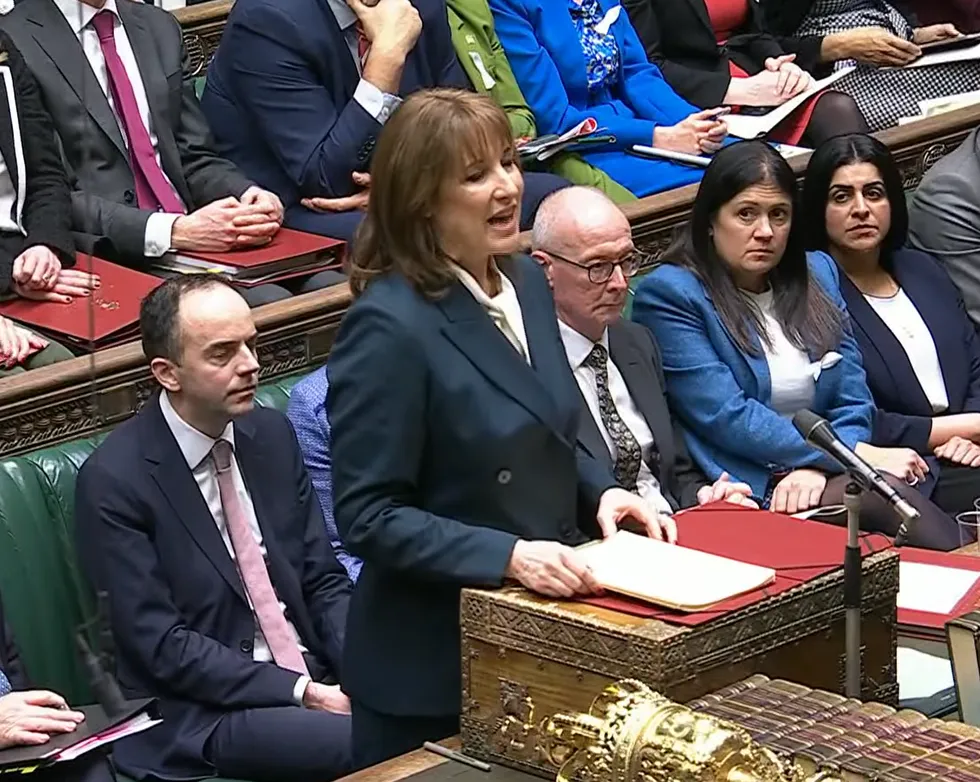 Rachel Reeves delivering the Budget | PARLIAMENT
A 2025 Aon survey found that 90 per cent of employers offer the arrangement.
The current system costs the Treasury an estimated £4billion annually, which amounts to £1.2billion from employee relief and £2.9billion from employer relie.
It should be noted that this is widely viewed as a worthwhile investment in encouraging retirement saving.
Research published by HM Revenue and Customs (HMRC) found employers broadly support the existing framework, believing alterations would create confusion and discourage pension contributions.