

Ed Miliband has published a memorandum of understanding with Beijing that opens the door to greater Chinese investment in Britain’s energy infrastructure, prompting warnings from critics about potential national security risks.
The Energy Secretary released the agreement nearly a year after striking the deal during a visit to China, following sustained pressure from opposition MPs to make the document public.
The memorandum commits the UK to closer cooperation with China on offshore wind, electricity grids, battery storage, carbon capture and hydrogen and leaves open the possibility of collaboration in other areas including civil nuclear power.
One section states both countries will “aim to facilitate opportunities for British and Chinese companies to collaborate to create mutual trade and investment opportunities”, including in manufacturing and services.
A spokesman for the Department for Energy Security and Net Zero said the agreement was not legally binding and any specific projects would remain subject to national security scrutiny.
The publication of the deal has triggered criticism from the Conservatives, who argued that closer ties risk increasing reliance on Chinese green technology supply chains.
Claire Coutinho, shadow energy secretary, said: “The release of Ed Miliband’s secret China deal is a victory for transparency and only comes after months of pressure from the Conservatives.
“He has agreed to ‘cooperate’ on areas where China has complete dominance in global supply chains.”
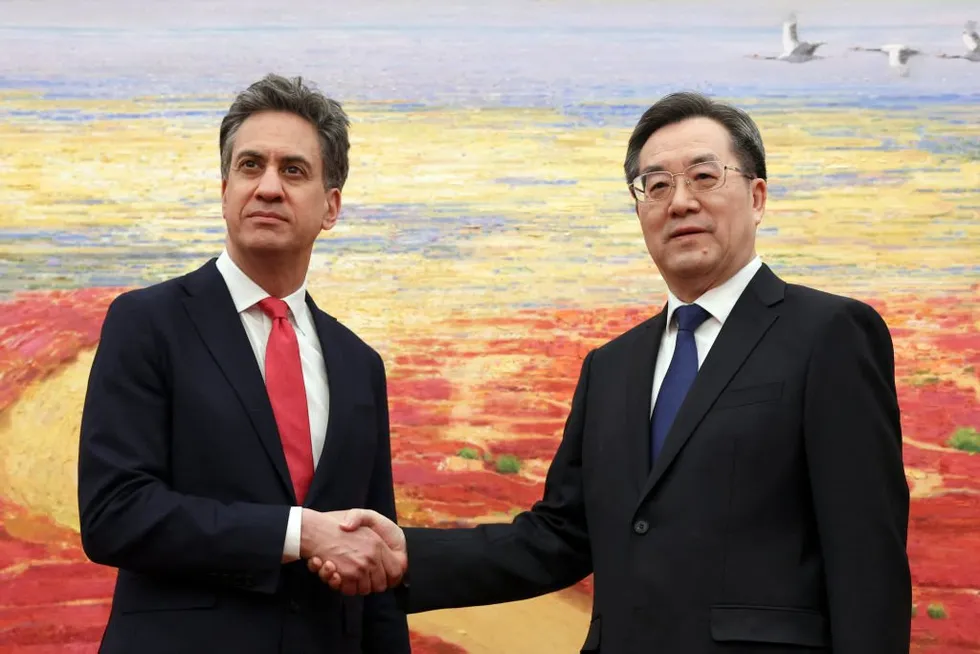
Ed Miliband has published a memorandum of understanding with Beijing
|
GETTY
She further said: “Labour’s Net Zero targets are making us more dependent on China for our energy supply, just as the world is getting more dangerous. We cannot allow our security to be undermined because of ideology.”
Officials had previously resisted calls to release the text, arguing there was no precedent for publishing agreements of this kind.
They pointed to a similar 2015 energy cooperation deal signed under former prime minister David Cameron, which formed part of what was described at the time as a “golden era” in UK-China relations.
That dialogue was later suspended under Theresa May amid growing concerns about Chinese involvement in critical national infrastructure and subsequent ministers cancelled Chinese participation in parts of the UK’s nuclear programme.
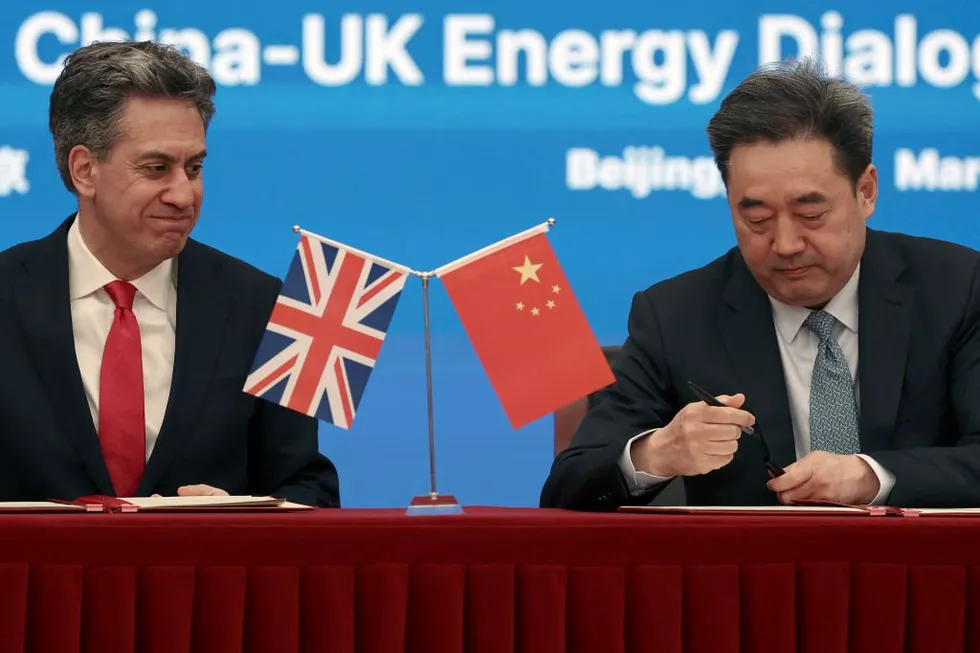
Ed Miliband on a recent trip to China
|
GETTY
Mr Miliband revived formal energy cooperation discussions during his visit to Beijing last year, but declined on multiple occasions to publish the full text when questioned by MPs.
During a select committee hearing, he accused critics of promoting “wacky conspiracy theories” when pressed on the issue.
The renewed focus on Chinese involvement is expected to intensify scrutiny of proposals by Mingyang, a Chinese wind turbine manufacturer, to construct a £1.5billion factory in Scotland.
Reports have indicated the Ministry of Defence has raised concerns turbines could potentially be used for surveillance purposes or provide a pretext for regular access by foreign engineers, although Mingyang has denied posing any security threat.
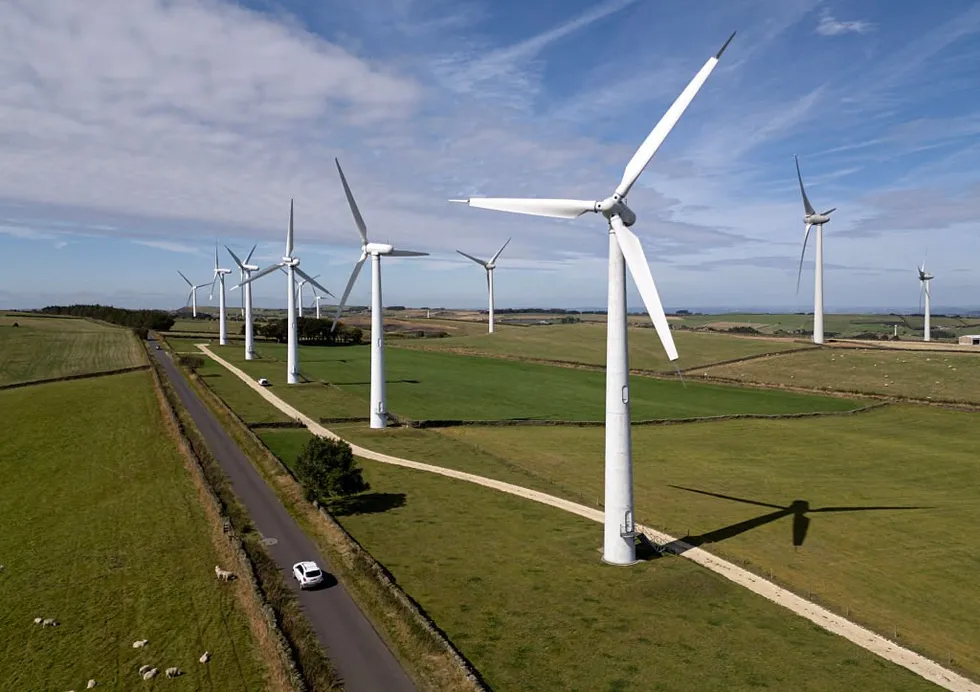
The Government has not yet confirmed whether it will approve the company’s plans
|
GETTY
Responding to the publication, a department spokesman said: “The 2025 agreement provides a platform to share research and ideas between both countries, and, unlike the 2015 agreement, explicitly excludes co-operation on solar.”
The spokesman added: “As we have always said, it is in the UK’s interest to engage with the world’s largest emitter and one of our biggest trading partners to tackle the climate crisis and protect the British people.”
A report published last year by the Royal United Services Institute warned heavy reliance on Chinese supply chains in pursuit of Net zero targets could pose strategic risks, arguing that vulnerabilities risked becoming embedded in major infrastructure projects.