

Oil prices could surge to more than $150 per barrel if the Middle East conflict continues, Qatar’s Energy Minister has warned, raising fears of major economic disruption across the world.
Saad al-Kaabi said such a dramatic increase in oil prices would have severe consequences for global growth and trade.
Mr Kaabi told the Financial Times: “If this war continues for a few weeks, GDP growth around the world will be impacted.
“Everybody’s energy price is going to go higher.”
Crude prices have already climbed sharply during the past week.
Brent crude is currently trading at around $85 per barrel after spending most of the year between $60 and $65.
The rise represents an increase of nearly 20 per cent over the course of the week.
Energy markets are now experiencing their most significant weekly surge since 2022 as the conflict in the Middle East creates growing uncertainty over global supply.
Tensions have escalated further after Iran effectively closed the Strait of Hormuz.
The shipping channel is one of the world’s most important energy routes and carries roughly 21 million barrels of oil every day.

Oil prices could surge to $150 if the conflict continues
|
GETTY/Trading Economics
This volume accounts for around one-fifth of global oil trade.
Mr Kaabi warned that the disruption could worsen if energy producers in the Gulf region are forced to halt production.
He said the suspension of production would push oil prices significantly higher.
Mr Kaabi added that additional Gulf countries could declare force majeure in the coming days.
Even if the conflict ends quickly, he said oil and gas production cycles could take weeks or months to return to normal levels.
An Iranian drone strike earlier this week damaged Qatar’s largest liquefied natural gas facility, highlighting the risks facing energy infrastructure in the region.

The 100-mile waterway connects the Persian Gulf to the Gulf of Oman and then the Arabian Sea
|
GETTYThe surge in global energy prices is already affecting consumers in the UK.
Petrol prices have begun rising in recent days as oil markets react to the escalating conflict.
The RAC said that if oil reaches $90 per barrel, the average price of unleaded petrol at forecourts would exceed 140p per litre.
At $100 per barrel, the organisation estimates motorists would face prices of around 150p per litre.
Volatility in wholesale energy markets has also begun affecting the tariffs available to British households.
Several energy suppliers have withdrawn fixed-rate deals from sale as companies respond to rapid price movements.
There are growing concerns that the Ofgem energy price cap could increase significantly in July if the conflict continues.
Gas prices have also surged sharply in recent days.
Mr Kaabi warned that natural gas costs could rise dramatically if supply disruptions continue.
He said gas prices could reach four times their pre-conflict levels.
Such increases would place additional pressure on household budgets across the UK and other countries.
Economists have warned that sustained increases in energy prices could have wider economic consequences.
Higher oil and gas costs could push inflation higher and complicate efforts by central banks to lower interest rates.
Joshua Mahony, chief market analyst at Scope Markets, said energy markets are increasingly reacting to the risk of a prolonged conflict.
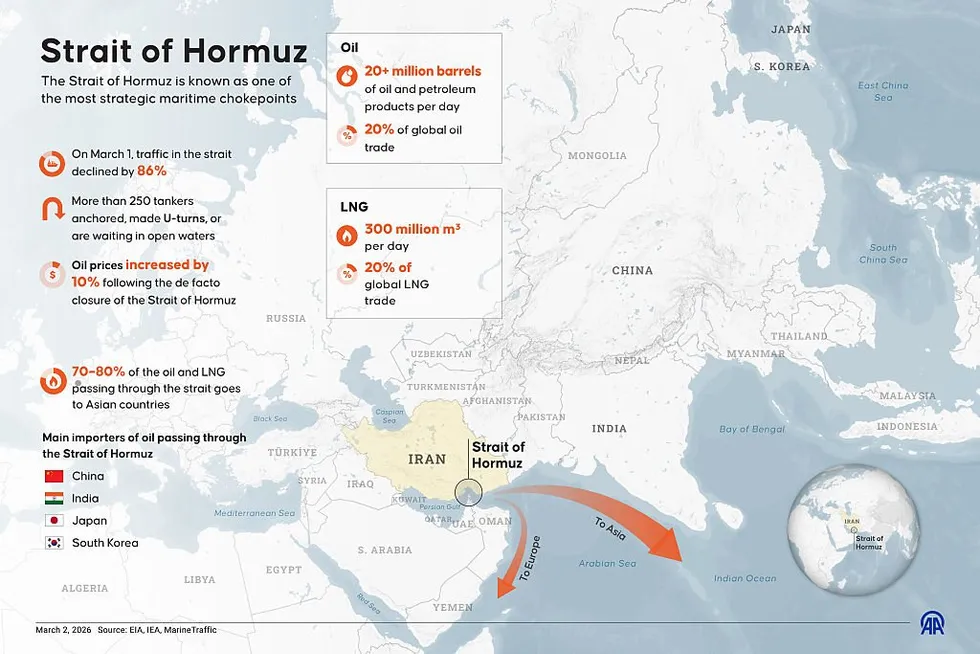 The Strait of Hormuz is one of the most important shipping routes in the world, especially for oil exports | GETTY
Mr Mahony said: “Oil prices have continued to rise, as we head towards the biggest weekly gain in four years as hopes of a swift resolution in Iran fade.
“For markets, they are waking up to the possibility of a sharp increase in energy costs and inflation if this conflict runs on for weeks.”
Mr Kaabi also warned that disruption to energy exports could affect wider trade flows between the Gulf and the rest of the world.
“In addition to energy, there will be a halt on all other trade in between the [Gulf] and the world, which will have a significant effect on the economies of the [Gulf] and all the trading partners around the world.”
Oil prices briefly retreated on Thursday after the United States indicated it could intervene to contain rising costs.
Washington signalled it may take steps to stabilise markets, including measures allowing the Treasury to trade oil futures in an attempt to curb price volatility.