

Britain cannot deliver on its ambitious Net Zero push because the world does not have enough minerals to do it, a leading scientist will warn at a major international mining conference this week.
Dr Simon Michaux, a world-leading mineral adviser, said Net Zero targets must be scrapped and replaced with an entirely new plan in order for the UK and other industrial countries to “maintain society to current standards”.
Dr Michaux, a senior scientist at the Mineral Intelligence group at the Geological Survey of Finland, will tell delegates at the MetPlant 2026 Conference in Adelaide, Australia, this week that the current green transition targets ignore the reality that there are not enough metals on the planet to replace the fossil-fuel economy on a like-for-like basis.
The scientist, who has written numerous technical papers on global resource limits and presented his findings around the world, will warn the numbers behind Britain’s Net Zero plans simply do not work.
He also insisted that existing analyses have underestimated projected demand.
“We have a very serious materials supply shortfall and multiple blind spots in our industrial culture,” he told GB News.
“It’s like pulling a string on a sweater. Once the string pulls apart, the whole sweater pulls apart. Industrial strategy planners have not done basic homework.”
His research shows the world does not have the raw materials to replace oil, gas and coal with electric vehicles, renewable power, batteries, new grids and hydrogen systems.
“I have written peer review studies about the green transition as it is being proposed, and the estimated mineral resources, recycling capacity and mining productivity are nowhere near enough to phase out fossil fuels,” he said.
“All the metal mineral deposits we know of on the planet will be nowhere near enough.”
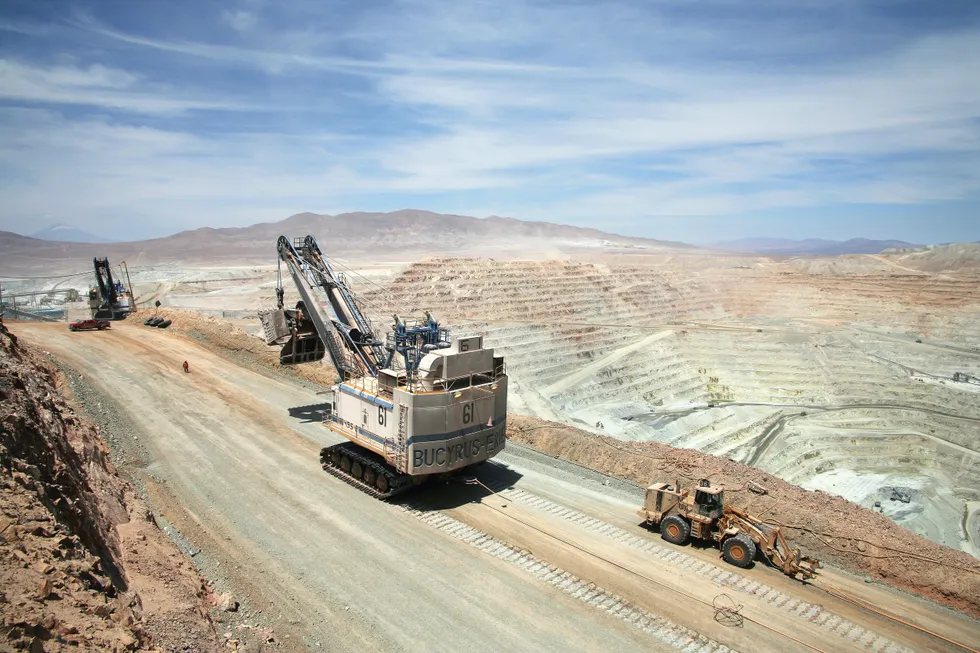
Dr Simon Michaux, a world-leading mineral adviser, said Net Zero targets must be scrapped and replaced with an entirely new plan in order for the UK and other industrial countries to ‘maintain society to current standards’
|
GETTY
Dr Michaux added the scale of the problem becomes clear when looking at copper, one of the most important metals for electrification.
Copper is needed for power cables, wind turbines, electric cars, charging networks, solar farms, data centres and grid upgrades.
However, according to his research, the amount required is far beyond what exists in known reserves.
“To phase out fossil fuels and maintain existing capability, we need about 6.1 billion tonnes of copper,” he said.
“With all known reported mineral reserves, estimated resources, and undersea resources, we only have about 3.1 billion tonnes. That means even if we mined everything we know about, it still would not be enough.”
He added the same problem appears across multiple key materials needed for the Net Zero transition, including nickel, lithium, cobalt, graphite, vanadium and rare earth elements.
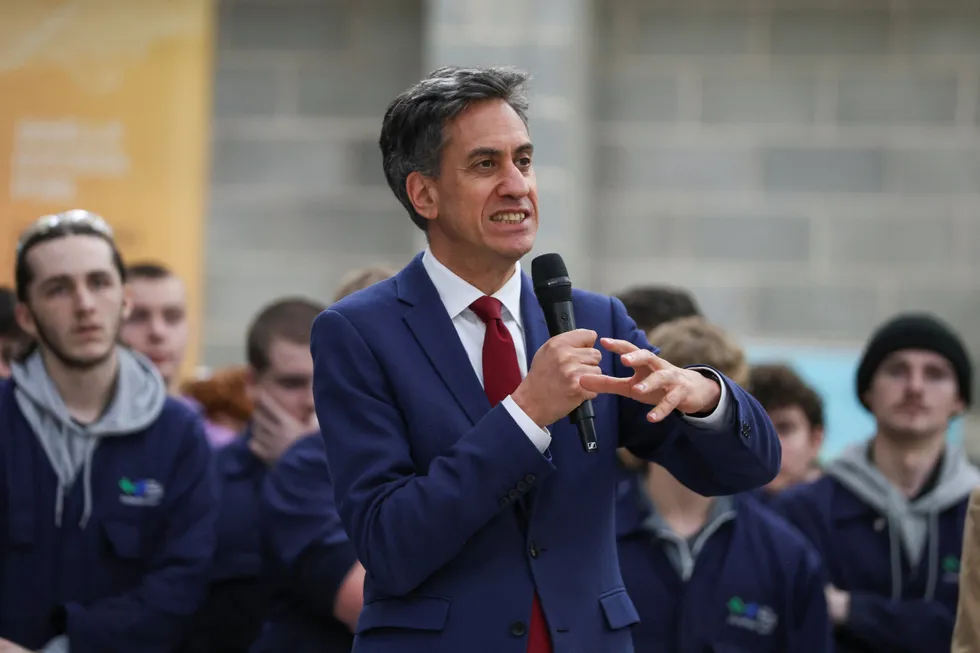
Energy, Security and Net Zero Secretary Ed Miliband now faces a challenge to implement his plans
|
PAThe result, he warns, is that the current plan to electrify transport, expand renewable energy and replace fossil fuels cannot be built in the UK – or at a global scale.
“We cannot replace on a like-for-like basis the cars, the trucks, aviation, rail, maritime shipping, steel production, fertiliser production and hydrogen systems with the proposed green transition plan,” he said.
Because every country is trying to build the same technologies at the same time, he will argue the shortage is global, not local.
Most of the global capability to mine, smelt and refine metals, then manufacture renewable technology is based in South East Asia.
“This is not a UK problem. This is global – Europe, the US, China and the UK. All nations are impacted by this raw materials supply problem,” he said. “If we don’t have enough minerals, nobody has enough minerals.”
That warning has major implications for Britain, which has very little domestic mining and depends heavily on imports for critical materials.
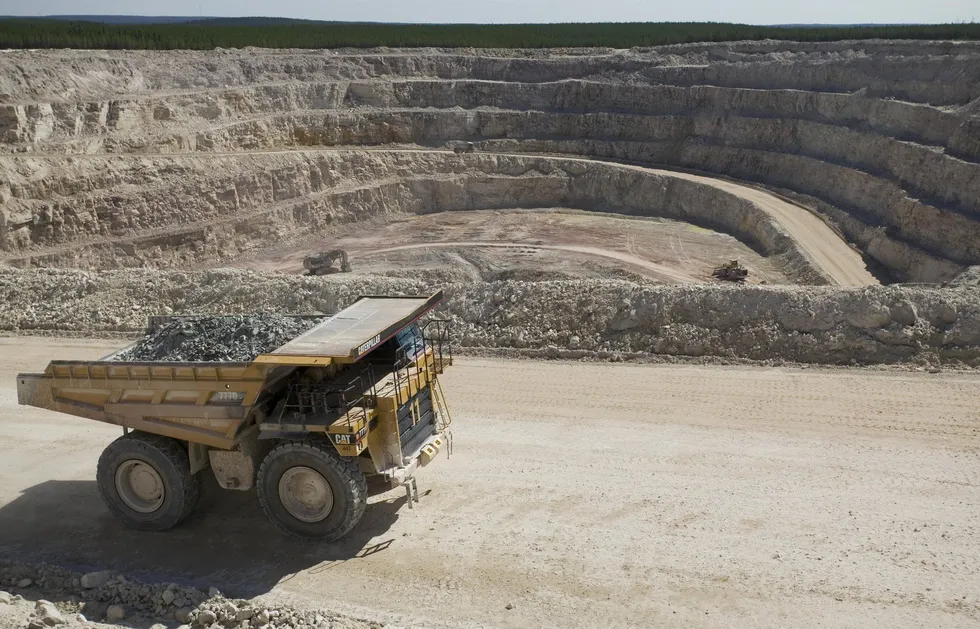
That warning has major implications for Britain, which has very little domestic mining and depends heavily on imports for critical materials
|
GETTY
“The UK imports most of what it needs and has no large-scale mining industry of its own,” he said.
In a world where countries are competing for the same limited resources, he says that leaves Britain exposed.
“The world is moving towards regional systems where countries will need to be more self-sufficient,” he said.
“If you don’t have your own industrial capability, you are in a weak position.”
Dr Michaux will also warn the conference in Adelaide that the mineral shortage is only part of the problem.
He added the energy system needed to run a fully electrified society is far larger than current Net Zero plans assume, and renewable power alone cannot provide the reliability required for modern industry.
“Wind and solar are not strong enough to be the support system for the next industrial era,” he said.
“They are not flexible enough and they are not reliable enough at large scale.”
He added: “The amount of electricity needed for electric transport, upgraded grids, heavy industry, data centres and the growing digital economy would require enormous new infrastructure – which itself needs huge quantities of metals to build.”
He said to phase out fossil fuels and have 100 percent electric transport power generation would have to more than double in size.
To deliver this without coal or gas power stations, the UK would have to develop a new power station fleet many times the size it is now.
However, he argued the current wind and solar energy sources are too unreliable and too costly to make this viable to support Britain’s needs.
He pointed to the Iberian peninsula blackout in April 2025, which he blamed on an unstable and erratic solar power supply.
That creates what he described as a circular problem: the green system cannot be built due to the fact there are neither the mineral resources nor manufacturing capacity to do it.
His research also shows a shortfall if the UK recycled existing minerals.
Dr Michaux concluded that the result of ignoring these limits will be an energy system that costs more but delivers less.
He said: “Strategic decisions made to reach Net Zero mean electricity costs will go up and there will not be enough to go around. The cost goes up, and you still do not get what you pay for.”
Dr Michaux also warned that in a shortage, priority will likely go to industry and major investors rather than households.
“Big business will only invest if they have a guaranteed electricity supply, where that supply is guaranteed with a contract with the local government.
“That means ordinary people in communities that don’t have a contract guaranteeing supply, could be left with shortages or blackouts.”
Dr Michaux is not arguing that fossil fuels can continue forever, saying they are finite and will eventually decline.
But he said Net Zero is not the answer, adding: “The society we have around us now was built over two centuries, powered with fossil fuels.
“These include oil, which has been the densest energy source the world has ever known. We now think we will develop a new system that is far more complex, using a vast quantity of exotic raw materials to produce an energy technology that is not as flexible or capable as what we seek to replace.
“Reality will soon impose itself as it becomes apparent that planned milestones of national development never appear. The whole thing has become a public-relations exercise to convince people there is a plan.”
He continued: “This is an emperor-has-no-clothes moment – not just for the UK, but for the whole world. So, we need a new plan that is more practical and based in reality.
“Something that does not have the same limitations as this plan or the last one. If we can get out of our own way and think innovatively, there are solutions.”
Some experts have criticised Dr Michaux’s analysis and argue there are plenty of resources to expand based on projected demand.
In one article, Michael Barnard, a climate strategist, wrote that Dr Michaux’s analysis is “misguided” and “collapses under scrutiny.”
He said his projections ignore “technical evolution…and (have) an almost willful blindness to efficiency gains.”
A spokeswoman for the Department of Energy Security & Net Zero said: “Net Zero is the economic opportunity of the 21st century, with countries investing more than twice as much in homegrown clean energy than fossil fuels.
“Our Critical Minerals Strategy set out a clear plan to secure the supply of critical minerals that our country needs, including leveraging our pockets of mineral wealth and deep mining history, and working with international partners to build stronger supply chains.”