

Martin Lewis has issued an urgent warning to millions of UK workers, cautioning that opting out of a workplace pension could amount to what he described as “a huge mistake”.
The MoneySavingExpert founder urged employees born between 1959 and 2003 to remain enrolled in their workplace pension schemes rather than withdrawing from automatic enrolment.
Speaking on his ITV programme, Mr Lewis said millions of workers have already chosen to opt out, a decision he warned could significantly reduce their long‑term retirement income.
He said the central issue is that opting out means turning down employer pension contributions and tax relief, which together substantially increase the value of savings.
Mr Lewis said: “Opt out and you’re effectively giving up a pay rise and you’re giving up the tax benefit too.”
Under auto‑enrolment rules, employers must automatically enrol eligible staff aged between 22 and state pension age who earn at least £10,000 per year.
Employers are required to contribute a minimum of three per cent of qualifying earnings, with total minimum contributions set at eight per cent.
Contribute five per cent, with the remainder coming from employers and tax relief.
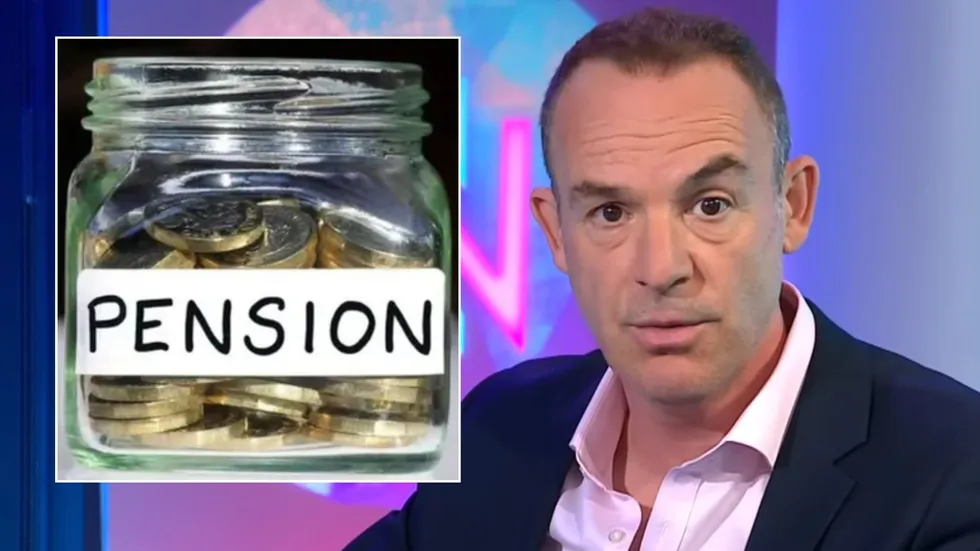
MoneySavingExpert urges millions to stay enrolled in workplace pension schemes
|
BBC/GETTY
Qualifying earnings are calculated on income between £6,240 and £50,270 before tax. When an employee is enrolled, employers must provide information including the date of enrolment, contribution levels, the type of pension scheme and how to opt out.
Mr Lewis said the structure of pension contributions makes opting out particularly costly for basic‑rate taxpayers.
“Whether you are a basic 20 per cent or higher 40 per cent taxpayer, for every £100 you put in, on the minimums your employer would have to add £60 towards your pension pot,” he said.
For a basic‑rate taxpayer, a £100 pension contribution does not reduce take‑home pay by £100. Mr Lewis explained that a worker paying 20 per cent income tax would only have received £80 of that £100 after tax, with £20 paid to HMRC.

Higher‑rate taxpayers gain even more, with Mr Lewis saying they effectively pay £60 for a £160 pension contribution once higher‑rate relief is applied
|
GETTY
As a result, £80 of take‑home pay becomes £160 in a pension once employer contributions and tax relief are applied.
Higher‑rate taxpayers benefit even more, with Mr Lewis saying they effectively pay £60 for the same £160 pension contribution once higher‑rate tax relief is included.
Mr Lewis said: “The doubling or nearly trebling is so important, so don’t opt out unless you absolutely have to.”
He acknowledged that remaining in a workplace pension reduces monthly take‑home pay, but said the long‑term financial benefits far outweigh the short‑term impact.
Described the combination of employer contributions and tax relief as unmatched by other savings options. “There’s nothing out there like it,” he said.
Workplace pension participation has increased significantly since auto‑enrolment was introduced, although opt‑out rates remain a concern among pension experts.

He said workers weighing up opting out should treat employer pension contributions as part of their overall pay package rather than an optional extra
|
GETTY
The Department for Work and Pensions (DWP) has previously warned that opting out could leave workers with substantially lower retirement incomes.
Mr Lewis has repeatedly urged workers struggling with day‑to‑day costs to seek guidance before leaving pension schemes, warning that rebuilding pension savings later in life is significantly harder.
He said workers considering opting out should view employer contributions as part of their overall pay package rather than an optional extra.
Mr Lewis said his message applied particularly to younger workers, who have more time to benefit from compound growth on pension savings.
He urged viewers to consider workplace pensions as a long‑term investment rather than focusing solely on immediate monthly finances.