

A man found himself fighting a dangerous flesh-eating infection after what appeared to be an innocuous spider bite transformed his hand into something resembling “the size of a bowling ball.”
Chris Keegan, a 40-year-old actor and escape room designer, awoke one morning to discover a tiny mark on his right hand, which he initially paid little attention to.
The seemingly trivial wound, suspected to be from a false widow spider, would soon escalate into a medical emergency requiring urgent hospital intervention.
When the bite began turning red, Mr Keegan sought advice from a pharmacist, who identified it as a spider bite and prescribed antibiotics, noting such occurrences were unusual for that time of year.
“It was the size of a pinhead – it looked like the head of a pin near the joint,” he recalled. “It was just a little insect bite on the back of my hand.”
However, the medication proved ineffective against what appeared to be an antibiotic-resistant infection.
“Just a day later my whole hand swelled up like a boxing glove,” Mr Keegan explained. “The bite itself was purple, swollen and almost ruptured.”
A second course of antibiotics from his GP similarly failed to halt the spreading redness, prompting him to seek emergency care as his hand turned an alarming purple hue.
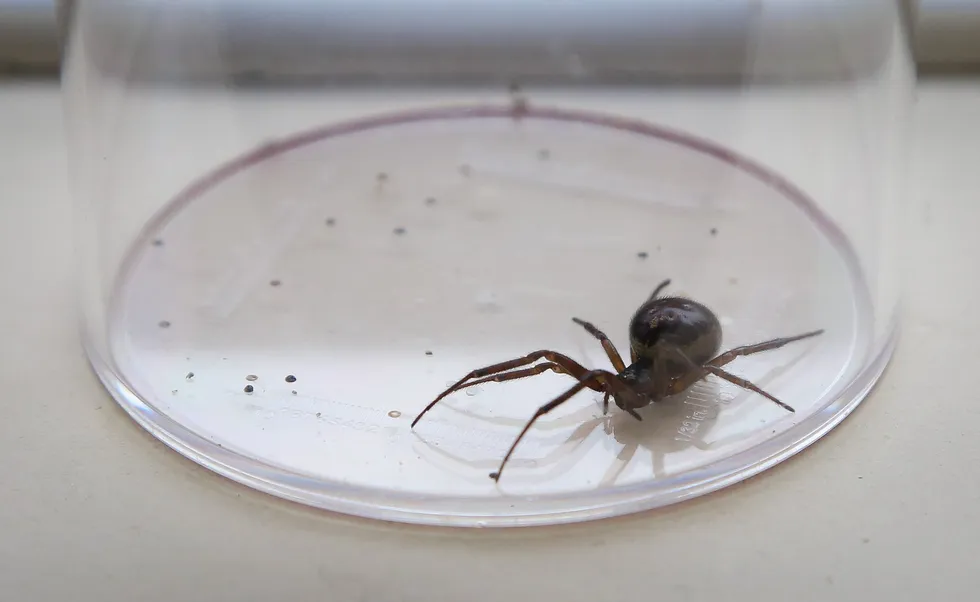
False widow spider numbers are said to be growing exponentially across the nation, following what BBC Countryfile described as ‘a rapid expansion across the world’ (stock)
|
PA
Upon arriving at hospital, Mr Keegan’s condition was treated with considerable urgency.
“I took myself to hospital and within five hours I was x-rayed and had my hand on an operating table, and they were cutting out large chunks of puss and skin,” he recounted.
Surgeons worked to excise any necrotising tissue to prevent the infection from spreading further throughout his hand.
“I felt weirdly removed because they numb the nerve clusters in your armpit – they were going quite deep into the hand to make sure there was no necrotising soft tissue,” he said.
The Coventry man spent five days in hospital undergoing multiple operations before being discharged with six stitches and a permanent scar.
Mr Keegan now issues a cautionary message to others who might dismiss similar injuries.
“Something so tiny and trivial if ignored could have led to my thumb or hand being removed, or sepsis could have set in,” he warned.
The precise cause of his infection remains uncertain, with medical professionals unable to determine whether the bite itself carried the infection or merely provided an entry point for bacteria.
“Some people are hypothesising that it could have been a false widow spider but in reality, we don’t know,” Mr Keegan acknowledged.
False widow species are said to be growing exponentially across the nation, following what BBC Countryfile described as “a rapid expansion across the world.”
Nearly 100 people required hospital treatment for spider bites across the UK in 2024.
Health experts advise those bitten to cleanse the wound with soap and water, apply a cold compress, and contact the 111 helpline should symptoms persist or worsen.