
Experts are calling on Chancellor Rachel Reeves to unveil a major fuel duty U-turn in the Spring Statement this week in response to the conflict in the Middle East.
Strikes from the United States and Israel on Iran over the weekend saw strategic targets in Tehran hit, resulting in the death of Ayatollah Ali Khamenei.
Iran has launched retaliatory strikes against US and RAF bases in the region, warning that enemy nations would face consequences after the death of the Ayatollah.
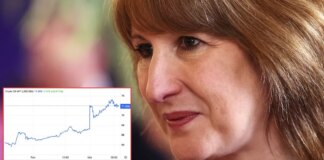
As a result of the instability in the region, oil prices have surged by seven per cent to their highest level in 10 months.
The price of Brent Crude Oil is trading at just over $80 (£60) a barrel, with the markets focusing particularly on the Strait of Hormuz.
The Strait handles roughly one-fifth of global oil shipments, in addition to a significant volume of natural gas.
Although Iran has not closed the Strait of Hormuz yet, many shipping companies have started to reroute to mitigate any disruption.
Reuters reported that more than 150 ships in the Strait had dropped their anchors in a bid to avoid being struck by Iranian missiles.
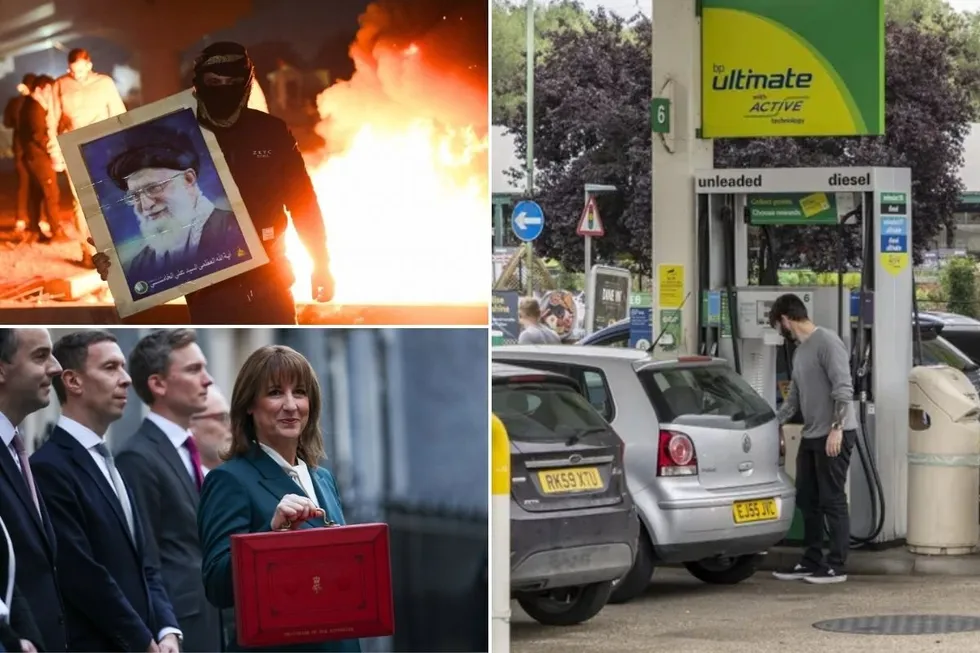
The killing of Ayatollah Ali Khamenei and tensions in the Middle East have prompted campaigners to call on the Chancellor to slash fuel duty rates
|
REUTERS/PA
Dmitry Zhdannikov, energy and commodities editor at Reuters, highlighted how analysts predicted the price of oil to rise by $10 or $20 (£7.50 or £15) if tensions continue to escalate.
Analysts have predicted that if Iran were to close the Strait of Hormuz, oil prices could hit $100 or £75 if the conflict continues into the week.
Howard Cox, founder of FairFuelUK, called on Chancellor Rachel Reeves to protect British drivers in the upcoming Spring Statement following the bombing raids over the weekend.
He said the Government must freeze fuel duty for the remainder of the current Parliament and cancel any planned increases in the Autumn Budget.
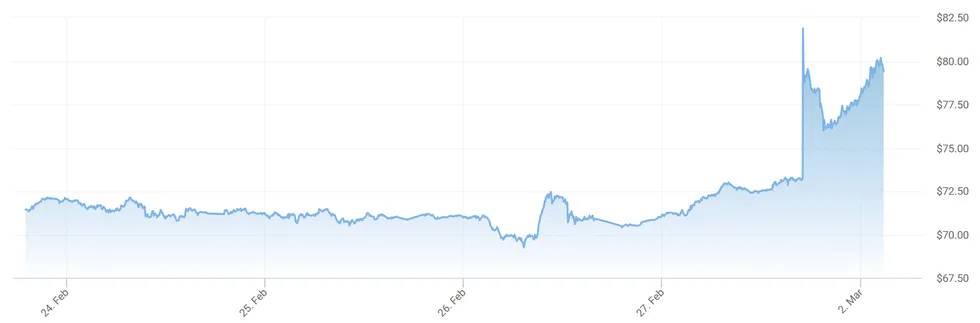
Oil prices have soared over the weekend in response to strikes on Iran and around the Middle East
|
OILPRICE.COM
The campaigner said: “This move would not only be economically prudent—stimulating GDP growth and alleviating inflationary pressure—but it would also provide some much-needed political relief to this Government, known for its frequent U-turns.
“The critical point for all UK politicians to consider is that had the North Sea oil and gas fields been permitted to ‘drill-baby-drill’, our pump prices would not, once again, be so vulnerable in the long term to any conflict in the Middle East.”
At present, drivers in the UK are paying an average of 132.68p per litre for unleaded petrol and 142.34p for diesel, according to RAC Fuel Watch.
The service does not forecast any price changes in the near future, especially given the recent tensions in the Middle East and the potential impact it could have on global fuel prices.
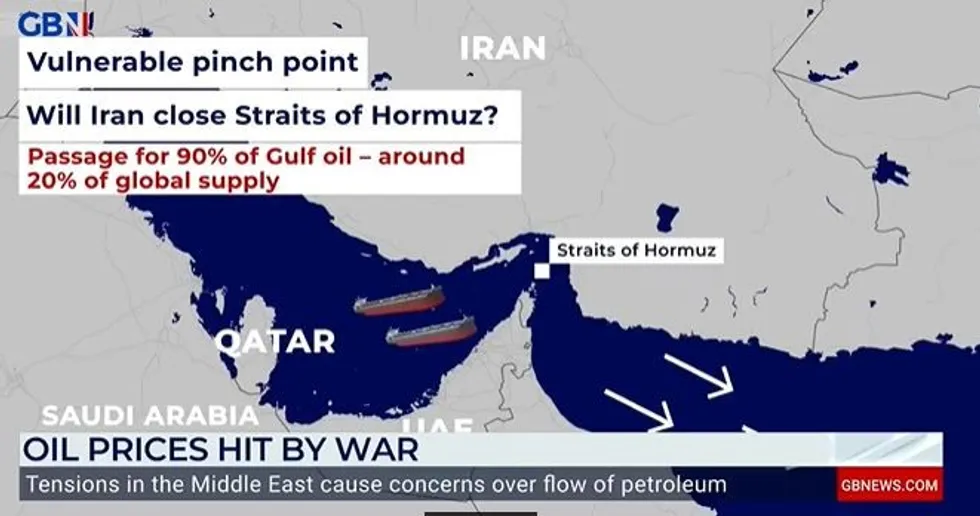 If Iran was to close the Strait of Hormuz, global oil prices would soar | GB NEWS
Chancellor Rachel Reeves announced in last year’s Autumn Budget that the Government would extend the temporary 5p fuel duty cut for a further five months.
The 5p per litre cut was introduced following soaring oil prices in response to the Russian invasion of Ukraine, with this set to be reversed in three stages.
It will fall by one penny in September, 2p in December and a further 2p in March. The Chancellor also scrapped the planned inflation increase for 2026-27, with this returning in April 2027.
GB News has contacted HM Treasury for a comment.