

When Adam Herbert talks about the origins of his business, he doesn’t refer to a boardroom, a pitch deck or a venture capital cheque. He points to a garden shed. It was there that the entrepreneur laid the foundations for what would become Go Live Data, now one of the UK’s fastest-growing marketing firms which partners with Amazon.
“I set it up from my garden shed,” he told GB News. “It was the perfect space to think and create ideas for the business.” Go Live Data was never meant to be a clone of the existing B2B data giants. It was created to challenge them; being built outside the industry, by someone who had spent decades inside it and decided it no longer worked.
Mr Herbert’s entrepreneurial instincts kicked in long before the shed. At just 16, he launched a local business directory called North West Local, which he later sold before it grew too large. It was a small venture, but an important one, teaching him the fundamentals of value creation, timing and restraint.
From there, Herbert spent the next 20 years deep in sales and marketing, “in the trenches” as he puts it. His career took him from B2B data roles in Altrincham to selling billboard space in Poland, exposing him to the mechanics of outbound marketing across markets and cultures.

Go Live Data began as a ‘garden shed’ business but now partners with major firms such as Amazon
|
GETTY / GO LIVE DATA
The businessman explained: “I’ve spent my whole career helping businesses connect with each other. And that gave me plenty of time to realise there had to be a better way.”
By the time Mr Herbert retreated to his garden shed to sketch out Go Live Data, the B2B data industry had become complacent. Companies were paying vast sums for databases that were often 12 months out of date, sometimes more.
According to the entrepreneur, marketing teams were encouraged to send more, contact more, and think les. A volume-driven “spray and pray” culture that irritated recipients and quietly undermined trust. “It was killing marketing ROI,” Herbert says. “And it was bad for everyone.”
The shed gave Herbert something he hadn’t had in years: clarity. Without corporate inertia or legacy systems to appease, he looked to improve the industry he has spent so many years slaving away in on behalf of others.
One of Go Live Data’s first decisions was also its most disruptive. Instead of refreshing databases once a year, as most of the industry still does, the company would clean and refresh its data every 30 days.

Mr Herbert seeks to revolutionise the marketing sector
|
GO LIVE DATA
However, Mr Herbert recognised that accuracy was only half the problem. The deeper issue was how businesses used data, how often they contacted people, and how little thought was given to the individual on the receiving end.
“Data shapes how your business connects with the world,” he added. “From who you talk to, to how you talk to them. It’s worth getting right.”
Out of that thinking came a recipient-first outreach model which is designed to curb over-communication, reduce spam, and reintroduce basic respect into B2B marketing. Mr Herbert did not want Go Live Data to simply sell lists. He wanted it to challenge the entire industry’s habits.
“We didn’t just want to sell data,” he says. “We wanted to change behaviour.” Building that vision from a garden shed was both liberating and risky. There were no safety nets. No giant marketing budgets. No assumption that customers would simply accept a new way of doing things.
Taking on entrenched data giants was never going to be easy. Established players had scale, legacy clients and deep pockets. But Herbert saw their size as a weakness as much as a strength.
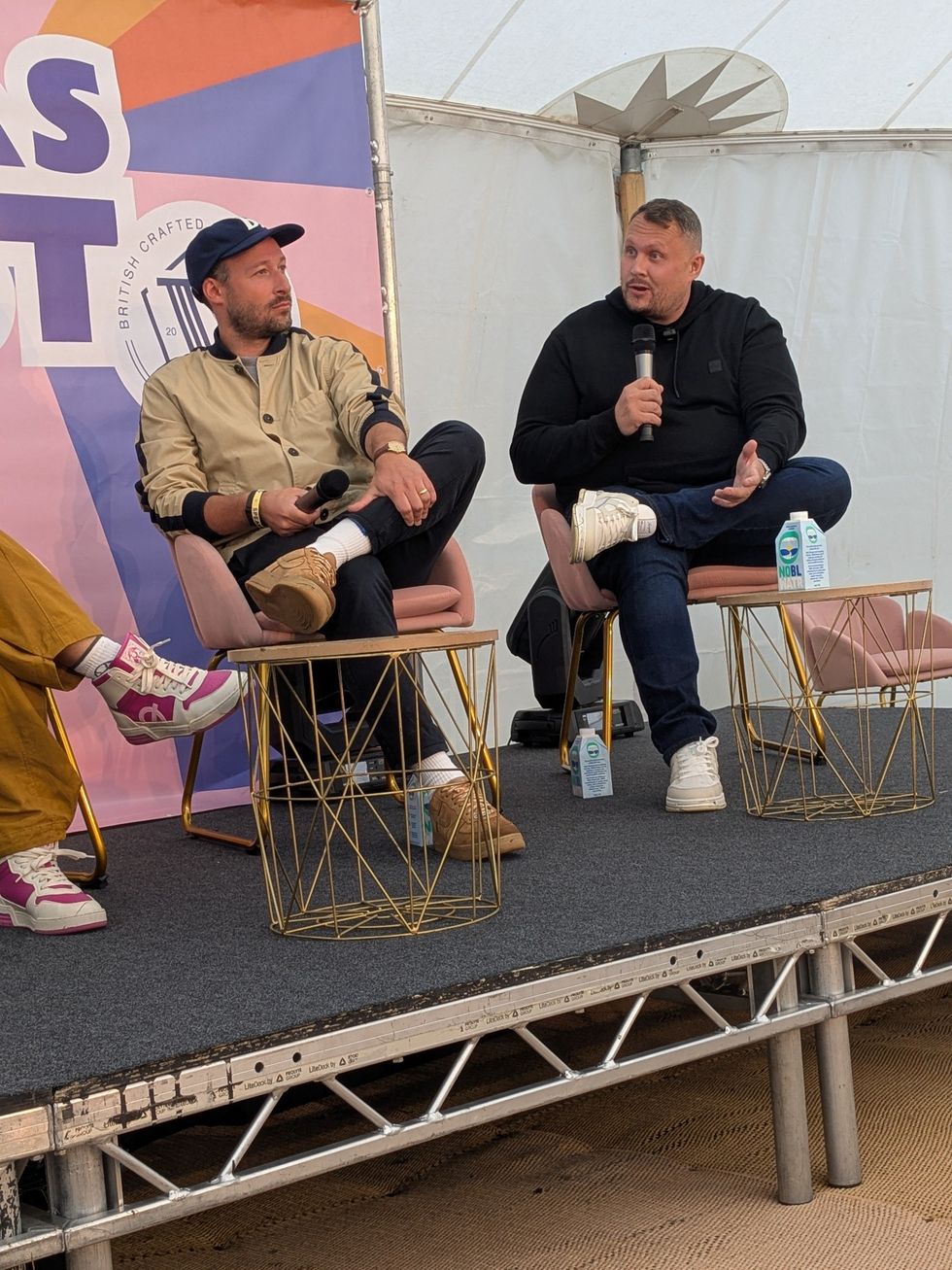
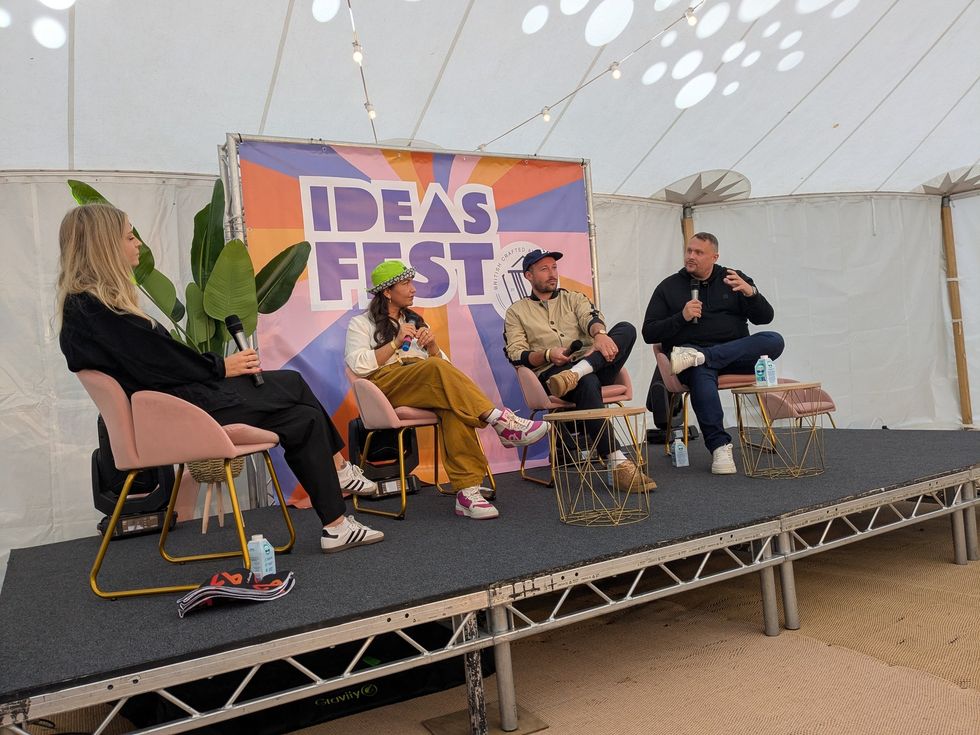
Mr Herbert discusses business at Ideas Fest
|
GO LIVE DATA
“They’ve got the resources,” he says. “But they’re slow. They’re impersonal. They’re stuck in their ways.”
Go Live Data, by contrast, was built to move quickly. New ideas could be tested fast. Systems could be rebuilt without months of approvals. Where competitors took years to adapt, Herbert says his team could innovate in weeks.
He noted: “We don’t out-spend the big guys We out-think them and out-care them.”
Ironically, one of the biggest challenges came when Go Live Data itself started to scale. As the company grew beyond the shed and into offices, Mr Herbert became determined not to lose the mindset that had shaped its early days.
“The interesting thing is that even as we’ve become one of the ‘big boys’ ourselves, we haven’t lost that philosophy,” he says. “We’ve grown in scale, but we’ve kept the challenger mindset.”
 |
|
GO LIVE DATA
The moment Herbert realised the business was genuinely taking off came sooner than expected and before the platform was even fully built. In its early days, Go Live Data was selling a vision as much as a product: cleaner data, better communication, and ethical marketing that actually works.
That message landed quickly. The company secured two major early contracts with Amazon Business and AXA Health, wins that gave the fledgling business both validation and financial runway.
“We were selling the idea before the product was finished,” Herbert revealed. “Thankfully, it resonated.” Those early deals allowed Go Live Data to expand its team, professionalise its systems, and move beyond the shed — without abandoning the thinking that started there.
Today, the company works with major corporates and SMEs across the UK and overseas, providing highly accurate B2B data covering 100 million companies across the UK, Ireland, the US, Canada and the UAE. A team of 20 based in Manchester now supports clients with a focus on long-term trust rather than short-term wins.
Despite the company’s growth, Mr Herbert remains deeply involved in the day-to-day running of the business. He describes his role as part technologist and part guardian, constantly reviewing the tech stack while protecting the philosophy that was born in that shed.
“I’m hands-on,” he says. “I’m talking to clients, challenging assumptions, and making sure we’re building something sustainable.”
For young entrepreneurs, his advice is refreshingly blunt. “Starting a business is a selfish thing,” he says. “Especially if you have a partner or family. They get a more tired, busier version of you. Forget why you think your business is valuable Find out why it’s valuable to the world.”

