

The number of drivers being issued penalty charges for abusing electric vehicle-only bays has soared in the last five years as councils crackdown on petrol and diesel owners who park in them.
Since 2020, over 161,303 fines have been issued to drivers misusing EV charging bays, a new Freedom of Information (FOI) request has found.
Used online car buying platform Cinch requested FOIs to all 218 upper tier local authorities in the UK, with 194 responding.
Penalty Charge Notices (PCNs) are dished out to petrol or diesel cars parking in an EV-only bay – or to EV owners who are taking up the spaces but not charging.
Fines can range up to £70 or £80, making it a very expensive mistake to make.
According to latest records, there are now over 1.7million electric vehicles on UK roads and almost 87,000 public chargepoints across the country.
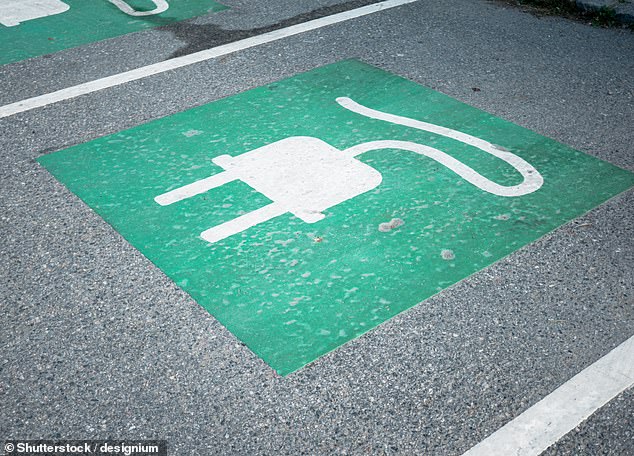
Since 2020, over 161,303 fines have been issued to drivers misusing EV charging bays, an investigation has found
The data collected by Cinch revealed that the number of penalty charges being handed out has increased sharply year-on-year as councils increase enforcement measures.
The monthly averages for fines show an increase of around 24.6 per cent compared to 2024’s monthly average.
Based on estimations using the existing rate of acceleration in fines, drivers are on course to received over 57,000 PCNs in 2025 – an annual record high.
Unsurprisingly, eight out 10 of the most prolific councils are in London, where the share of EV ownership is greater but also parking enforcement is more stringent.
However, it’s Newcastle upon Tyne City Council that tops the list, handing out 19,404 fines between 2020 and 2025.
Some local authorities, such as West Lothian in Scotland, don’t currently enforce EV charging bays at all.
This can either be because Traffic Regulation Orders (TROs) haven’t yet been established or there aren’t the resources to cover enforcement.
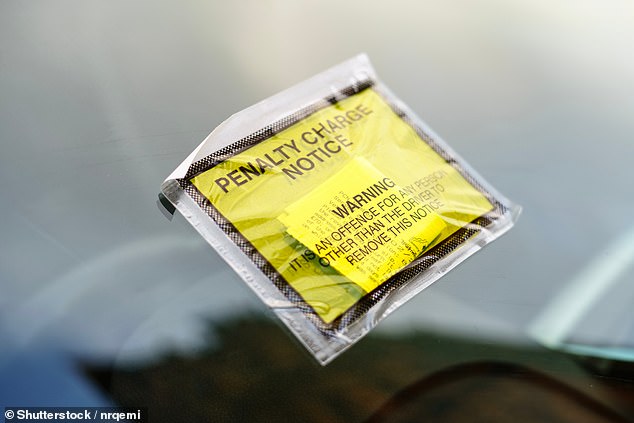
2025 monthly averages show an increase in fines of around 24.6% compared to 2024’s monthly average.
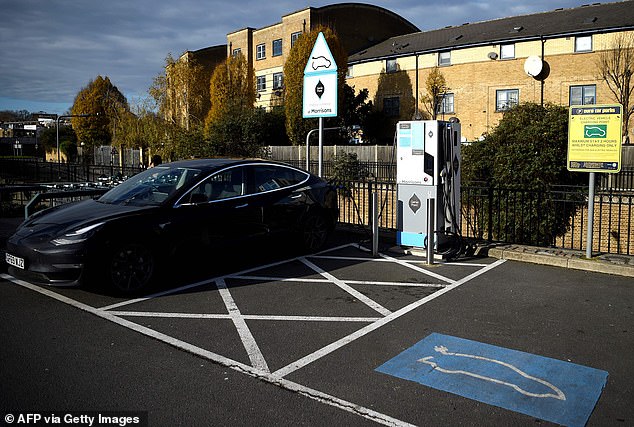
Based on estimations using the existing rate of acceleration in fines, drivers are on course to received over 57,000 PCNs in 2025 – an annual record high
Graham Conway, managing director at UK lease firm Select Car Leasing, says that whether the misuse is accidental or deliberate, drivers need to be aware of the risks.
He warns: ‘Misusing an EV charging bay by overstaying your welcome, or parking in one when you don’t even drive an EV, doesn’t just annoy and irritate other drivers, you’re highly likely to be hit with a £70 fine.
‘And while rules vary between locations, good EV charging bay etiquette is essential for all motorists to understand as we look ahead to a battery-powered future.’
How can you ensure you don’t get a fine for parking in an EV bay?
There are six keys ways to avoid a possible fine, according to Conway and Select Car Leasing.
The first is to check signage thoroughly.
Mr Conway says: ‘Some EV bays rules are enforced 24/7, others are only enforced when a charger is active, and others impose strict maximum stay limits. Check the signage carefully when you park up.’
The second is to park in an EV bay if you’re actively charging.
‘Idle parking is the number one reason fines are issued. If you’re not plugged in and recharging, you shouldn’t be there.’
Thirdly, make sure you move your car once charging is complete.
‘Many chargers have stay limits, often around 45 minutes.
‘Overstaying frustrates other drivers and can lead to fines, so don’t be that person.
‘In fact, the RAC recommends leaving a note on your dash to let others know precisely when you’ll be back.’
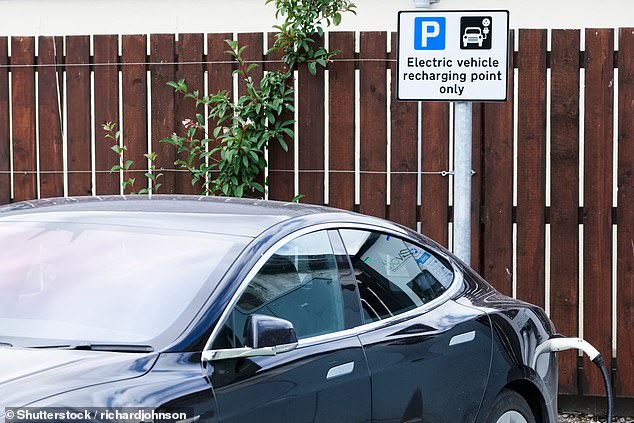
Always check the signage at EV chargers to make sure you aren’t overstaying strict maximum time limits. Fines can be as high as £70 or even £80
Fourthly, watch out for idle fees .
‘Idle fees are charges that accrue when a vehicle remains connected to a charger after its charging session is complete. And they can attract a fee of up to £1 per minute in some circumstances.’
The fifth recommendation is to never use EV bays as short-term parking.
‘No matter what sort of car you drive, if you nip into an EV charging bay for a quick five minutes while you run into the shop – and have no intention of charging – you can create big inconveniences for others. Your quick shop could also cost you an extra £70 quid if you get caught – and remember that some bays are camera-enforced.’
And, finally, Conway says drivers should never unplug another vehicle.
‘With modern cars and chargers, it’s physically impossible to remove a charging cable from someone else’s vehicle, as it locks in place. With older vehicles and certain chargers, however, a charger could be removed.
‘Be warned, though – unplugging someone else’s car to use the charger for yourself could see you being hit with a prosecution for criminal damage. If the case went to court, you could face a fine of up to £2,500.’