

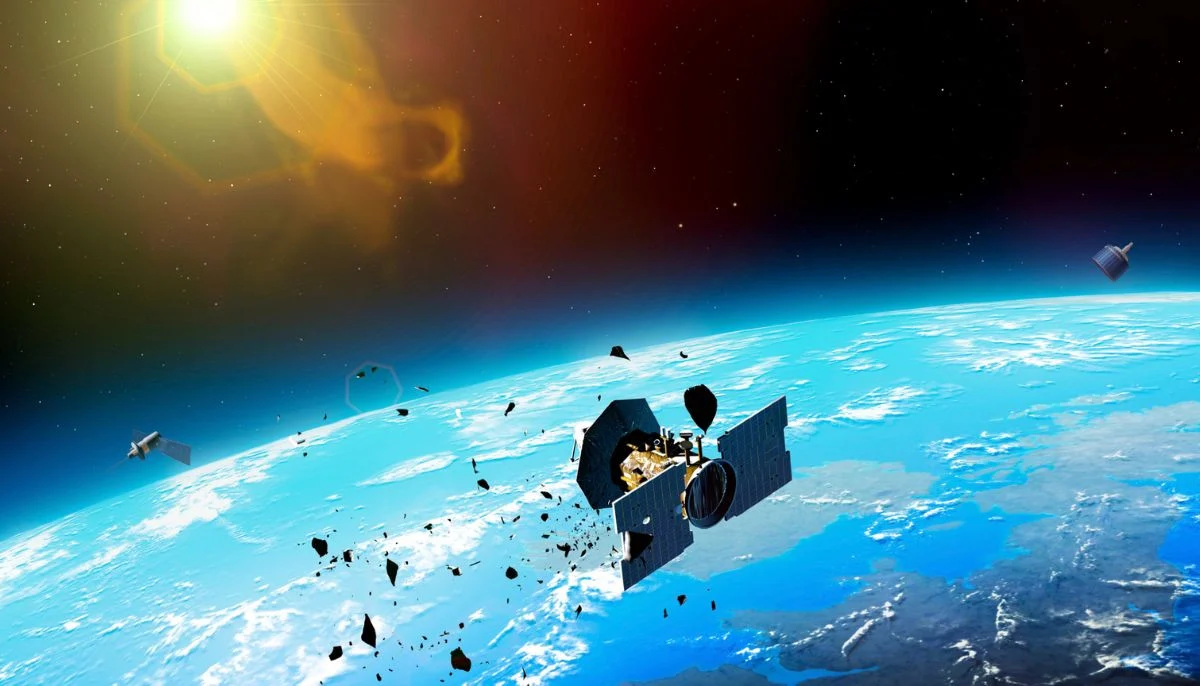
NASA’s 1,323-pound (600 kg) satellite is expected to crash back to Earth on Tuesday, March 10, 2026.
As reported by Space.com, the mission was intended to last only two years, but the satellite named Van Allen Probe and its twin Van Allen Probe B remained active until 2019.
NASA launched these satellites in August to obtain the critical data on Earth’s radiation belt and study the impact of solar activity on astronauts and technology.
According to NASA, “By observing these dynamic regions, the Van Allen Probes contributed to improving forecasts of space weather events and their potential consequences.”
Both spacecraft were deactivated in 2019. According to the US Space Force the Van Allen Probe is expected to reenter Earth’s atmosphere on Tuesday at 7:45 p.m. EDT, plus or minus 24 hours.
“NASA expects most of the spacecraft to burn up as it travels through the atmosphere, but some components are expected to survive re-entry,” a NASA official said in a statement.
Early falling of Probe A
Both probes were expected to stay in orbit until 2034. But, increased solar activity caused Earth’s atmosphere to expand, creating more drag on the satellites and pulling them toward Earth sooner than expected.
In contrast to Probe A, Probe B will not reenter the atmosphere until at least 2030.
Potential risks to human life
As per NASA observations, most of the spacecraft is anticipated to burn up in the atmosphere, but some debris may survive.
Despite that, the risk to human life is extremely low. “The risk of harm coming to anyone on Earth is low — approximately 1 in 4,200,” NASA said.
The risk of getting hurt is extremely low (around 1 in 5,000) because the Earth is mostly water. Since 70% of the planet is covered by oceans, any debris that doesn’t burn up will likely fall into the sea rather than hitting a city.






 satellite is expected to crash back to Eart)