

A tiny snail that was long presumed lost to the world forever has been brought back from the brink.
The greater Bermuda snail was considered extinct until researchers stumbled upon a small surviving group in an alleyway in Hamilton, the island’s capital, approximately ten years ago.
That chance discovery of the button sized mollusc sparked an international rescue mission.
Now, conservationists have successfully bred and released more than 100,000 individuals into their native habitat, with researchers from Chester Zoo playing a central role.
The achievement represents what experts have dubbed a “once in a career” moment in wildlife conservation.
The rescue operation brought together the Bermuda government, Canadian conservation organisation Biolinx Environmental Research, and the Chester-based zoo in a collaborative effort spanning years.
Tamas Papp, Invertebrates Assistant Team Manager at Chester Zoo, said: “It’s every conservationist’s dream to help save a whole species and that’s exactly what we’ve done.
“The greater Bermuda snail is tiny, but this is one of the biggest success stories in conservation… [it is] is testament to the role zoos can play in preventing extinction, and in the power of collaboration.”
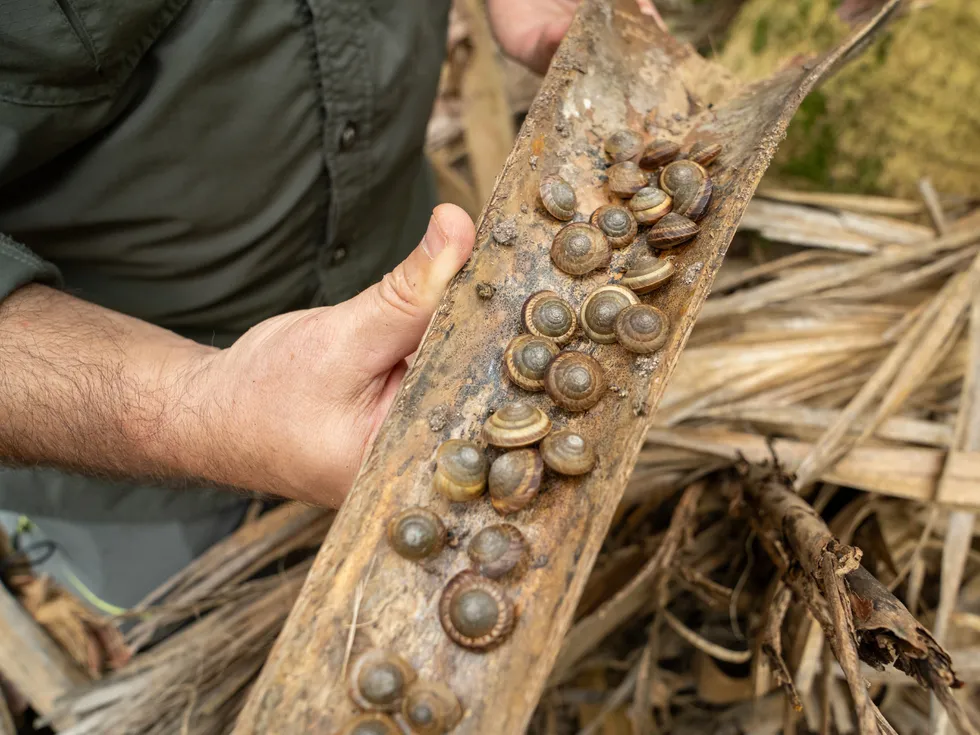
The snails were found in an alleyway
|
CHESTER ZOO
Dr Mark Outerbridge, a Wildlife Ecologist with Bermuda’s Department of Environment and Natural Resources, said: “It is remarkable to think we only began with less than 200 snails and have now released over 100,000.”
Scientists and keepers at the zoo’s 130-acre site bred the snails in purpose-built pods, adapting existing husbandry techniques to discover optimal conditions for the species to reproduce.
Their work has resulted in the first conservation breeding guide ever created for this species.
Six thriving colonies have now taken hold across the Atlantic archipelago, located some 600 miles from the nearest mainland, with findings on their progress due to be published in Oryx, The International Journal of Conservation.

Six thriving colonies have now taken hold across the Atlantic archipelago,
|
CHESTER ZOO
Gerardo Garcia, Animal and Plant Director at Chester Zoo, said: “They nearly vanished, so being able to say the snails are now safe from extinction is amazing.”
He described the reintroduction process as “like a war game”, with expanding populations tracked using flags on a map.
Bermuda’s native snails faced mounting pressures from habitat destruction and climate change.
However, their numbers plummeted dramatically following the arrival of predatory wolf snails and carnivorous flatworms that devoured the smaller indigenous species.

Scientists working on the rout of snails
|
CHESTER ZOO
Dr Kristiina Ovaska from Biolinx explained that the snails serve a crucial ecological function, acting as both prey for larger creatures and processors of living and decaying plant matter, making them essential for nutrient cycling.
The Chester Zoo team will now turn its attention to saving a second threatened species, the lesser Bermuda land snail.
Ruth Davis OBE, UK Special Representative for Nature, said: “This is an example of not only brilliant conservation science, but what is possible when we collaborate across borders to restore nature and reverse biodiversity loss.”