
Energy bills for British households could be “reduced to zero” for households across the UK as part of a major deal between Octopus Energy and property developer Barratt Redrow.
Britain’s biggest housebuilder has struck a deal with the country’s largest energy supplier to create homes where residents will pay nothing for their power for an entire decade.
Barratt Redrow and Octopus Energy announced the collaboration earlier this week, which will see 54 properties built across sites in Wixams, Bedfordshire and Tewkesbury, Gloucestershire.
The initiative targets a significant household expense, with typical UK families currently paying more than £1,800 annually on energy.
Could your energy bills be ‘reduced to zero’?
|
GETTY
Under the arrangement, occupants of these new-build properties will face no home energy costs whatsoever for ten years, potentially saving them tens of thousands of pounds.
Each property will come equipped with advanced sustainable technology designed to eliminate energy bills entirely.
Solar panels, heat pumps and battery storage systems will be installed as standard, working together to generate and store renewable power on site.
These features are bundled with Octopus Energy’s Zero Bills tariff, which the company introduced in 2022 as the world’s first offering to guarantee customers no home energy costs for between five and ten years.

Octopus Energy has launched a new initiative
|
PAThe tariff enables homeowners to move into properties fitted with green technology without facing any charges for their domestic energy consumption throughout the guarantee period.
This partnership represents a significant step towards Octopus Energy’s goal of delivering 100,000 Zero Bills homes by 2030.
Recently, the energy supplier secured £100million through its Affordable Housing Fund, funding that will enable more than 1,000 additional zero-bill properties across England and Scotland.
Octopus has already given approval for over 5,000 Zero Bills homes through collaborations with various developers, spanning affordable housing, private rentals, and both private and shared ownership schemes.
The company has expanded the initiative beyond British shores, launching Zero Bills programmes in Germany, France and New Zealand alongside its domestic rollout.
Nigel Banks, Zero Bills director at Octopus Energy, said: “We’ve been working closely with Barratt Redrow on their research trials and we are now able to showcase what can be achieved with Zero Bills at scale in new housing developments.”
He added that with new homes already incorporating solar panels, heat pumps and electric vehicle chargers, removing energy bills through their tariff represents “a simple, viable and cost-effective upgrade.”
Oliver Novakovic, Technical & Innovation Director at Barratt Redrow, said: “This initiative shows how innovation in housebuilding and energy can work hand-in-hand to create homes that are not only more sustainable, but also more affordable for the long term.”
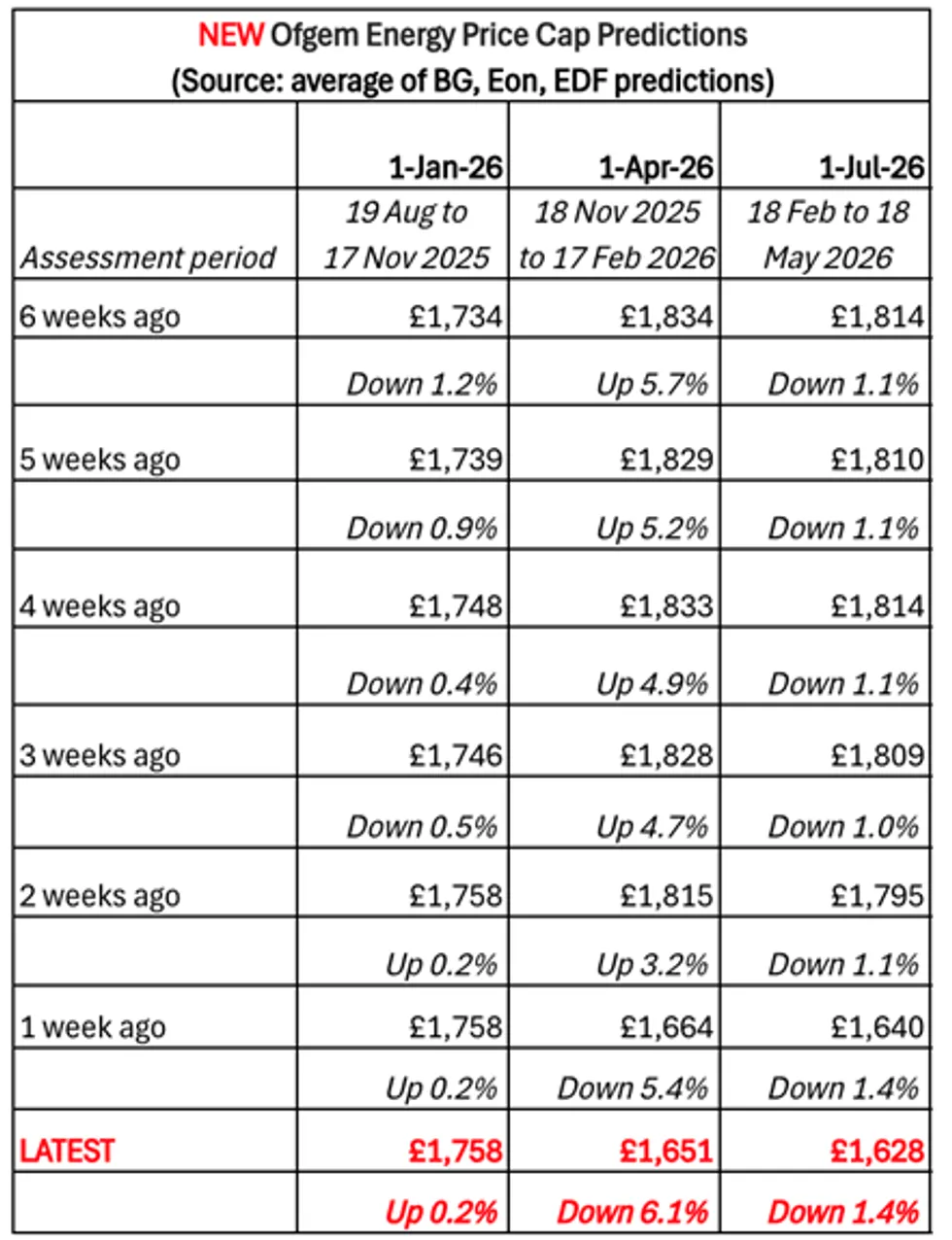 How will the Ofgem energy price cap change next year? | MARTIN LEWIS / X
“By combining Barratt Redrow’s highly energy-efficient homes with Octopus’ Zero Bills technology, we’re helping buyers to cut their energy costs to zero whilst also lowering their carbon footprint.”
The first properties are scheduled for completion in 2026, with both companies already investigating additional sites nationwide. From January 1, 2026, Ofgem will the typical annual dual-fuel energy price cap by about 0.2 er cent to £1,758, up roughly £3 from the previous October-to-December period.
This cap applies for the January to March 2026 quarter and sets the maximum rates suppliers can charge on standard variable tariffs for a typical household paying by Direct Debit.
While wholesale costs have eased slightly, other costs like network and policy charges pushed unit rates and daily standing charges modestly higher, meaning monthly bills rise by around a few tens of pence for many household,