

Police were guilty of “deep complacency”, “fundamental failure” and a “concerted effort” to blame fans during and after the Hillsborough disaster, according to a report from the police watchdog.
The Independent Office for Police Conduct has spent 13 years carrying out the largest ever independent investigation into alleged police misconduct and criminality.
Its report identified a dozen officers – including the then-chief constable of South Yorkshire Police – who would have had a case to answer for gross misconduct had they still been serving. A 13th officer would have potentially faced a misconduct case.
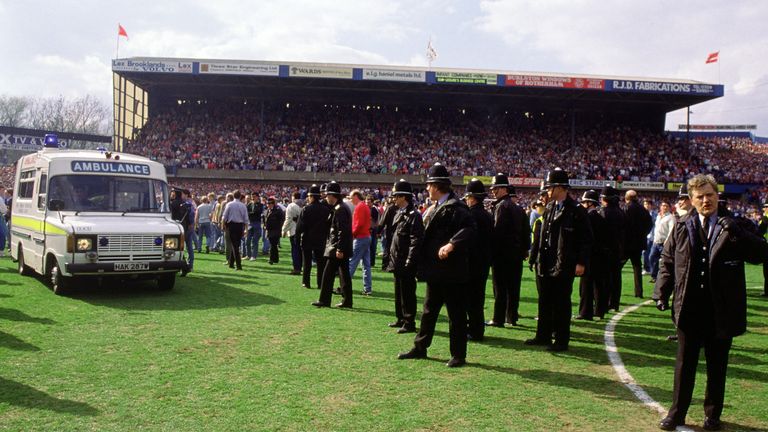
An ambulance on the pitch during the 1989 Hillsborough disaster. Pic: Action Images via Reuters
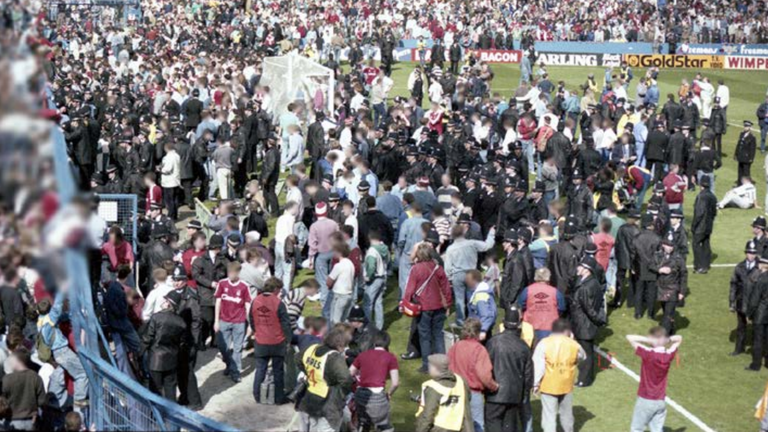
The scene in front of the West Terrace at Hillsborough at 3.11pm on the day of the disaster. Pic: South Yorkshire Police
Hillsborough remains to this day the worst disaster in British sporting history.
A crush on the terraces during the FA Cup semi-final at the stadium in Sheffield resulted in the death of 97 Liverpool fans on April 15 1989.
The men, women and children were aged from 10 to 67.
What the victims’ families have endured ever since, said IOPC deputy director general Kathie Cashell, was “a source of national shame”.
Ms Cashell said: “The 97 people who were unlawfully killed, their families, survivors of the disaster and all those so deeply affected, have been repeatedly let down—before, during and after the horrific events of that day.
“First by the deep complacency of South Yorkshire Police in its preparation for the match, followed by its fundamental failure to grip the disaster as it unfolded, and then through the force’s concerted efforts to deflect the blame on to the Liverpool supporters, which caused enormous distress to bereaved families and survivors for nearly four decades.”
The IOPC report also found that South Yorkshire Police “fundamentally failed in its planning for the match, in its response as the disaster unfolded and in how it dealt with traumatised supporters and families searching for their loved ones”.
The force “attempted to deflect the blame” and “this included allegations about the behaviour of supporters, which have been repeatedly disproven”.
Police initially blamed Liverpool supporters, arriving late, drunk and without tickets, for causing the disaster but, after decades of campaigning by families, that narrative was debunked.
In April 2016, new inquests – held after the original verdicts of accidental death were quashed in 2012 – determined that those who died had been unlawfully killed.
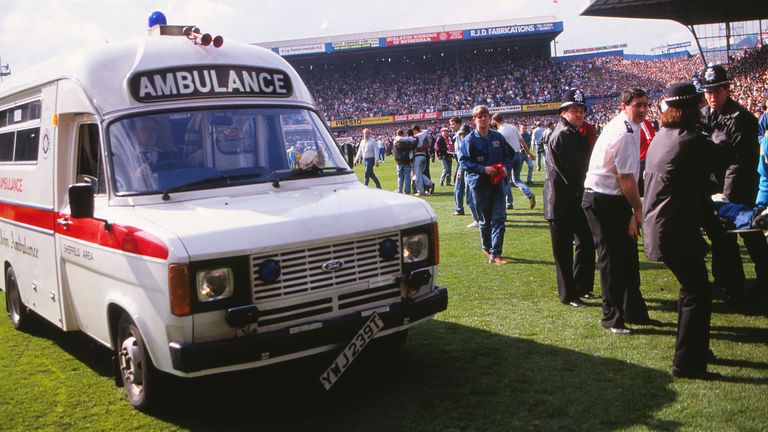
Pic: Colorsport/Shutterstock
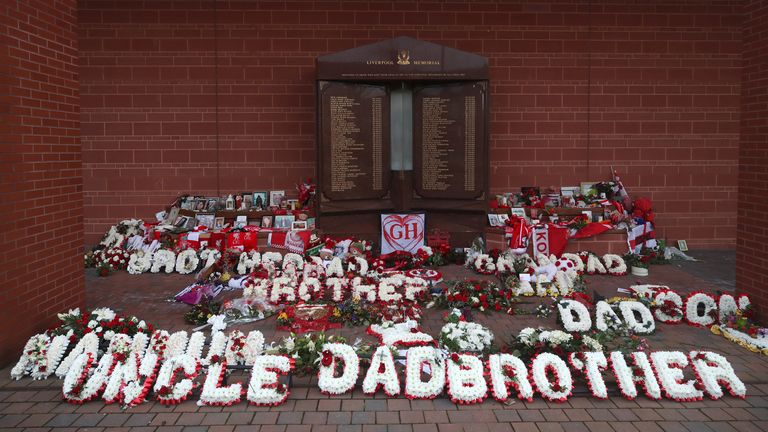
Tributes at Anfield in December 2020 to victims of the 1989 Hillsborough disaster. Pic: PA
The IOPC also examined the actions of West Midlands Police, which investigated the disaster and supported Lord Justice Taylor’s inquiry that followed. It found the force’s investigation was “wholly unsatisfactory and too narrow”.
The report names 12 officers who would have had a case to answer for gross misconduct.
They include the then-South Yorkshire chief constable Peter Wright “for his part in attempting to minimise culpability and deflect blame for the disaster away from SYP and towards Liverpool supporters”. Peter Wright died in 2011.
Also named is the match commander on the day, Chief Supt David Duckenfield.
He was cleared by a jury of gross negligence manslaughter at a retrial in November 2019, after the jury in his first trial was unable to reach a verdict.
Dozens of allegations of misconduct against officers have been upheld but none will face disciplinary proceedings because they have all left the police service.
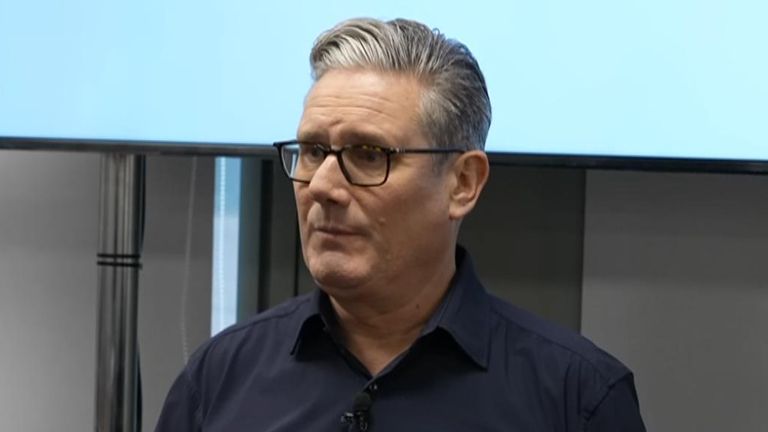
Emotional PM talks about Hillsborough
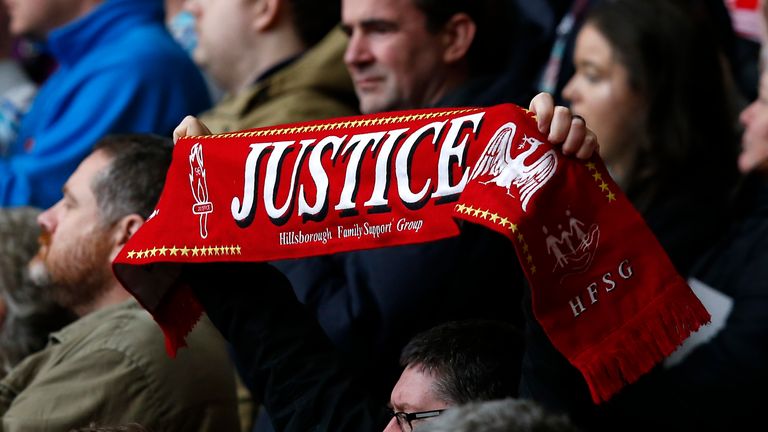
The Hillsborough 27th Anniversary Memorial Service at Anfield, Liverpool in 2016. Pic: PA
Legislation in place at the time did not require the police to have a duty of candour.
But the report has received a lukewarm reception from some of the victims’ families.
Read more on Sky News:
What is the ‘Hillsborough Law?’
Jail ‘the only way to stop cover-ups’
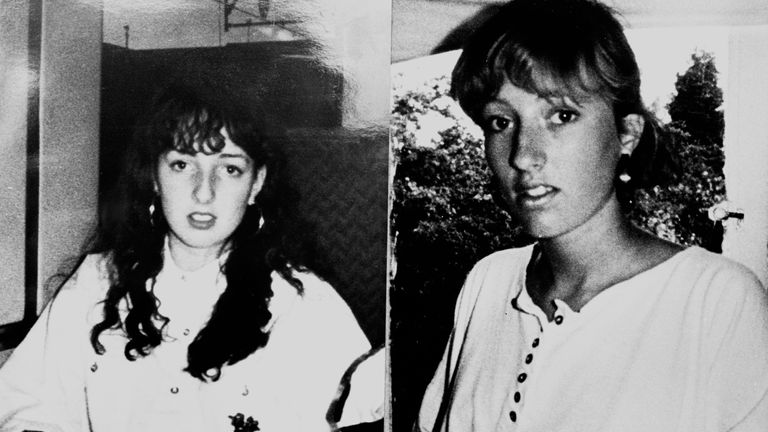
Sisters Victoria and Sarah Hicks died in the tragedy. Pic: PA
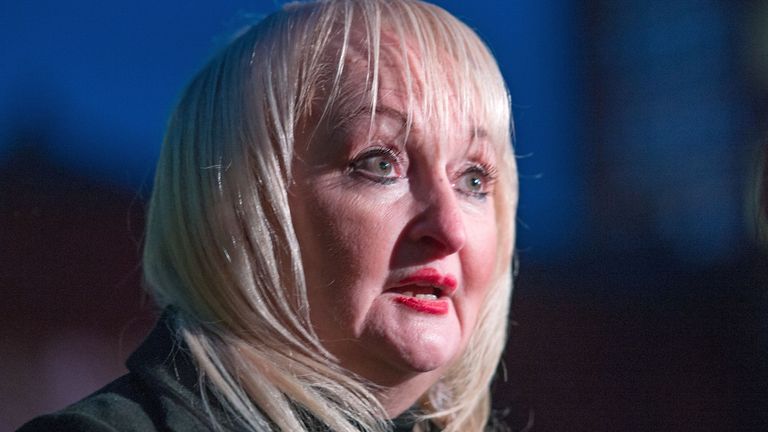
Jenni Hicks. Pic: PA
Jenni Hicks, whose teenage daughters Sarah and Vicki died at Hillsborough, questioned why action had not been taken against those officers when police failings were first revealed by the Taylor inquiry just months after the disaster.
She said: “I can’t believe, having seen the 370-odd page report, how on earth it can have taken them 13 years to write. There’s very little in this report that I didn’t know already. It’s not, in my opinion, about telling the families anything.”
In September, the government introduced the so-called Hillsborough Law to the House of Commons. It will include a duty of candour, forcing public officials to act with honesty and integrity at all times or face criminal sanctions.
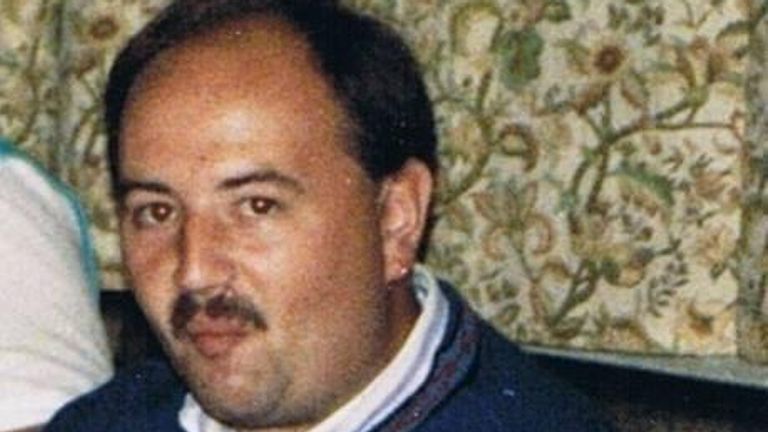
Andrew Mark Brookes
But Louise Brookes, whose brother Andrew Mark Brookes died at Hillsborough, dismissed both the IOPC report and the new law.
“Nothing will ever change. There will be another cover-up, there will be another disaster, and until things change at the very top, and I include MPs, chief constables, CEOs of organisations, until they’re the ones who stop protecting and covering up for themselves, nothing will ever change.”
Nicola Brook, a solicitor at Broudie Jackson Canter acting for several bereaved families, said it was a “bitter injustice” that no one would be held to account.
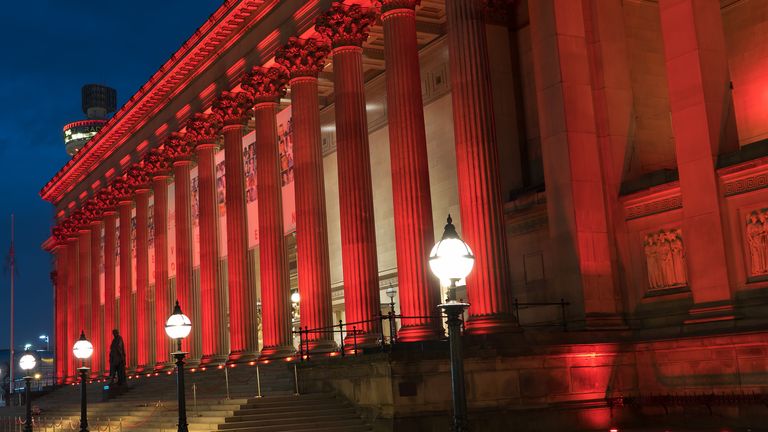
Liverpool’s St Georges Hall lit up in red in 2019 on the 30th anniversary of the disaster. Pic: Shuttercock
She said: “This outcome may vindicate the bereaved families and survivors who have fought for decades to expose the truth – but it delivers no justice.”Instead, it exposes a system that has allowed officers to simply walk away, retiring without scrutiny, sanction or consequence for failing to meet the standards the public has every right to expect.
“Yes, the law has now changed so this loophole cannot be used in future. But for those affected by this case, that is no consolation.
“They are left with yet another bitter injustice: the truth finally acknowledged, but accountability denied.”
In her statement, published with the IOPC report, Kathie Cashell said: “As I have expressed to those closely affected, this process has taken too long – those who campaigned for so many years deserve better.
“If a legal duty of candour had existed in 1989, it could have helped ensure that all relevant evidence was shared fully and promptly. The families of those who were unlawfully killed would have experienced a far less traumatic fight for answers about what happened to their loved ones. Had that duty existed, our investigations may not have been necessary at all.”

