
Sales haven’t been too sweet for Sweetgreen recently.
The trendy salad chain — once the go-to lunch spot for young professionals — has reported falling sales and is now scrambling to win customers back with cheaper options and a new focus on protein.
Sweetgreen blamed a spending pullback among 25 to 35-year-olds, a group that once powered its growth but is now tightening budgets as restaurant prices soar.
The chain’s own prices haven’t helped. With some salads topping $15, even loyal fans are balking.
Sales plunged 9.5 percent compared to last year, according to its third-quarter earnings call.
In response, Sweetgreen says it’s doubling down on two things: value and protein.
The latest diet craze has seen Americans upping their protein consumption — and Sweetgreen is hoping to cash in on the trend.
The brand is launching a new ‘macro-tracking’ feature that lets customers see exactly how much protein, fat, and carbs are in each meal — and how ingredient swaps change the nutritional balance.
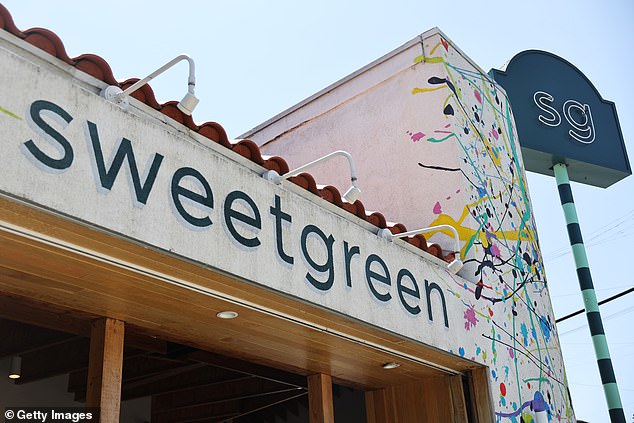
Sales haven’t been too sweet for Sweetgreen recently, but the hugely popular salad chain is vowing to make changes to draw customers back in
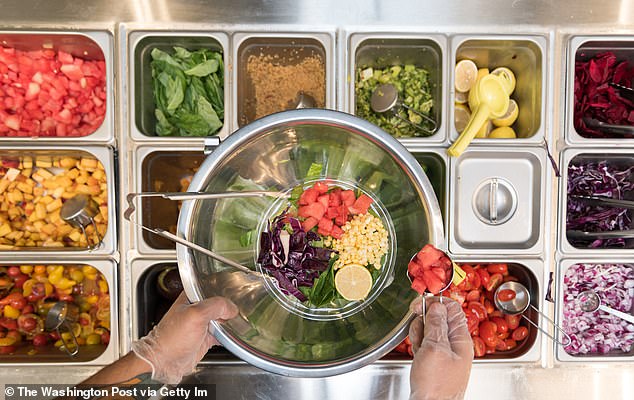
In an effort to turn its luck, Sweetgreen is focusing on two main things: value and protein

Pictured: Lila Moss, model and sister of Kate Moss, picks up lunch at Sweetgreen in New York City
The company vowed to add 25 percent more protein to entrees featuring chicken and tofu earlier this year, and has now highlighted nine chef-curated dishes with over 30 grams of protein.
Earlier this year, Sweetgreen admitted that about two-thirds of its restaurant locations were not operationally up to par.
According to CEO and co-founder Jonathan Neman, only about 60 percent of Sweetgreen’s 266 restaurants meet the operational standards, but the brand is working to improve these numbers.
‘We know that we can do a better job of creating clear entry prices and logical trade-up opportunities across our create-your-own and chef-curated menu options so that our customers understand the value across every menu here,’ said Neman.
‘When guests know what they’re getting and feel good about it, it builds trust and drives loyalty over time.’
Sweetgreen has come under fire in recent years for selling $15 salads, which has been deemed out of touch with what consumers can and will pay.
Earlier this year, the chain experimented with promotions of a $13 weekly bowl drop, which Neman said helped the chain understand more about price elasticity.
‘We saw a lot of engagement around it, but given the fact that it was mostly marketed to existing customers, a relative high degree of cannibalization,’ he said.
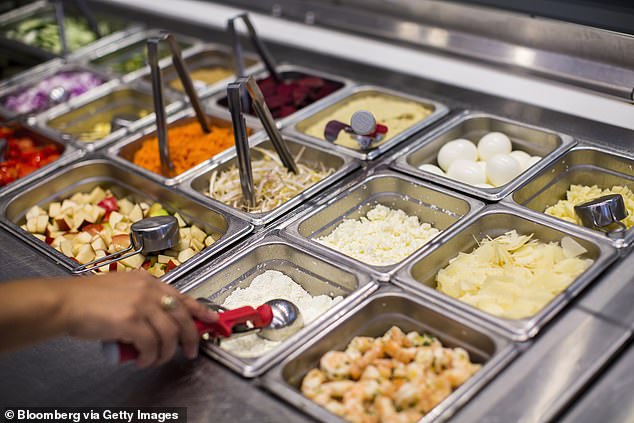
Sweetgreen vowed to add 25 percent more protein to entrees featuring chicken and tofu earlier this year

Pictured: Irish actor Paul Mescal spotted grabbing Sweetgreen in New York City
‘But it did show us that there is a real opportunity around more entry price points around our menu as we look at menu innovation.’
On top of its protein push, Sweetgreen may also release more new menu items that bridge the gap between affordability and health, including potential hand-held options.
‘A lot of the pricing work is going into stage gate in the coming months, and we do think that there’s going to be a lot of opportunity around the different pricing tiers,’ he said.
Sweetgreen is also slowing development next year to focus more on operations.
The chain is on track to open a net of 37 new restaurants this year, including 18 that feature the Infinite Kitchen model which uses robotic automation to prepare food orders on a rotating conveyor belt, with ingredients dispensed from automated dispensers into bowls.
Next year, Sweetgreen expects to open between 15 to 20 restaurants, about half of which will be Infinite Kitchens.
‘We believe this strikes the right balance between growth and financial discipline,’ Neman said.
Jamie McConnell, Sweetgreen’s newly appointed chief financial officer, said the company initially experienced a boost in sales in July following the launch of its summer menu. However, sales declined in both August and September.

According to CEO and co-founder Jonathan Neman (pictured), only about 60 percent of Sweetgreen’s 266 restaurants meet the operational standards, but the brand is working to improve these numbers
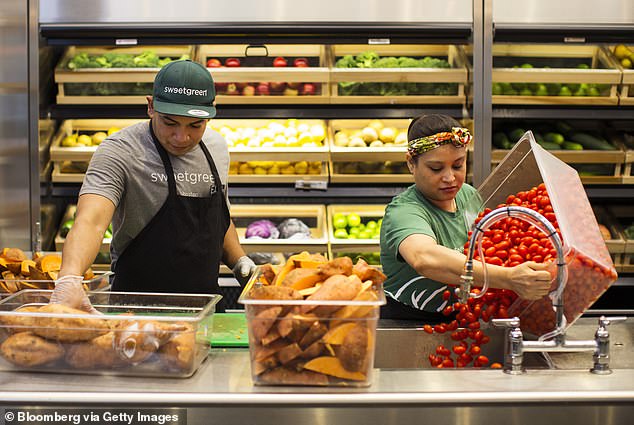
Sweetgreen has come under fire in recent years for selling $15 salads, which has been deemed out of touch with what consumers can and will pay
‘October is holding flat to September, so we’re running at low negative double digits right now,’ said McConnell.
‘The 25 to 35 [year-old] consumer is the most under pressure, and they make up about 30 percent of our consumer base. And they’re down 15 percent.’
The company is also seeing weaker performance during the dinner daypart — a segment that had shown strong growth just a year ago.
Following the earnings call, Sweetgreen’s stock plummeted more than 11% in after-hours trading following the earnings call.