

Nationwide Building Society has revealed the most affordable areas in the UK for homebuyers ahead of a potential spike in mortgage rates, which could repayments surge by £1,500 a year.
Inverclyde, encompassing Greenock and Port Glasgow, offers first-time buyers properties at just 2.3 times average local earnings, with typical prices sitting at approximately £100,000.
At the opposite end of the spectrum, Kensington and Chelsea remains the least accessible area for those seeking to get on the property ladder, alongside Oxford and Cambridge.
Andrew Harvey, Nationwide’s senior economist, said: “Our recent Affordability Report showed that affordability had improved across all regions in Great Britain over the past year, helping to support first-time buyer activity.”
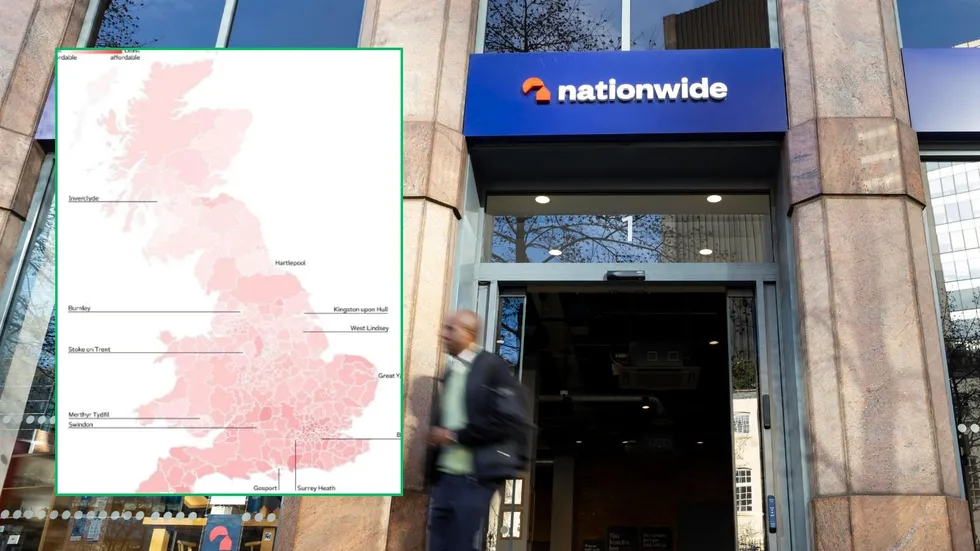
Nationwide Building Society reveals the most affordable places in the UK
|
NATIONWIDE BUILDING SOCIETY
The North West’s most budget-friendly option remains Burnley, while Hartlepool continues to offer the best value in the North region. Yorkshire and The Humber’s most affordable spot is Kingston upon Hull, where the ratio stands at 3.0.
Further south, West Lindsey in Lincolnshire tops the East Midlands for value, whilst Great Yarmouth maintains its status as East Anglia’s cheapest and most affordable location.
Hampshire’s Gosport leads the Outer South East with average prices around £200,000, and Swindon remains the South West’s most accessible town at 4.8 times earnings.
Roughly seven in ten local authorities across Britain have experienced improved affordability conditions over the past twelve months.
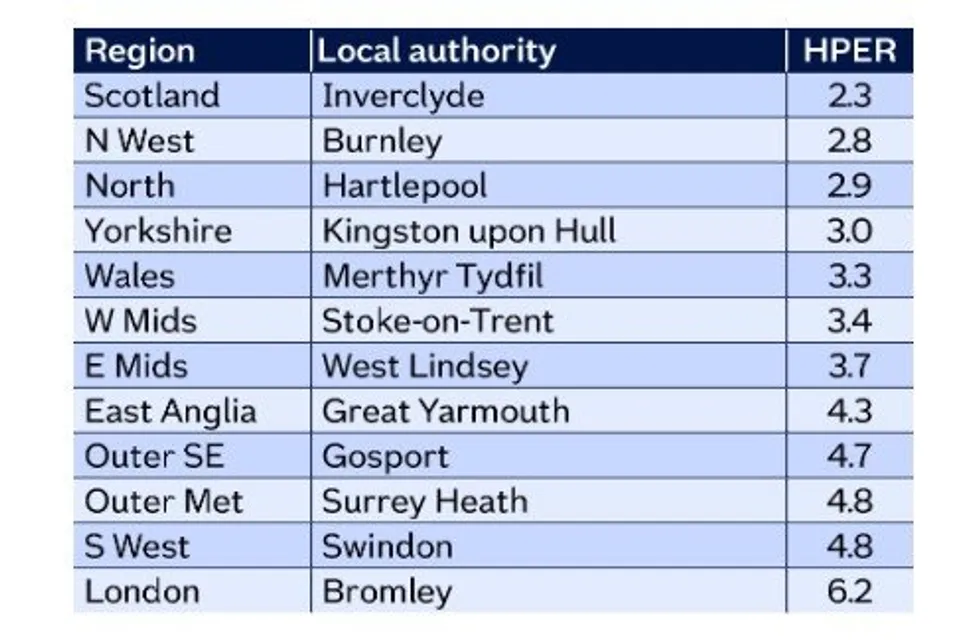
Where are the most affordable places to buy per region?
|
NATIONWIDE BUILDING SOCIETY
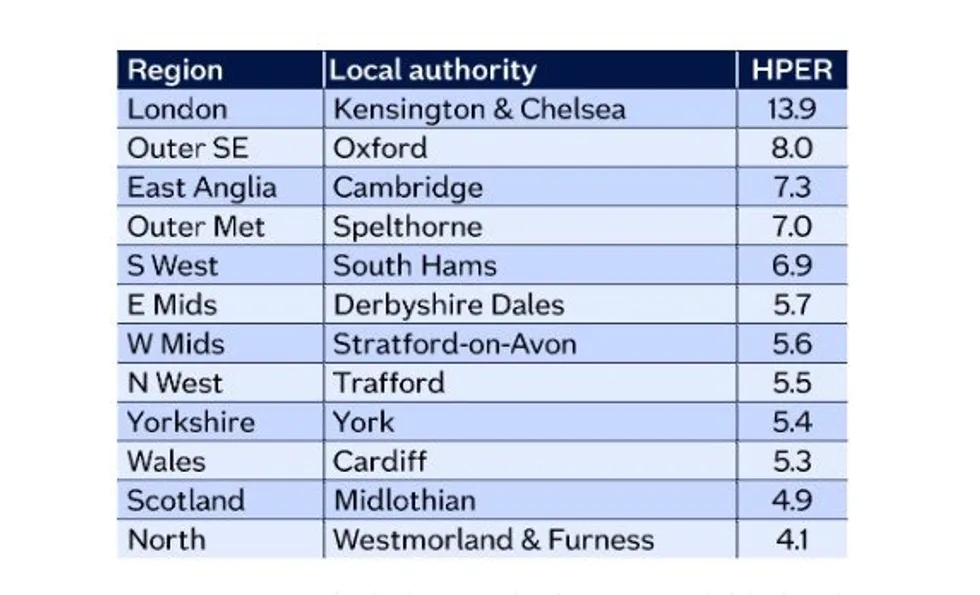
Where are the most
|
NATIONWIDE BUILDING SOCIETY
London boroughs have recorded some of the most significant gains, partly driven by declining average property values, though prices relative to earnings remain substantially higher than elsewhere in the country.
Beyond the capital, Norwich demonstrated the strongest improvement, with its house price to earnings ratio dropping from 5.4 in 2024 to 4.3, fuelled by robust wage growth.
Welwyn Hatfield in Hertfordshire also saw notable progress, with the ratio falling from 7.6 to 6.6 through a combination of rising incomes and reduced property prices.
Saving for a deposit presents vastly different challenges depending on location, with a 10 per cent down payment on a typical first-time buyer home falling between £10,000 and £25,000 in more than half of local authority areas.
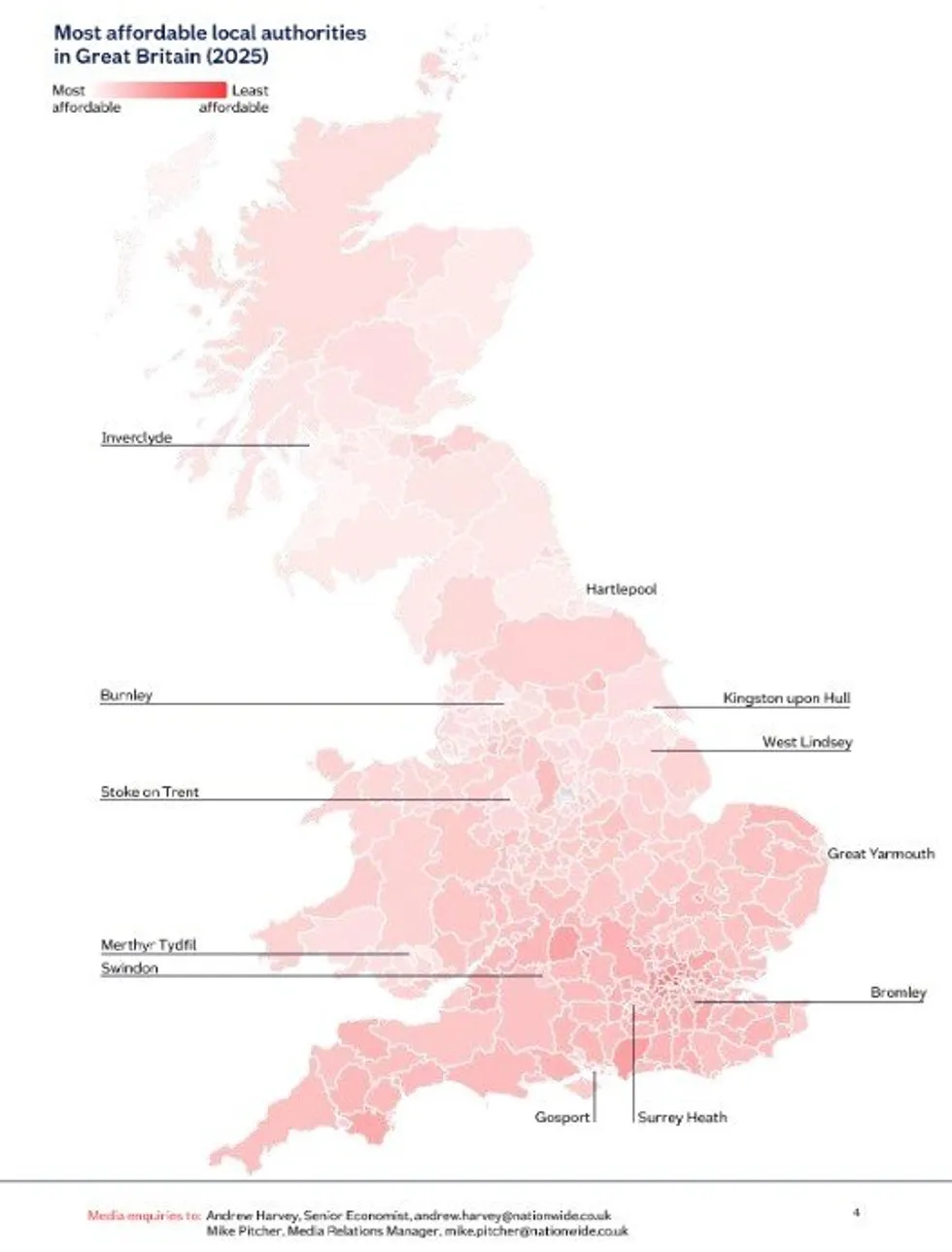
Homebuyers are struggling the UK market
|
NATIONWIDE BUILDING SOCIETY
Earlier this week, the Bank of England’s Monetary Policy Committee (MPC) unanimously voted to keep the base rate at 3.75 per cent amid growing concerns over the impact of the US-Iran war on the economy.
Adam French, the head of Consumer Finance at Moneyfacts, said: “Swap rates, which underpin mortgage pricing, have risen sharply following the decision to hold the base rate at 3.75 per cent, with markets interpreting commentary from the Bank of England as leaving the door open to rate rises amid ‘Trumpflation’ fears.
“With two- and five-year swaps now sitting at their highest level in more than a year, lenders are once again facing higher funding costs, and this will feed through into mortgage pricing.
Moneyfacts analysis of more than 30 years of historic rates data shows mortgage rates have historically averaged around 1.5 percentage points above Base Rate. If markets continue to price in one or two rate rises, this could see average new mortgage rates stabilise at around 5.50 per cent to 5.75 per cent
“That would leave borrowers paying £1,000 to £1,500 more per year on a typical £250,000 mortgage compared to just a few weeks ago. While a quicker resolution to the conflict in the Middle East could ease pressure on rates, the reality is that a more volatile world is a more expensive world”