
Sadiq Khan’s plan to ban cars from a major London shopping district has come under growing scrutiny after London Assembly members raised concerns about funding, transparency and the impact on local residents.
The Mayor’s £150million pedestrianisation scheme for Oxford Street, which would see traffic removed between Orchard Street and Great Portland Street by the summer, was challenged during a tense session at City Hall.
Senior officials from Transport for London and the Oxford Street Development Corporation were questioned by the London Assembly Budget and Performance Committee this week.
A major flashpoint was TfL‘s refusal to publish detailed consultation data showing how people living near Oxford Street responded to the plans.
Despite collecting postcode information from around 2,700 respondents, officials confirmed they had not analysed or released results based on proximity to the street.
Helen Cansick, TfL’s Head of Investment Planning for Healthy Streets, defended the approach, telling the committee: “We don’t segment our results by postcode. Our standard approach for any consultation is to look at the totality of what people are telling us about our proposals.”
But Assembly Member Susan Hall said residents felt ignored, warning: “We’re hearing loud and clear from residents that they’re very unhappy about this.”
Fellow Assembly Member Keith Prince suggested the lack of transparency risked damaging trust. “By not publishing the data, it suggests that the people who live closest are up in arms,” he said. “TfL is creating inferences for people to draw.”
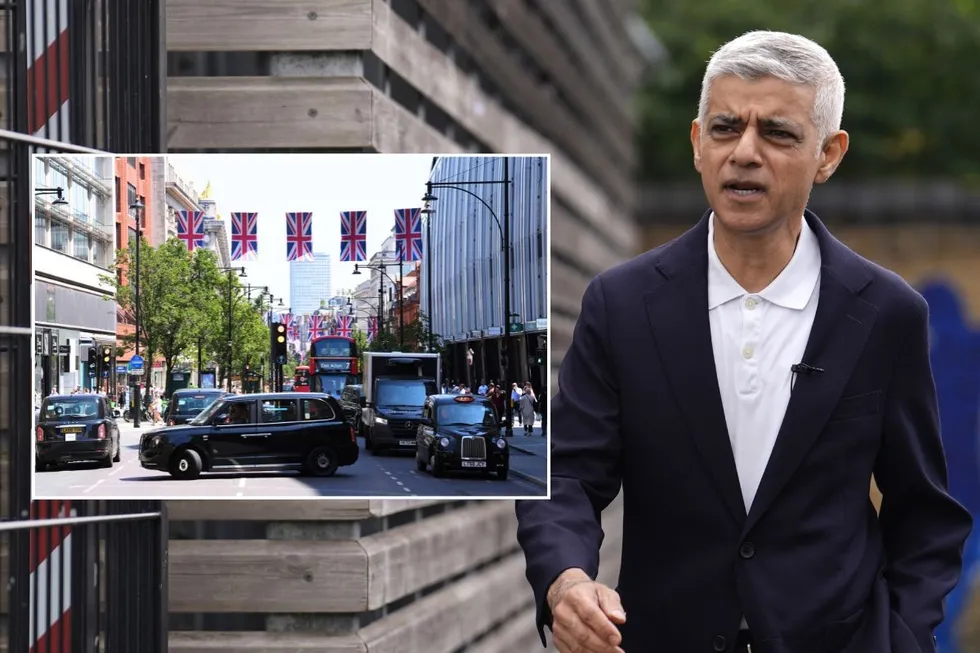
Sadiq Khan plans to pedestrianise London’s Oxford Street by the summer
|
PAFunding concerns also dominated the session, with officials admitting no commercial sponsors have yet backed the project, 18 months after it was first announced.
Committee chairman Neil Garratt highlighted the gap, saying: “Literally not one single commercial sponsor has come forward.”
OSDC Chief Finance Officer Adam Barrett confirmed the organisation had not factored any commercial income into its financial planning so far.
He said the scheme would need around £27million to £28million a year by 2030 to cover running costs and debt repayments.
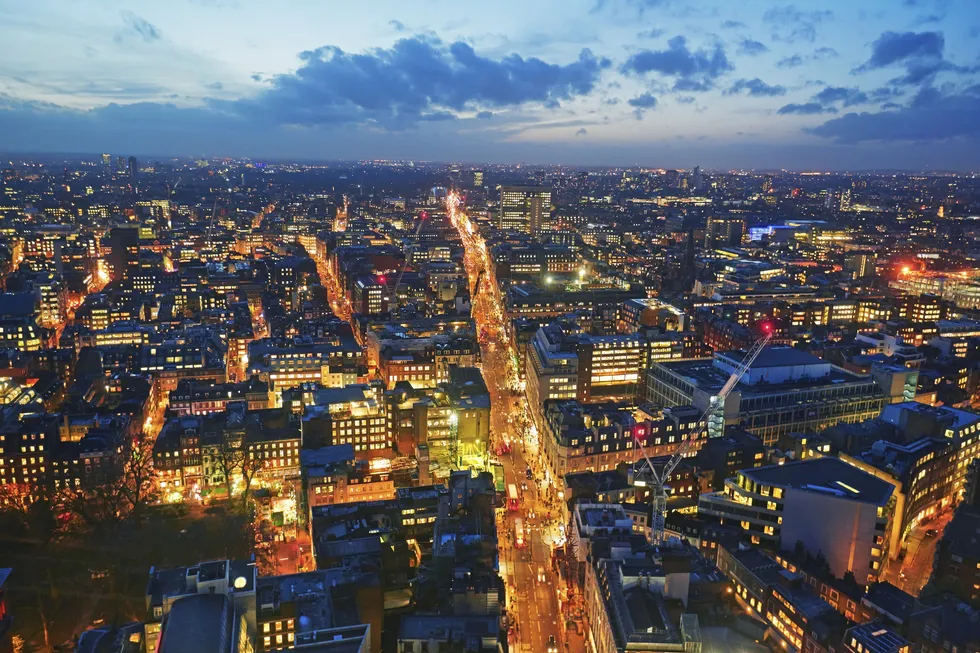 The London Mayor gained new powers in January to help push forward with pedestrianising Oxford Street | GETTY
Mr Barrett suggested advertising revenue could potentially bring in up to £25million annually, but admitted the figures were not yet confirmed.
Newly appointed OSDC Chief Executive Nabeel Khan, who has been in the role for just over three weeks, said it was still early days.
He told the committee the corporation was “a very young organisation” and insisted discussions about commercial opportunities would now begin in earnest.
Accessibility was another key concern raised by Assembly members. Officials confirmed bus stops would be moved between 100 and 200 metres away from Oxford Street, potentially making access harder for some users.
Ms Cansick also confirmed there are no plans to make Oxford Circus or Marble Arch stations step-free, citing “exceptionally high capital cost”.
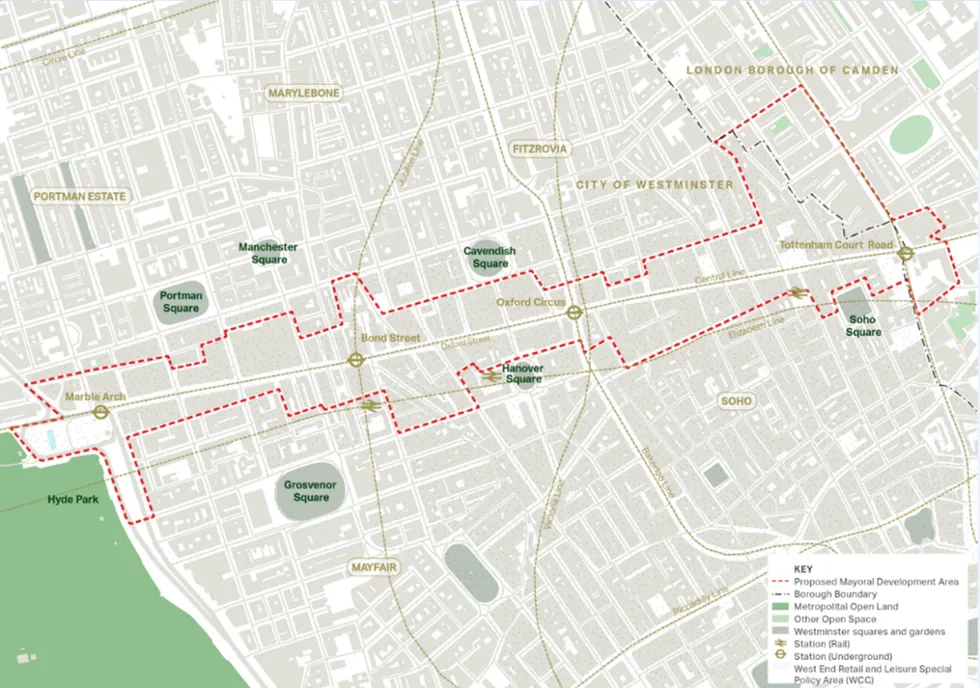 Map of the proposed pedestrianised route along Oxford Street | TFL
Meanwhile, Ms Hall said the changes would disproportionately affect older and disabled people. “It’s going to be more difficult for people to be dropped outside their favourite shops,” she warned.
Safety fears were also raised, particularly about the impact of pedestrianisation at night.
Ms Hall told officials: “Lots of local residents have said to me they’re very concerned about their safety in a pedestrianised area at nighttime because many of them use Oxford Street to walk across to get to their homes.”
Questions were also raised about the relationship between the new development corporation and local councils.
Sir Sadiq described his dealings with Westminster and Camden as “nothing but constructive“, noting both authorities are represented on the OSDC board.
But Mr Garratt pushed back, pointing out that Westminster Council leader Adam Hug had previously said he did not believe the corporation should exist.
“If he introduced himself by saying I don’t think this should exist, maybe that’s not as warm and rosy as you perhaps painted,” he said.
The Oxford Street Development Corporation was formally set up in January and will be reviewed after three years.