

Homeowners and prospective buyers taking out a mortgage today face annual costs £788 higher than just a fortnight ago, according to fresh figures.
The sharp rise follows US-Israel military strikes on Iran that commenced at the end of February, triggering significant upheaval across lending markets.
For a typical £250,000 loan spread over 25 years, the average two-year fixed rate has climbed from 4.83 per cent at the beginning of March to 5.28 per cent currently, according to MoneyFacts.
This marks the highest level since April last year.
Adam French, head of consumer finance at Moneyfacts, said: “Borrowers may need to brace for further volatility in the weeks ahead as the global economy braces for a ‘Trumpflation’ wave flowing from the US and Israel-led action in Iran.”
Those seeking longer-term security have seen similar increases, with five-year fixed rates rising from 4.95 per cent to 5.32 per cent over the same two-week period.
This represents the highest point for five-year deals since February of last year.
Moneyfacts calculations show that opting for a five-year arrangement now costs £651 more annually compared to early March.
The turmoil has also reduced choice for borrowers, with nearly 690 mortgage products disappearing from the market since March 9, accounting for close to a tenth of all available deals.

The sharp rise follows US-Israel military strikes on Iran
|
GETTY
However, this contraction remains considerably less severe than the disruption following the mini-Budget under former Prime Minister Liz Truss, when then Chancellor Kwasi Kwarteng’s announcements prompted lenders to withdraw approximately a quarter of their offerings.
The most competitive mortgage deals have now been withdrawn from Britain’s biggest lenders.
Barclays, HSBC, NatWest, Nationwide and Santander have all pulled their sub-four per cent fixed rate products, which were still on offer just last week.
First-time buyers are expected to be among the most affected by these developments.
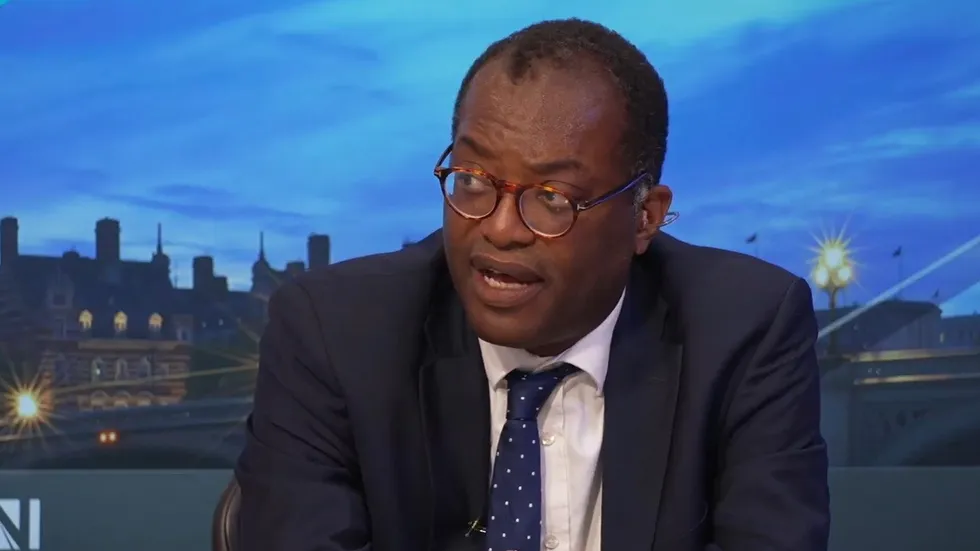
The mini-Budget under Liz Truss and Kwasi Kwarteng caused an even worse contraction
|
GB NewsMary-Lou Press, president of NAEA Propertymark, said: “This shift highlights how sensitive mortgage rates are to wider economic uncertainty, making it harder for people to plan and potentially slowing activity across the housing market.”
She added: “Even small increases in rates can significantly impact borrowing capacity and monthly costs, reinforcing the need for stability and confidence.”
The withdrawal of lower-rate deals comes at a time when financial markets had previously anticipated interest rate cuts in the UK this year.
Those expectations have shifted as rising oil prices have increased concerns about inflation.
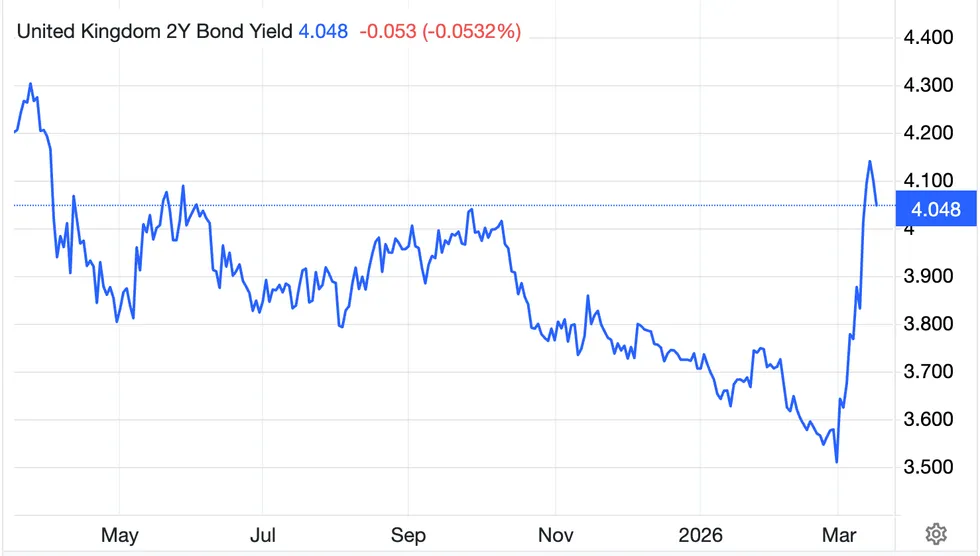
The two year Government bond yield as of Tuesday
|
Trading Economics
The yield on two-year Government bonds, a key indicator of borrowing costs, has fluctuated since the escalation in tensions.
The Bank of England’s rate-setting committee is due to meet later this week amid ongoing uncertainty.
Jo Jingree, specialist mortgage adviser at Mortgage Confidence, said: “I’m speaking to many anxious clients at the moment who often come away from our conversations feeling less overwhelmed and much more reassured.”
She added: “Expert support is key. Mortgage advisers are in touch with lenders constantly and are surveying the changing rates on a daily basis.”