

A young boy from Gloucestershire has made history as the first individual in Britain to test a cutting-edge bionic exoskeleton within his own home.
Asger, aged seven, lives with cerebral palsy in Stroud and has been trialling the Agilik orthosis, a powered mobility device manufactured by Bionic Power.
The sophisticated equipment carries a price tag of £72,000.
His parents, Holly and Sam, have described the experience as potentially transformative for their son’s daily life.
The London Orthotic Consultancy is overseeing the groundbreaking trial, which represents a significant step forward in assistive technology for children with mobility conditions.
The youngster typically relies on a wheelchair for mobility or a pushchair when covering longer distances.
With the exoskeleton strapped on, however, he requires neither.
His father Sam described the moment as “really exciting” to witness his son gain greater “independence”.
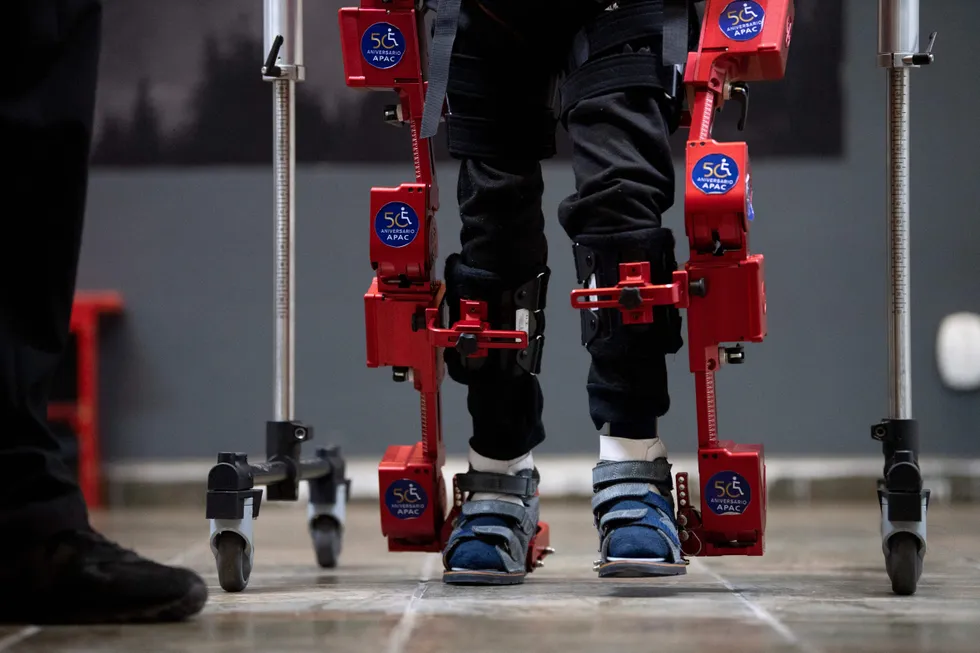
A young boy from Gloucestershire has made history as the first individual in Britain to test a cutting-edge bionic exoskeleton within his own home
|
GETTY
The family watched with delight as Asger completed the entire journey to school on foot.
“It had been exciting to see him walk all the way to school,” his parents said.
The Agilik device was originally engineered for military applications in Canada before being adapted for civilian medical use.
Holly believes the technology could prove “life-changing” for her son.
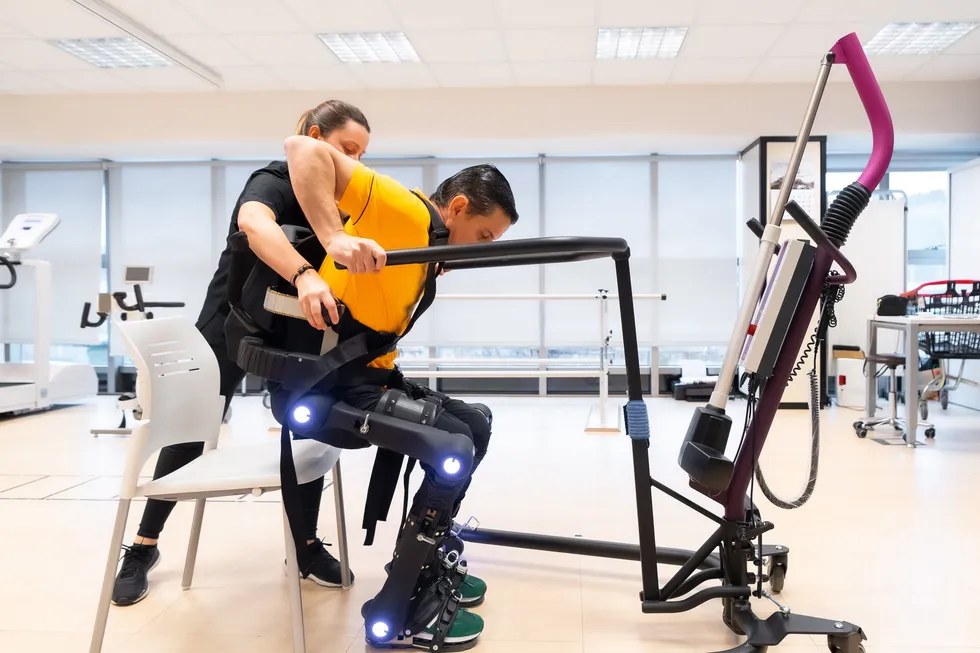
Approximately 160,000 people suffer from cerebral palsy in the UK, with 30,000 children diagnosed
|
GETTY
But the financial burden facing the family is substantial. Simply trialling the device for one week cost the parents £600.
Beyond the initial £72,000 purchase price, ongoing adjustments and servicing would add further expense.
“If it’s the right thing for him, we’ll make it happen because we have to,” Sam explained.
Holly acknowledged the harsh reality many families face: “Disability is expensive. We couldn’t really ever say no because you do anything for your children.”
Should they decide to proceed with purchasing the exoskeleton, the family would need to organise significant fundraising efforts.
“If we did buy one, it would take something like a really big fundraiser,” Holly said.
Sam Walmsley from the London Orthotic Consultancy noted that the family had previously sought assistance from alternative providers and the NHS, but “they couldn’t quite get it right”.
He expressed confidence that such technology would eventually become accessible to ordinary families, suggesting that early adopters help establish the evidence needed for wider availability.
“Those few patients who can afford it build a bit of an evidence base so that it can be used by the masses,” Walmsley said.
According to the charity Scope, disabled households require £1,000 more monthly than non-disabled households to maintain equivalent living standards, with this disparity increasing annually.
Amanda Richardson, founder of Action Cerebral Palsy, highlighted that “children with cerebral palsy are one of the groups that wait the longest for referral and interventions”.