
A Labour council has warned schools that children’s drawing might be blasphemous to Islam.
In the North, guidance has been handed out to schools by Labour councils warning children’s illustrations in art lessons might be “idolatrous” under Islamic law.
Designed to educate teachers to ensure religious sensitivities are upheld in the classroom, the advice also warns music and dancing classes could also be contrary to Islamic teachings.
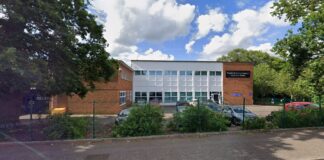
The local authorities dishing out the advice include Kirklees, the council area that covers Batley Grammar School.
In 2021, Batley Grammar caught the attention of the media after a teacher depicted an image of the Prophet Mohammed in class, which sparked protests.
The staff member remains in hiding, the Telegraph reports.
Called “Sharing the Journey”, the guidance advises that some Muslim parents might be sensitive to the certain aspects of teaching art, dance, drama, music, physical education and religious studies.
It states that Islamic culture has produced abstract art, “three-dimensional figurative imagery of humans is considered idolatrous by some Muslims”.
The guidance has become a growing priority for the Labour Government, which recently urged schools to monitor anti-Muslim hostility to help maintain community cohesion
|
GETTY
Teachers have been warned that it is critical that children do not produce images of Jesus, the Prophet Mohammed or other figures considered to be prophets of Islam.
The restriction is rooted in several hadith – traditional accounts of the Prophet Mohammed that help shape sharia – in which he is described as discouraging the creation of images, particularly those depicting living beings.
Guidance issued to schools advises that, within some interpretations of Islam, music is traditionally limited to the human voice and non-tuneable percussion instruments, reflecting practices believed to date back to the time of the Prophet when such instruments were used mainly at weddings or on the battlefield.
The document acknowledges, however, that views on music vary widely among Muslims.
It recommends that schools listen to parental concerns, discuss the role of music within the curriculum and avoid requiring pupils to participate in songs that conflict with their religious beliefs, while making clear that music itself should not be removed entirely from school life.
Not all Muslims accept restrictions on music, but prohibitions have been promoted in certain conservative movements, including the Deobandi tradition followed by the Taliban.
Teachers are also cautioned that dance lessons could raise objections from some parents because of potential physical contact between male and female pupils.
The guidance was first produced in 2022 by councils in Leeds, Calderdale, Oldham and Wakefield, and was later circulated by other local authorities including Sefton in Lancashire and Tameside in Greater Manchester – it has since been reissued.

Protests kicked off outside Batley Grammar School in West Yorkshire in 2021 after a member of staff at the school showed an image of the Prophet Mohammed
|
GETTY
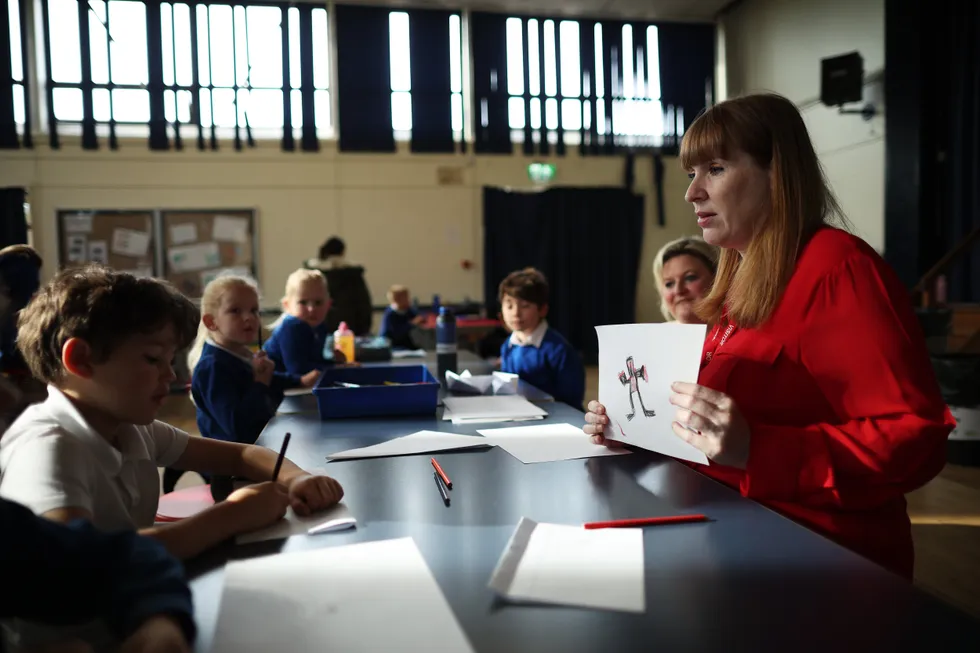
Separate advice on art notes that Islamic civilisation has a long artistic heritage, particularly in geometry, calligraphy and patterned design.
However, it warns that some Muslims regard three-dimensional depictions of people as idolatrous, and schools are urged to avoid asking pupils to create images of religious figures such as Jesus or the Prophet Mohammed.
Some Muslim pupils may also prefer not to draw the human form.
The introduction to the guidance says it is intended to promote understanding between different communities and support social cohesion.
This objective has become a growing priority for the Labour Government, which recently urged schools to monitor anti-Muslim hostility as part of wider efforts to maintain community harmony.
Plans announced by Communities Secretary Steve Reed have prompted concerns from some free-speech campaigners, who warn they could discourage open discussion about issues within Muslim communities.
While new initiatives are being proposed, it has also emerged that guidance encouraging schools to accommodate religious sensitivities in the classroom has existed for several years.
Similar advice has been issued by other councils in England, suggesting that some Muslim families may object to representational art or certain forms of music and recommending alternative activities where participation might conflict with a pupil’s beliefs.
For example, guidance from Essex County Council states that some Muslims view representational art as blasphemous because it attempts to imitate God’s creation.
Teachers are therefore encouraged to explore Islamic artistic traditions such as pattern, calligraphy and abstract design when working with Muslim pupils.
Schools are advised that, when observational drawing is required under the national curriculum, sensitivity may be needed in choosing subjects.
Pupils could instead produce non-representational interpretations or focus on Islamic decorative styles.