

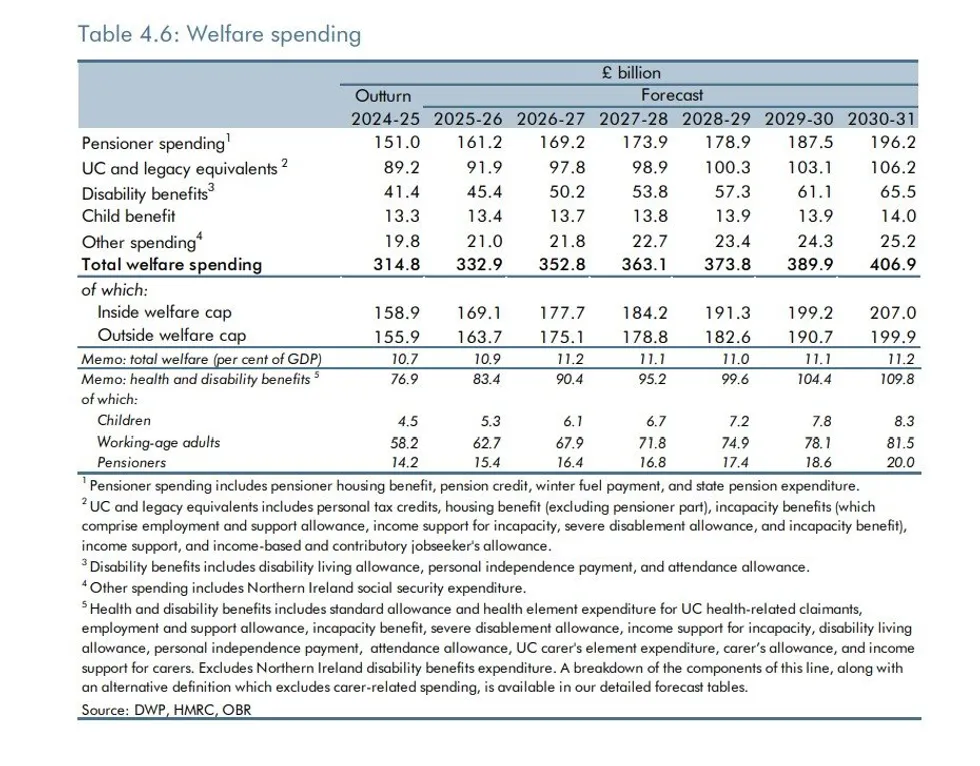
Welfare spending is expected to soar to £407billion, up from £314billion last year, according to the Office for Budget Responsibility’s (OBR) latest assessment of the economy.
Chancellor Rachel Reeves gave her annual Spring Statement to the House of Commons earlier today, prior to the UK fiscal watchdog’s assessment of the Government’s spending.
Despite Labour’s attempts to bring down Britain’s ballooning benefits bill, total welfare expenditure is forecast to reach nearly £407billion by the 2030/31 financial year.
Based on the OBR’s latest assessment, DWP welfare spending is on track to rise this year by £18billion to £333billion, or 10.9 per cent of gross domestic product (GDP)
Britain’s benefits bills is projected to balloon
|
GETTY
Benefit expenditure from the DWP is projected to jump in nominal terms by an average of £15billion annually over the rest of the forecast period, hitting £407 billion in 2030-31.
If these forecasts come to fruition, this spending splurge would be 1.2 per cent higher than pre-pandemic levels, hitting 11.2 per cent as opposed to 2019-20’s 10 per cent.
The fiscal watchdog has determined the projected increase in welfare spending is being primarily driven by health-related benefits, such as Personal Independence Payments (PIP), and pensioner benefits.
Both are forecast to increase by 0.3 and 0.4 per cent of GDP between now and 2030-31, respectively.
How much will benefit spending rise by?
|
OBR
 The OBR is the UK’s fiscal watchdog | GETTY
Notably, an ageing population and the Government’s pledge to keep the state pension triple lock will send spending on this cohort growing by 0.6 per cent over the period.
However, the OBR highlighted that this is partly mitigated by the increase in the state pension age from 66 to 67 between 2026 and 2028, which reduces pensioner spending by roughly 0.3 per cent of GDP in 2030-31.
Furthermore, the watchdog is pricing in an increase in claims for incapacity benefits, with the number of people on this support expected to go up by 600,000 to four million.
The number of people claiming disability benefits will rise by 2.3 million between now and 2030, going up from 6.5 million to 8.8 million.
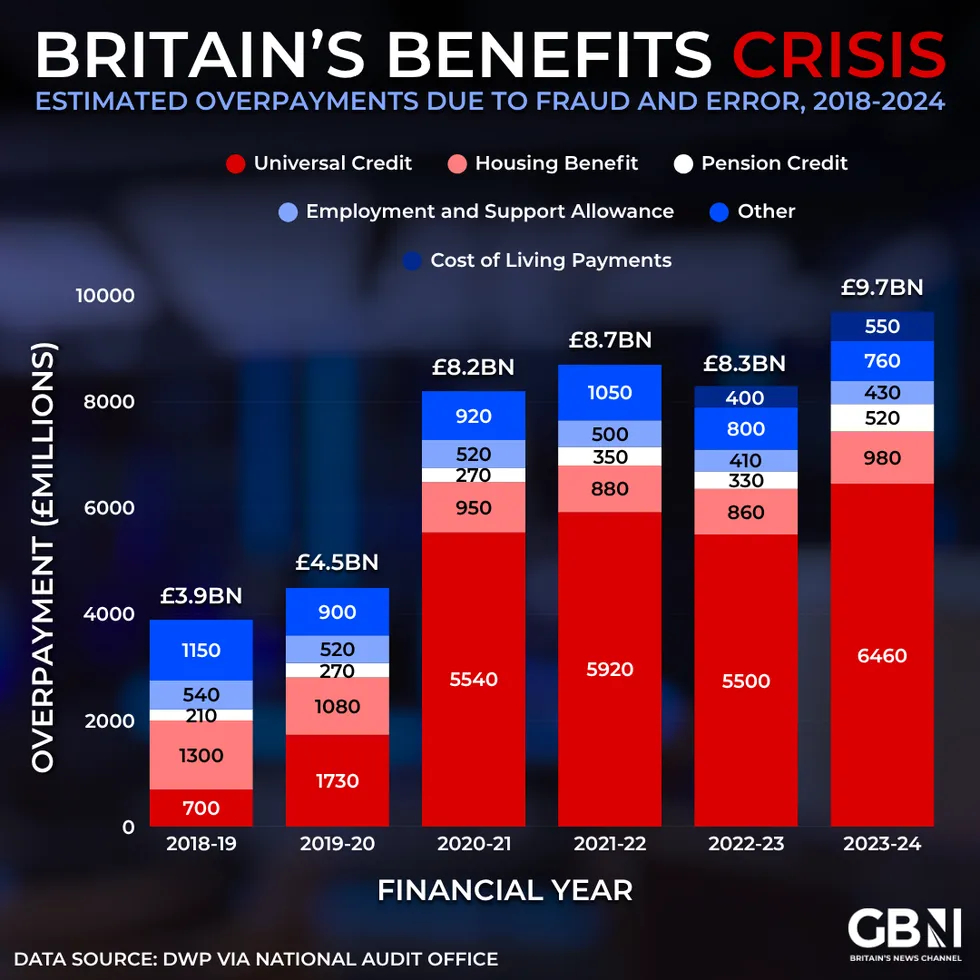 Figures from the DWP via the National Audit Office show billions of pounds in benefit overpayments are made each year | GB News
Labour ministers attempted to bring down the benefits bill by introducing reforms to means-test disability benefits, however, this was voted down by the Government’s own MPs.
Last month, DWP minister Pat McFadden accused the benefits system of being “rigged with the wrong incentives and wrote people off instead of backing them”, and that his reforms would “put more money in the pockets of working people on Universal Credit”.
He said: “These reforms put more money in the pockets of working people on Universal Credit, while ensuring those who can work get the support they need to do so.
“By boosting the standard allowance and investing in proper employment support, we’re building a welfare system that rewards work and offers people a route to a better future.”






 late)