

The towns of Gorton and Denton feel less like political battlegrounds and more like working towns getting on with the day.
And perhaps that’s the point. In places like these, elections are rarely theatrical.
They are quieter, more incremental, the odd conversation among friends who might pass each other in the street. But that doesn’t mean feelings don’t run deep.
In the past, this by-election would have been a dead cert for Labour. In reality, the mood on the ground suggests something more unsettled. Something subtler and potentially more significant: fragmentation.
Things got off to an interesting start when Greater Manchester mayor Andy Burnham was blocked from standing as Labour’s candidate here.
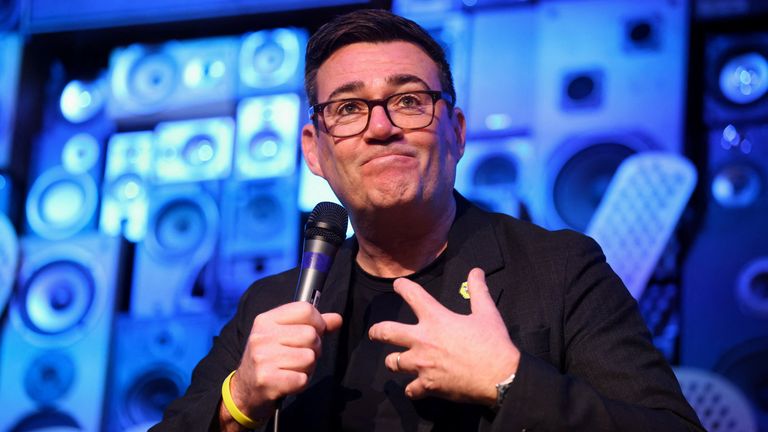
Labour’s key man in Manchester. Pic: Reuters
As one of the most recognisable figures in Greater Manchester – and consistently more personally popular than Sir Keir Starmer in national polling – Burnham would likely have started as favourite.
His exclusion fuelled talk that Labour’s leadership was wary of giving him a Westminster platform that could lead ultimately to a leadership challenge.
At the same time, Reform’s candidate has been publicly endorsed by Tommy Robinson – a backing the party has sought to distance itself from.

Stephen Yaxley-Lennon is backing Reform. Pic: Reuters
Reform curious…
At the busy indoor market in Gorton, former Labour voter Theresa Jewell is blunt about why she has switched.
“I don’t like Labour, and it’s Keir Starmer I don’t like,” she says. “He was the reason I wouldn’t vote for Labour.”
She now plans to back Reform.
“I don’t think there’s really anybody else that I trust.” For her, the move is personal rather than ideological – a judgement about leadership and direction.
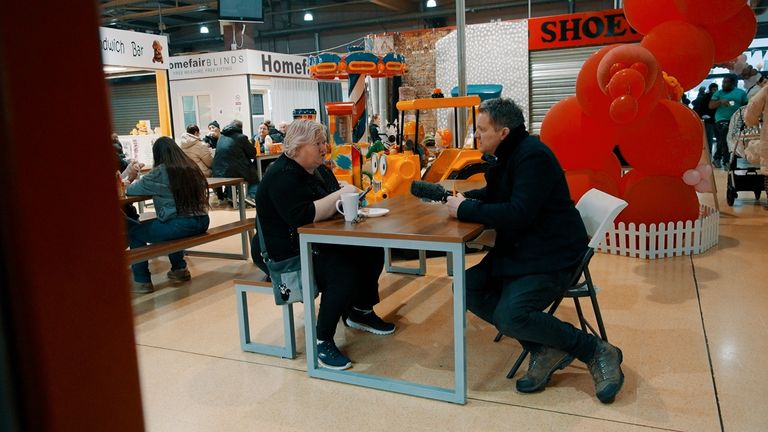
Former Labour voter Theresa will back Reform
…or going Green?
A few stalls away, Chenise says she would previously have been “more likely to vote Labour”, but she now feels politically displaced.
“As a woman, as a woman of colour, I feel like I’m under threat by Reform,” she says.
“It’s like they want to go backwards.” Instead, she is considering the Greens.
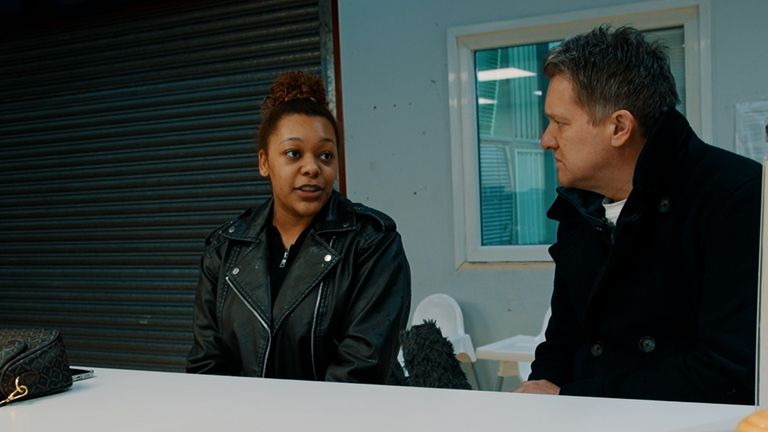
Chenise feels ‘under threat’ from Reform
Her frustration with Labour is not that the government has been too radical, but that it appears to be edging toward what she sees as Reform’s language.
“Their policies seem to now be more reflective of what Reform is, what the Conservatives are,” she argues.
“I don’t think it reflects what working-class people want right now – and even what Labour should have stood for.”
Between those two poles sits another perspective. Atif, who owns a sweet shop and bakery in Longsight, says most Asian voters he knows “are on the Labour side, mostly”, but he is now “thinking Green”.
He describes himself as “sick, tired of the Labour policies”. His frustration is less cultural than practical – about pressure on local services like doctors and dentists.
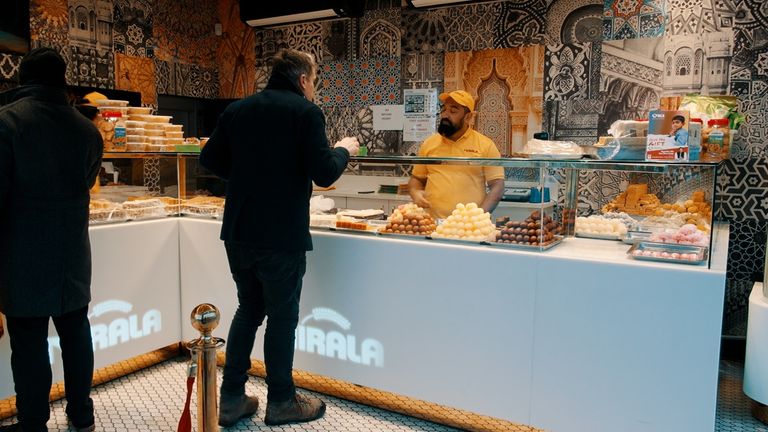
Atif says most Asian voters are loyal to Labour – but he is considering the Greens
And then there is Jason, another former Labour voter who says he is “absolutely voting Reform.” His reasoning is direct: “It’s the cost of living, it is immigration… you’ve just got to sit down and think which is best.”
For him, Reform represents disruption and clarity in a crowded political landscape.
A coalition under strain
What is striking is not that Labour is losing voters – governing parties often do in mid-term contests. It is that the losses appear to be fragmenting.
Reform attract those who want sharper rhetoric and disruption. The Greens attract those who feel Labour have diluted their values. Others express fatigue rather than fury.
This is not a single ideological realignment; it is a coalition under strain.
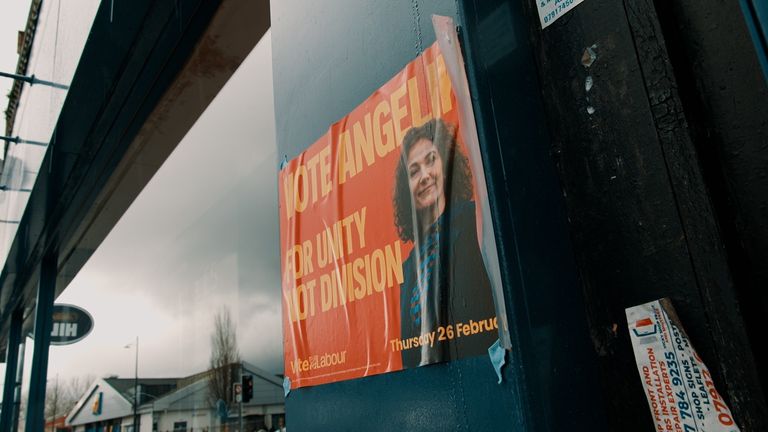
Labour’s Angeliki Stogia will be hoping to rely on decades of historical support
Read more from Sky News:
What’s happening with this year’s local elections?
The geography reinforces the divide. The Manchester half of the seat is younger and more diverse, with significant Muslim communities and a history of strong Labour majorities.
Denton, by contrast, is older, more white, and more owner-occupied – closer in character to the towns where Reform have been polling strongly.
Cross the motorway and the political temperature changes.
In Denton, the language of fairness and neglect comes more readily. And even the infrastructure feels symbolic. Denton station runs two trains a week – one in each direction, on a Saturday morning.
There are long-term proposals to integrate the line into Greater Manchester’s expanding tram network, but for now the image is stark: a town six miles from Manchester city centre that can feel further away.
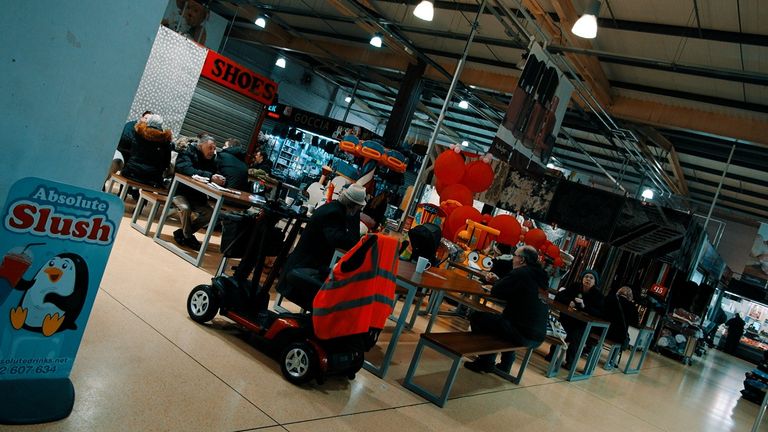
The constituency was only formed ahead of the 2024 election
That sense of proximity without connection feeds a broader narrative – one Reform seek to harness and Labour seek to counter. But whether frustration coalesces into a decisive swing remains unclear.
This by-election will not alter the parliamentary arithmetic. But it may reveal something about the arithmetic of allegiance. Labour’s vote here does not appear to be collapsing in a single direction.
Instead, it looks thinner, more conditional, more open to persuasion – or protest.
In Gorton and Denton, political loyalty is no longer automatic. It is negotiated. And that makes this contest more revealing than its size suggests.
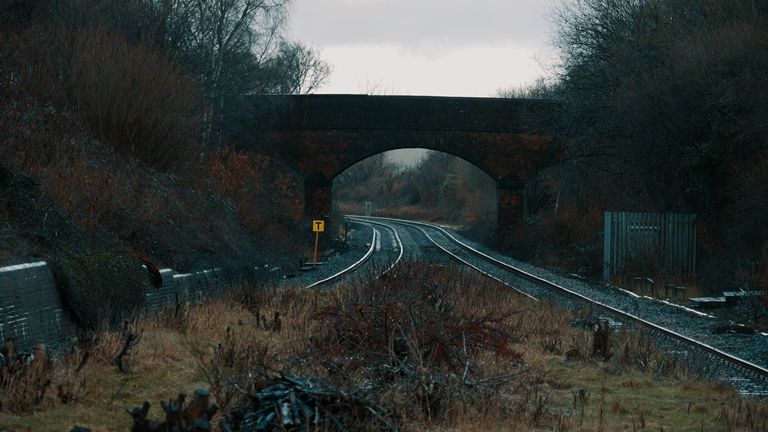
Many in Gorton and Denton will wonder if Labour are finally running out of track
Here is the full list of candidates standing in the Gorton and Denton by-election:
Angeliki Stogia, Labour Party
Charlotte Cadden, The Conservative Party
Matt Goodwin, Reform UK
Jackie Pearcey, Liberal Democrats
Hannah Spencer, Green Party
Sebastian Moore, Social Democratic Party
Joseph O’Meachair, The Rejoin EU Party
Dan Clarke, Libertarian Party
Hugo Wils, Communist League
Sir Oink A-lot, The Official Monster Raving Loony Party
Nick Buckley, Advance UK
The by-election takes place next Thursday, 26 February.