

Residents of the picturesque Hertfordshire market town of Tring are mounting fierce resistance against proposals for a substantial new housing development on Green Belt land.
The Marshcroft Farm scheme, put forward by developer Harrow Estates, would see approximately 1,400 homes constructed on a 300-acre site adjacent to the Chilterns National Landscape.
Dacorum Borough Council is expected to reach a decision on the contentious plans in mid-March.
The development has attracted overwhelming opposition, with more than 446 objections lodged against just a single letter of support.
Tring Town Council has formally recommended refusal of the application.
Should the scheme proceed, it would increase the town’s population of roughly 12,000 by nearly 28 per cent, prompting concerns that Tring would lose its character as a market town.
The proposals are not new to local campaigners. An almost identical application was rejected by Dacorum Borough Council in 2022, with then Housing Secretary Michael Gove subsequently dismissing an appeal at inquiry in March 2024.
However, following revisions to national planning policy and Green Belt guidance designed to support Labour’s target of 1.5 million new homes, the site was included in Dacorum’s updated Local Plan in 2024.
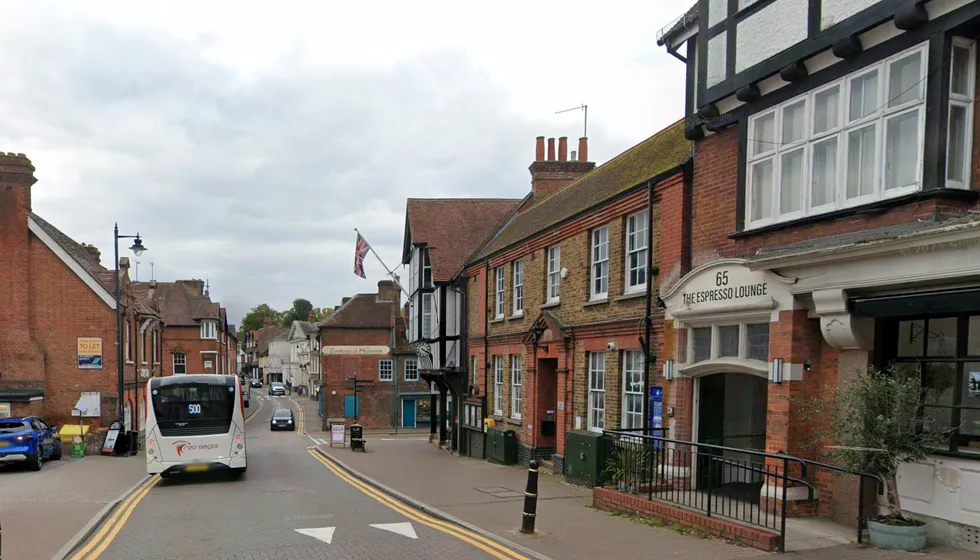
Residents of the picturesque Hertfordshire market town of Tring are mounting fierce resistance against proposals for a substantial new housing development on Green Belt land
|
GOOGLE MAPS
Developers now classify Marshcroft as a “grey belt” site under the revised National Planning Policy Framework.
Local residents have expressed dismay at what they perceive as an abrupt reversal.
Keith Baker, a committee member of Grove Fields Residents Association, said: “We really think that Dacorum are implementing their local plan by stealth.”
Tring Town Council argues that any approval would be premature while the Local Plan examination remains ongoing.
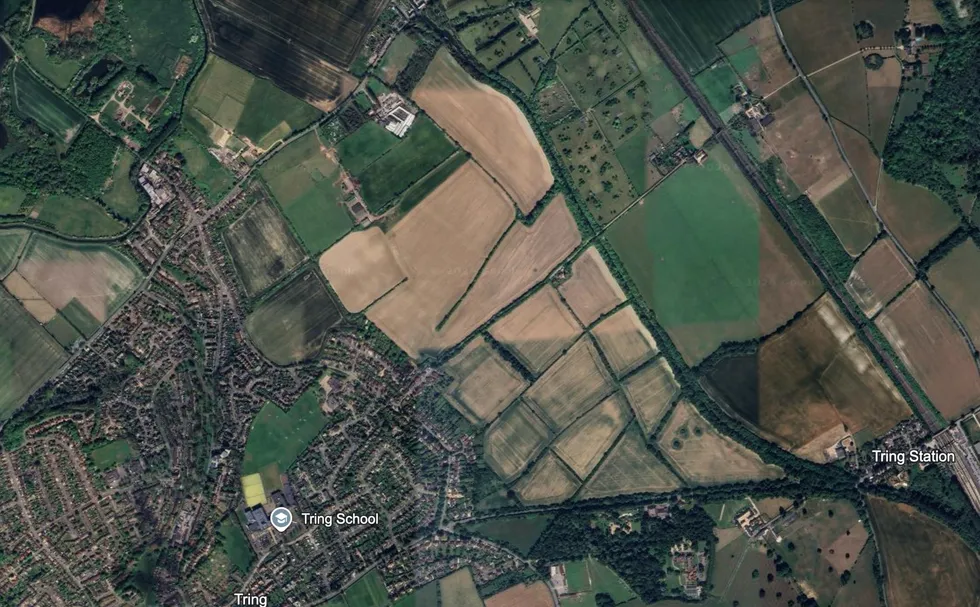
The 300-acre site situated north west of Tring Station is currently occupied by fields
|
GOOGLE EARTH
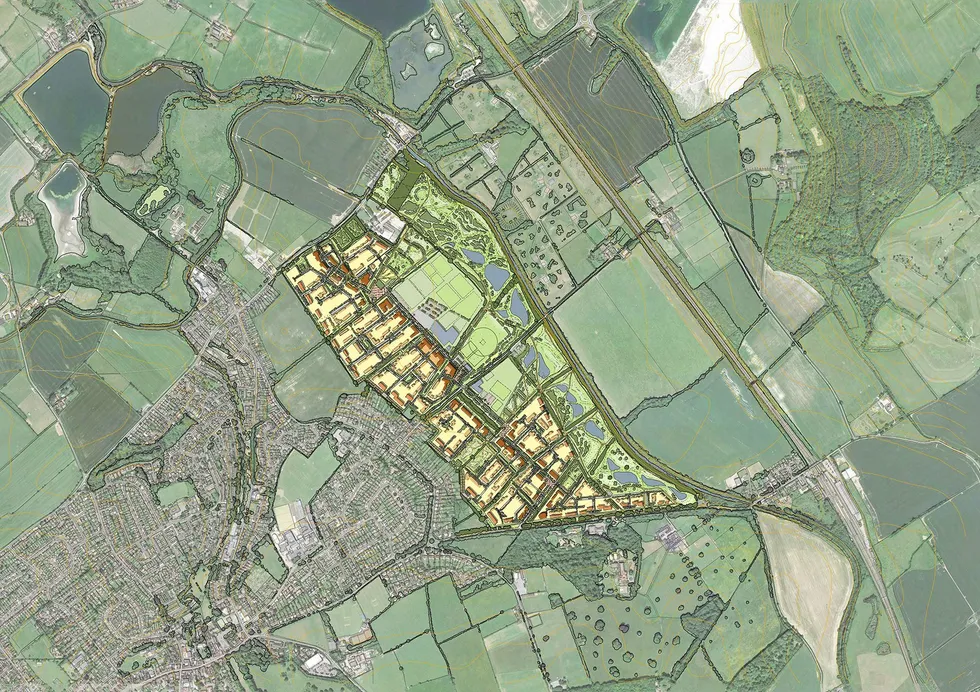
Planning permission shows the enormity of the proposed developments
|
PLANNING PERMISSION
Infrastructure concerns loom large among objectors’ grievances. Thames Water has formally objected to the proposals, warning that homes could not be occupied without water and sewage upgrades requiring years to complete.
Some 34 consultee bodies submitted formal responses, including the Environment Agency, National Rail, the National Trust and Historic England, with many raising concerns or objections.
Tring Town Council highlighted “unresolved infrastructure considerations (particularly water supply)” among its reasons for recommending refusal.
The town’s railway station, medical facilities and road network would all require significant improvements to accommodate the influx of new residents.
A local secondary school has already expanded yet remains insufficient to handle additional pupils.
While the submitted plans allocate land for primary and secondary schools plus medical facilities, residents fear these provisions may never materialise since developers are not obligated to build or fund them.
Harrow Estates maintains that its updated application addresses local concerns, with affordable housing increased from 45 to 50 per cent of the total.
A spokesman for the developer stated: “There are no outstanding technical objections and its impact on local infrastructure will be mitigated, with Thames Water obliged to upgrade its systems to meet future demand.”
Yet residents remain sceptical about affordability claims. Tring Town Council noted that under current rules, “affordable” properties can sell at up to 75 per cent of market value, likely placing them beyond reach for many locals.
Former planning barrister Trevor Standen warned: “None of my kids can afford a home in Tring, they’re renting in north London.”
Campaigners also fear approval would establish a troubling precedent for Green Belt development nationwide.