

A banned “forever chemical” has been detected in high quantities in rivers and groundwater at 25 sites across the Lake District and the North West.
High levels of Per- and polyfluoroalkyl substances (Pfas) have been found spread across a large area in Cumbria and Lancashire, including an area of outstanding natural beauty with multiple protections for wildlife and habitats.
The substances are dubbed “forever chemicals” as they take hundreds or even thousands of years to degrade.
They are widely used in consumer products and some have been linked to a range of serious health problems.
A Freedom of Information request revealed high concentrations of Pfos in Environment Agency samples taken in January 2025, reports The Guardian.
At one site, groundwater contained Pfos at 3,840ng/l, alongside elevated levels of other banned Pfas compounds, with 25 sites recording Pfos concentrations well above drinking water guideline limits of 100ng/l for the combined total of 48 Pfas compounds.
One resident who owns a private well at their business said they found out it was polluted in November 2021 after being “unofficially” informed by an individual at the Environment Agency, and stopped drinking the water immediately.
They said agency officers had been testing the well for 35 years because of concerns about “chemical drift” in the groundwater.

The chemical has been discovered across the North West
|
GETTY
The resident told The Guardian they were directed to Westmorland and Furness Council when they tried to raise the alarm with the Environment Agency.
They said: “[Westmorland and Furness Council] said they wished I had not been told, as they could not even test for Pfas…there was no help, no advice, no support of any kind.
“I tried to get the council to look for the source of the pollution but no one seemed interested. They said it looked like we were an outlier…nearly five years later I am still no wiser.”
A council spokesman said it was informed by the Environment Agency about the contaminated supply in late 2021 and that the business switched over to the mains water supply.
They added: “The council has continued to support the business to ensure compliance in line with statutory requirements and the provision of a safe water supply. These arrangements remain in place and are being managed to ensure there is no risk to public safety.”
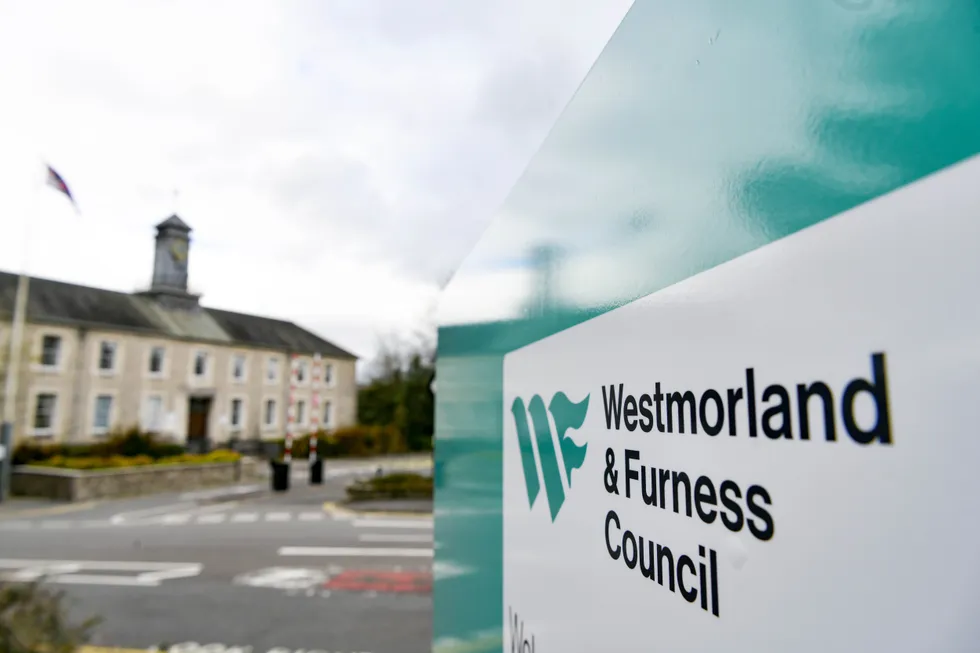
Westmorland and Furness Council
|
WFC
The Environment Agency said it identified elevated levels of Pfas in the area in 2022 through its national surveillance monitoring programme.
However, the spokesman stressed that responsibility for protecting users of private water supplies lies with local authorities.
The private borehole owner was alerted after detecting Pfas above drinking water guidelines and advised them to contact the local council.
It added that councils, the UK Health Security Agency, the Food Standards Agency and the Drinking Water Inspectorate (DWI) were informed in 2025.

Slater’s Bridge reflected in the tranquil waters of the River Brathay (file pic)
|
GETTY
A report from March 2025 revealed a paper mill in Beetham, where Pfas are known to have been used, as a potential source for the chemical.
Sites where Pfas-contaminated paper pulp may have been spread on land are also flagged as potential hotspots where Pfas could contaminate soils and enter the food chain.
In June 2025, the operator of the mill went into administration and its assets were sold to a new operator.
Responsibility for earlier operations now sits with the former company’s administrators.
Director of the new operator Pelta Medical Papers Robyn Khan told The Guardian: “The mill is now operated by a new legal entity.
“Since this acquisition, there has been no use of Pfas-based chemicals on site, and the mill does not manufacture paper containing Pfas.
“Any manufacture of Pfas-containing paper products occurred under the previous legal entity and ownership, in line with regulatory guidance and permit conditions in force at the time.
“We take our environmental responsibilities seriously and will continue to engage appropriately with the relevant regulatory authorities.”
GB News contacted the mill’s administrators, Kroll Advisory, for comment.
The Environment Agency report also identified five historical landfills and one operational landfill as possible sources of Pfas, alongside sewage treatment works, fire stations and discharges from caravan parks.