

A parliamentary spending watchdog has warned that the Department for Work and Pensions (DWP) must exercise its newly acquired bank account surveillance powers with restraint, cautioning that public confidence hangs in the balance.
The Public Accounts Committee raised concerns that the DWP has yet to adequately explain how it intends to deploy these substantial capabilities in a manner that preserves trust among citizens.
Under the Public Authorities (Fraud, Error and Recovery) Act 2025, the department gained authority to require banks and financial institutions to hand over information for verifying whether claimants are entitled to benefits.
The committee is demanding that the DWP include details in its annual report about how frequently these powers have been exercised and what outcomes they have produced.
The DWP is set to ‘reach further into citizens lives’ under new powers
|
GETTY
Perhaps most controversially, the department can now recover money directly from individuals’ bank accounts without obtaining a court order in certain circumstances.
The PAC report emphasised that the department needs to strengthen its internal processes and controls to prevent overpayments from occurring initially, thereby protecting taxpayers from losses.
Cross-Government data sharing represents a crucial tool in this effort, with the committee urging the DWP to make better use of information held by other departments to verify benefit entitlements.
The watchdog also highlighted a growing problem of underpayment, with unfulfilled eligibility rising to an estimated £3.7billion in 2024-25, up from £3.1 billion the previous year.
The report also addressed the ongoing Carer’s Allowance overpayment scandal, with the DWP committing to rectify cases involving 26,000 carers who were wrongly recorded as having been overpaid.
Identifying all those affected will take approximately two years, with the department facing the task of reviewing some 200,000 cases in total.
Notably, the DWP’s permanent secretary issued an apology to all carers who had been wronged by the department’s handling of their cases.
Sir Geoffrey Clifton-Brown, chair of the Public Accounts Committee, said: “Indeed, a separate element of our report, which saw a welcome apology from the DWP’s permanent secretary to all those carers wronged by his department, demonstrates the impact that wrongly-implemented powers can have on people’s lives.”
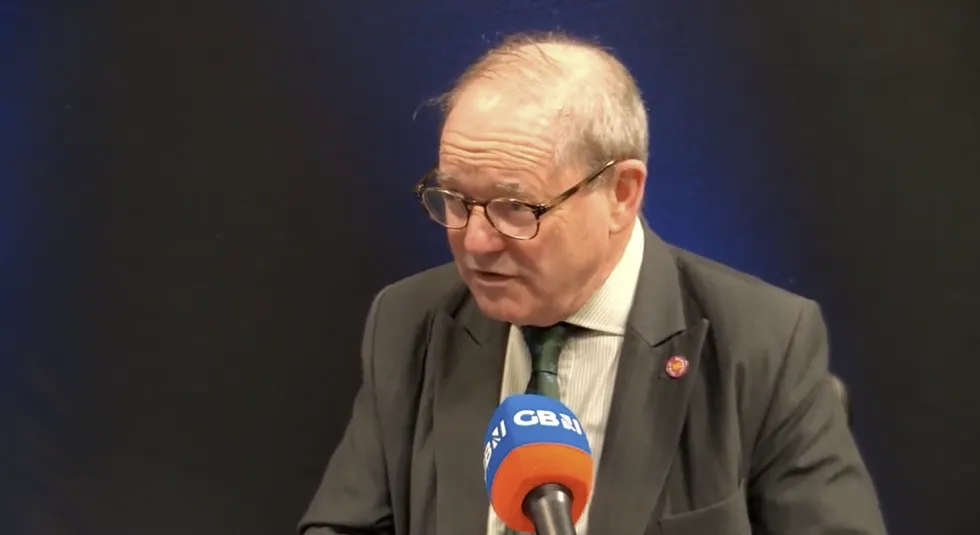 Sir Geoffrey Clifton-Brown oversaw the report | GB NEWS
He added: “Make no mistake, the DWP’s new powers to reach further into citizens’ lives are significant.
“It is essential that these extensive new powers of compulsion of disclosure over banks and financial institutions, of recovering funds directly from people’s accounts without the aid of the courts have the risk of over-reach mitigated against right from the outset.”
The committee chair noted that current efforts to tackle unacceptable fraud and error levels lack sufficient ambition, with the department failing to properly examine its own mistakes rather than concentrating solely on claimant behaviour.
This year marks the 37th consecutive year that the UK’s chief auditor has qualified the DWP’s accounts due to material fraud and error levels.
 Universal Credit payments will be impacted | PA
Sir Geoffrey warned the department is approaching a “sad and embarrassing milestone” of 40 years, urging immediate action.
On its website, civil liberties group Big Brother Watch UK stated: “The powers will force banks to trawl through your accounts and report back to the DWP if it appears you have received an overpayment of benefits, whether due to fraud or error, based on secret criteria.
“They risk exposing hundreds of thousands of innocent people to horizon-style injustices and it will be disabled people, carers, older people and those living in poverty who are likely to be disproportionately affected.”





 must exercise its newly acquired bank account surveilla)