

A former army veteran is slamming the UK Government for being treated as a “second-class citizen” due to a long-standing policy that prevents him from claiming the full, new state pension.
When Peter Sanguinetti was issued with instructions to report to an army barracks at 24 hours’ notice, it was October 1962, and the Cuban Missile Crisis was escalating. As a former National Service infantryman on the Army Emergency Reserve, he was liable to be recalled immediately if the monarch signed a proclamation.
The crisis passed. Mr Sanguinetti returned to civilian life, continued serving in the Territorial Army, and later built a long career in British industry. More than sixty years on, now living quietly in rural Ontario, he believes the country he once stood ready to defend has failed to uphold its side of the bargain.
He shared: “There is absolutely no excuse for the British Government to treat me as a second-class citizen.” Mr Sanguinetti is one of more than 100,000 British pensioners living in Canada whose UK state pensions are permanently frozen at the level first paid when they claimed.
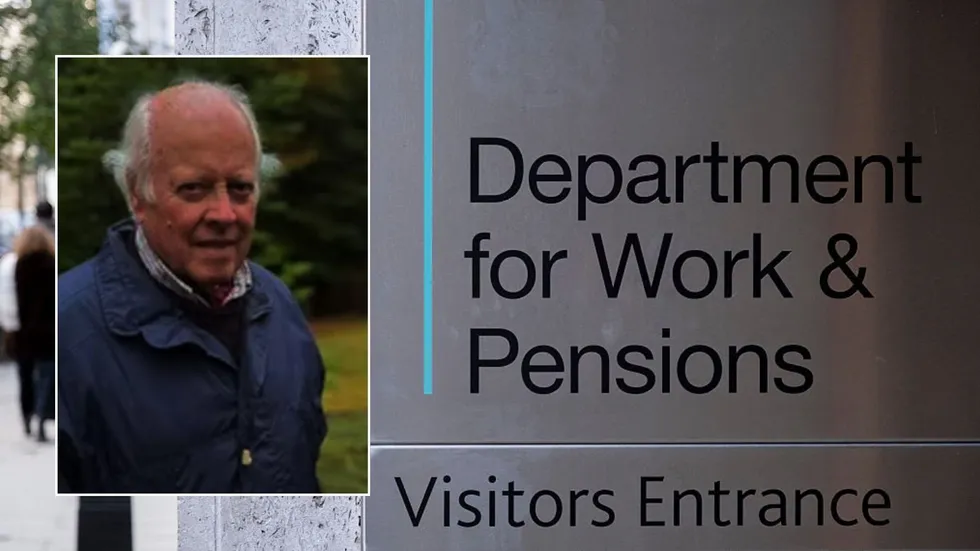
Mr Sanguinetti is one of the 100,000 British retirees based impacted by frozen pensions policy
|
GETTY / FROZEN PENSIONS CAMPAIGN
State pensions in the UK rise thanks to the triple lock, with British retirees in the United States and Europe benefiting from annual increases. However, those in Canada do not. The policy has existed for decades, but campaigners now argue it has reached a critical moment as trade negotiations give Canada unprecedented leverage.
Mr Sanguinetti was born in York in July 1939, just weeks before the outbreak of World War II. As the son of an army officer, he spent his childhood moving around the UK. Like many men of his generation, National Service was unavoidable.
He was called up in June 1959, trained as an infantryman, and joined the Royal Hampshire Regiment later that year. In February 1960, he sailed aboard HMT Dunera to the West Indies, serving in Jamaica and the Bahamas before returning to Britain in 1961.
On discharge, he was transferred to the Army Emergency Reserve, a routine step for many conscripts. That reserve status became suddenly real during the Cuban Missile Crisis. Mr Sanguinetti received a rail warrant instructing him to report immediately to Pirbright barracks if mobilisation was declared.
Later that year, he was granted a commission in the Dorset Regiment in the Territorial Army. He served until the regiment was disbanded in 1967 and remained on the reserve officers’ list until his fiftieth birthday. On his time in the army, he said: I was proud to serve. That sense of obligation mattered.”
Mr Sanguinetti moved to Canada after serving his country
|
GETTY
Alongside his military service, Mr Sanguinetti built a long civilian career. He joined Bridport Industries in Dorset as a commercial apprentice in 1961, rising through the ranks to become a director and general manager within the Bridport Gundry Group.
After further senior roles in Leicestershire, he accepted an offer to join GWB Rope and Twine as general manager in Orillia, Ontario. He and his family moved to Canada in April 1984.
It was a professional decision, not a retirement plan. Canada became home. His children grew up there and built their lives there. There was no family reason to return to the UK. Crucially, Mr Sanguinetti says he was never warned that the move could affect his future pension.
Mr Sanguinetti added: “I do not remember ever being told by the Department for Work and Pensions (DWP) what the consequences of retiring in Canada would be. The impact was something that would only be felt much later.”
That impact arrived in 2008, when Mr Sanguinetti began the process of claiming his UK state pension. It was then, he says, that he first learned it would never increase.
Only later did he discover how uneven the system was. British pensioners living in the United States receive full annual uprating. Those living in the European Union do too. Pensioners in Canada, Australia, New Zealand and much of the Commonwealth do not.
Two people who worked side by side in Britain, paid identical National Insurance contributions, and retired on the same day can receive dramatically different pensions for life purely because of where they live.
“In 2010, I decided to drive a school bus, and I continued to do this until the impact of Covid closed all schools in Ontario in March 2020,” the veteran told GB News.
“The money earned from driving the bus filled the loss of the frozen part of my state pension, but my feeling was and still is, should it be necessary for a British pensioner to continue driving a school bus until aged 81 years old just to fill that part of his state pension stolen from him by the British government?”
According to Mr Sanguinetti, he and his wife have a “frugal” way of living and have been unable to enjoy regular pleasures, such as eating out and going on holidays.
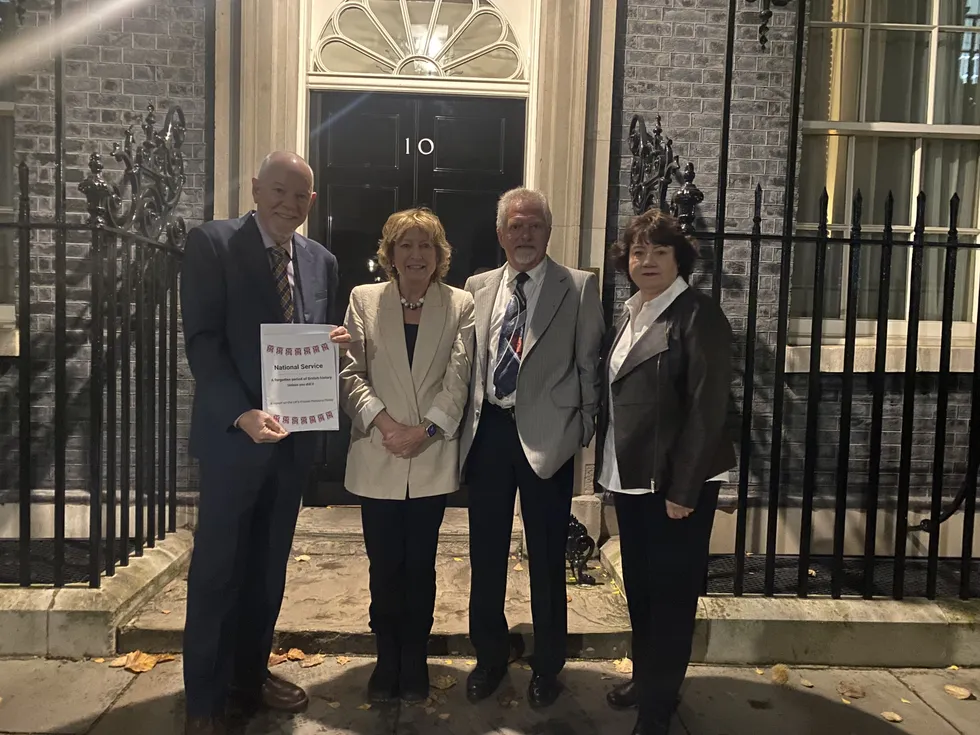
Campaigners delivered an End Frozen Pensions report to Downing Street in 2023
|
END FROZEN PENSIONSHe said: “My wife and I are frugal and keep a very tight grip on our finances. I can’t remember the last time we had a proper holiday, we very rarely eat out or go to the theatre, and the only organisation I belong to is the Royal Canadian Legion.
“We certainly don’t make unnecessary trips into Huntsville, our nearest town. We grow as many vegetables as we can, and my wife will try to freeze some if she can. We will try to stock the freezer when vegetables are at their lower fall prices.”
Campaigners say this experience is common among frozen pensioners, many of whom have seen their state pension lose more than half its real terms value since it was first claimed. Some have been pushed into poverty. Others rely increasingly on local welfare systems in their adopted countries.
That burden was highlighted this week when the End Frozen Pensions Campaign and the Canadian Alliance of British Pensioners gave evidence to Canada’s Standing Committee on International Trade.
Campaigners told MPs that Canada now spends more than $200million a year supporting British pensioners whose incomes have been eroded by the UK’s frozen pensions policy, effectively subsidising a foreign pension system.
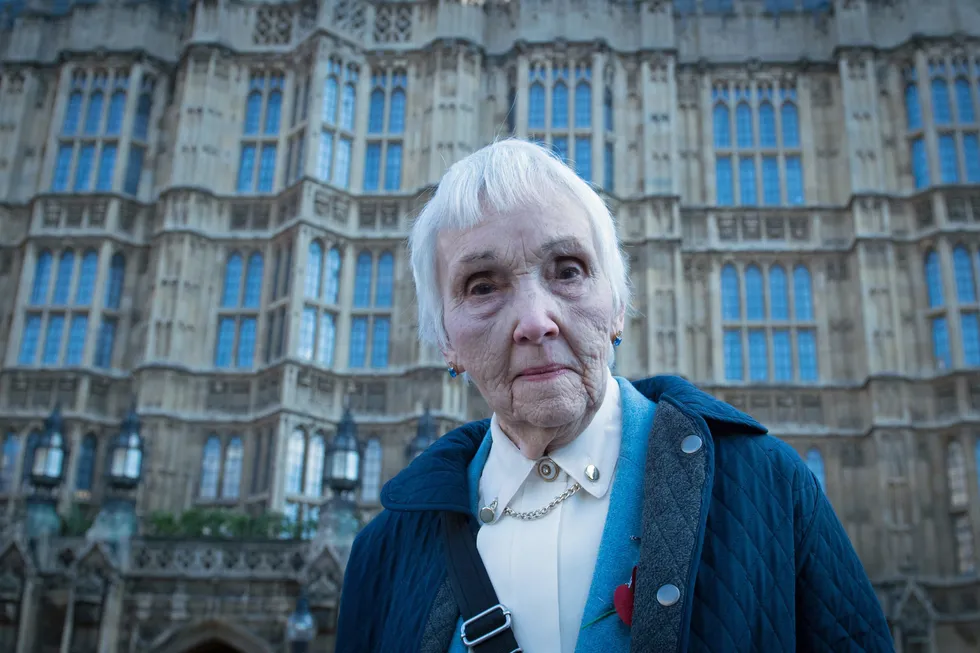 Anne Puckridge is among the estimated 500,000 pensioners living with ‘frozen’ state pensions | PA
Edwina Melville Gray, the board chair of End Frozen Pensions Canada, told the Committee that more than 100,000 people in Canada had worked and paid into the UK system for decades, yet because they retired in Canada their pensions were frozen permanently.
Speaking to MPs, Ms Melville Gray said: “If they lived in the United States or Europe, they would be treated fairly. In Canada, they are punished.”
What makes this moment different, campaigners argue, is trade. Canada is currently considering Bill C 13, legislation that would grant the UK permanent trade benefits under the Comprehensive and Progressive Agreement for Trans Pacific Partnership. Once ratified, Canada’s negotiating leverage would largely disappear.
The campaign has urged MPs to use that leverage now by pausing ratification until the UK commits to negotiations on pension uprating and to modernising the bilateral social security agreement.
“This is the moment when Canada has real leverage,” Ms Melville Gray said. “To let it pass would be to add insult to injury, both to pensioners who did everything right and to Canadian taxpayers left to pick up the bill.”
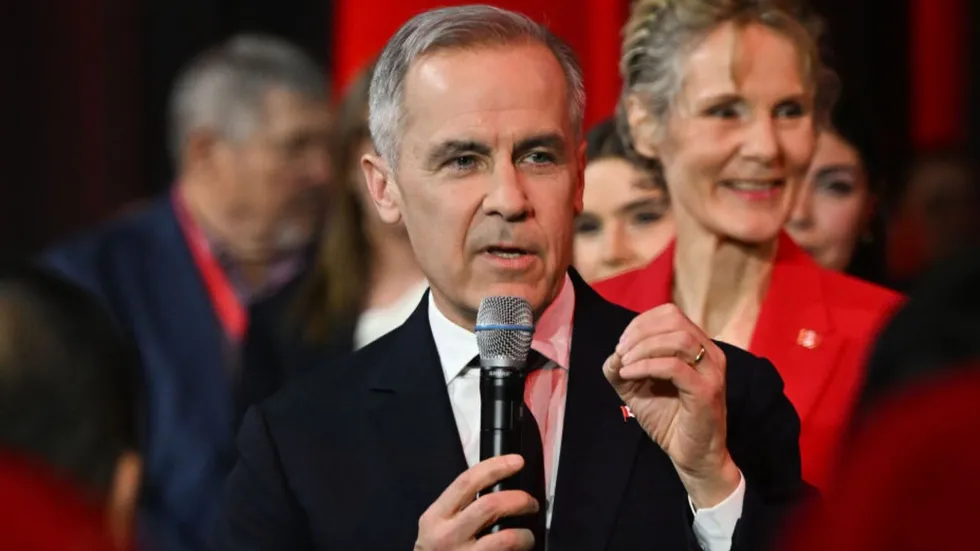 Canadian Prime Minister Mark Carney | GETTY
 Evidence presented to the Committee showed that official UK data puts the cost of uprating pensions in Canada at around £13million in 2027 to 28, a fraction of the UK’s overall pensions budget. For campaigners, that figure undermines the argument that reform is unaffordable.
Ms Melville Gray warned: “This injustice could be fixed for a relatively small sum. What is missing is political will.”
Mr Sanguinetti agrees. He points out that British pensioners living abroad save the UK Government money in healthcare, Winter Fuel Payments, concessionary travel and social care. He added: “This policy works against the UK’s own interests,. Yet we are treated as a liability.”
Earlier this year, Canadian Prime Minister Mark Carney urged middle powers at the World Economic Forum in Davos to act with conviction rather than passive acceptance of the status quo. Campaigners say frozen pensions are a test of that principle.
For Mr Sanguinetti, the issue is simpler: “I served when I was called. I worked. I paid in. There is no moral justification for treating me differently from someone who retired in Florida or France.”